
Buying or Selling a House With an Unpermitted Pool in Los Angeles: Risks, Fines & What to Do
An unpermitted pool in Los Angeles is more than a missing permit. It may also mean there are no approved plans or inspection records confirming how...
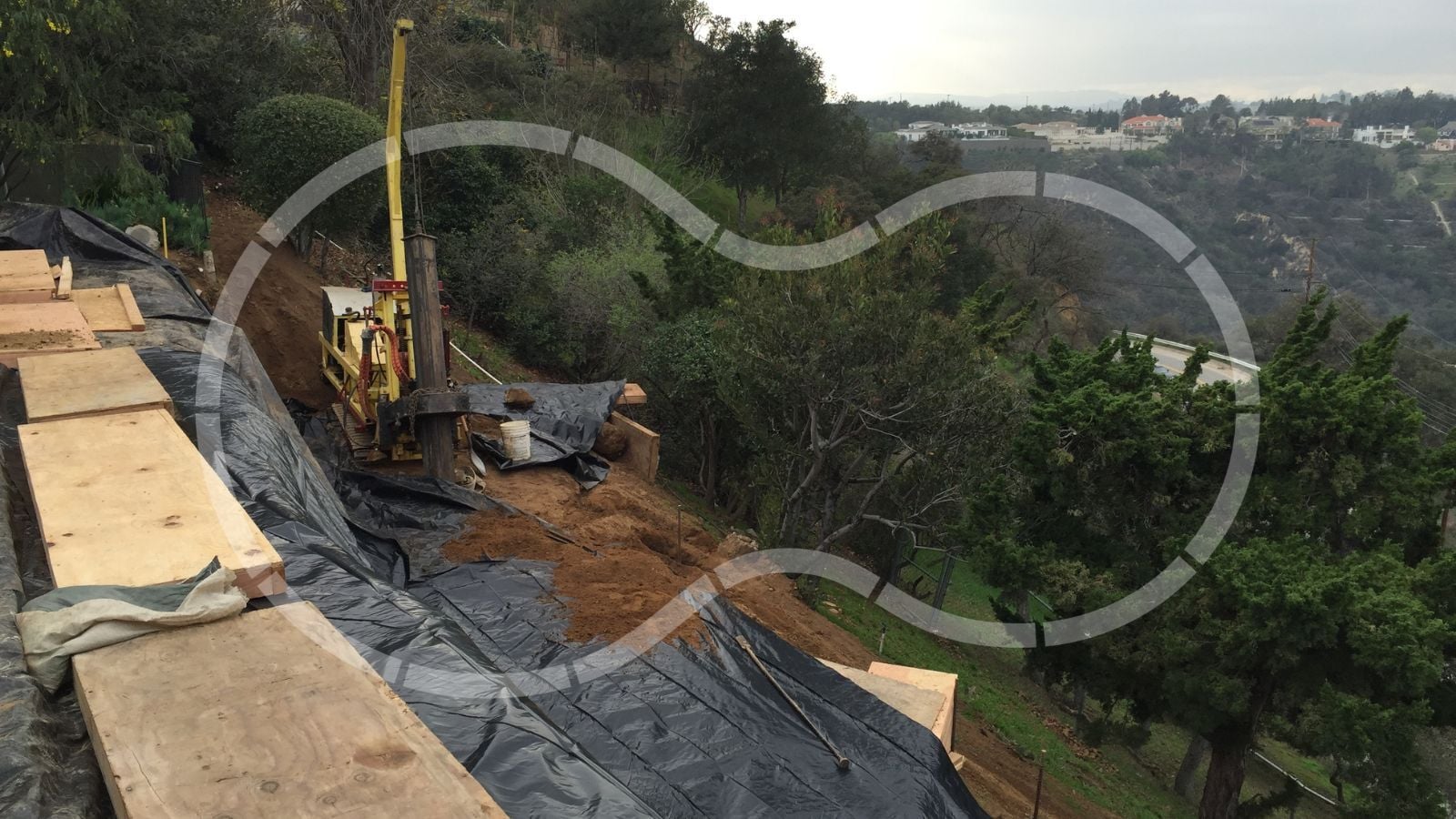
What happens when a pool project that seemed well planned suddenly stops because a caisson shaft becomes unstable 30 feet below grade?
What happens when the soils report looked acceptable, but drilling uncovers groundwater, loose material, buried boulders, or hard rock that requires added engineering, inspections, and corrective work before construction can continue?
For homeowners building a custom pool on a hillside or other challenging site in Los Angeles, these are among the most stressful surprises that can arise during construction. What begins as a straightforward excavation can quickly become a deeper structural issue that affects schedule, cost, and sequencing.
This is precisely why experienced planning matters.
At J Designs Pool & Spa, we have worked on luxury pool projects throughout Los Angeles that require caissons, grade beams, structural coordination, and careful oversight in difficult soil conditions. While geotechnical reports and engineering are essential, they are still based on sampling and analysis, not X-ray vision into every inch of earth below a property. Once drilling begins, actual field conditions sometimes reveal information that could not be fully confirmed beforehand.
This article explains:
If you are new to Los Angeles hillside construction, it helps to start with the basics.
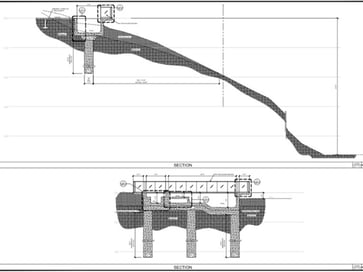
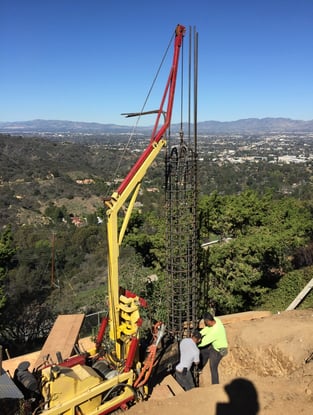
Caissons are deep concrete foundation shafts that are drilled into the ground to transfer structural loads to competent soil or bedrock below the surface. In many Los Angeles hillside pool projects, they are a critical part of the structural system.
That point is worth emphasizing: a pool is not simply a decorative backyard feature. It is a structural vessel holding enormous weight, often supported by steel, concrete, pressurized plumbing, electrical systems, and engineered foundations. When the site includes slopes, fill, variable soil, or elevation changes, the foundation system becomes even more important.
Depending on the property and the engineer’s design, pool caissons may extend 20, 30, or even 40 feet below grade. Their job is simple in concept but extremely important in practice: they help the pool remain stable over time.
If a caisson cannot be properly drilled, inspected, and completed, the integrity of the entire structure may be compromised.
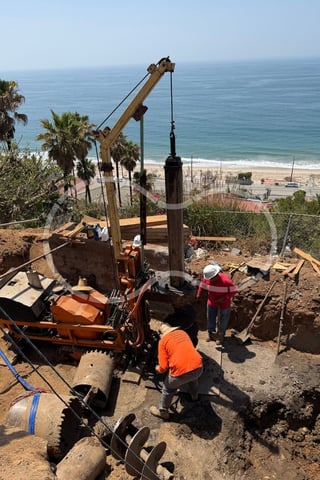 One of the most common misconceptions in hillside pool construction is that a soils report tells everyone exactly what will be found underground - It does not.
A geotechnical report is based on medium-to-shallow borings, samples, field observations, laboratory testing, and professional interpretation. It provides engineers with the information they need to recommend foundation design, expected bearing conditions, and likely drilling depths. That makes it indispensable.
But it is still a sampling document. Rarely is an observation or exploratory investigation done deeper than 10 feet, as these are done by hand with a two-man crew, most of the time
Subsurface conditions can vary significantly across the same lot. Soil density may change. Moisture levels may vary. Rock may appear in one location and not another. Groundwater may be encountered at a depth not fully reflected in preliminary data. In hillside environments, these variations are not unusual.
In other words, a soil report is a starting point for engineering, not a promise of what will be encountered in every shaft.
That is also why structural modifications involving exposed soil must be reviewed appropriately. When soil conditions vary, the risk is not merely inconvenience. Differential settlement, cracking, shifting, and long-term structural performance can all be affected. A quality builder does not ignore that uncertainty. A quality builder plans for it, communicates it, and responds correctly when field conditions change.
When drilling goes deeper into the earth, real site conditions replace assumptions.
That is when a project may uncover conditions that require: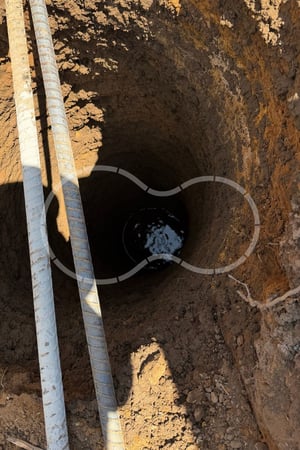
This does not necessarily mean anyone made a mistake.
In many cases, it means the team is doing exactly what responsible construction requires: stop, evaluate, and protect the structure's long-term performance before moving forward.
That is an important distinction for homeowners. A pause in construction is not always a sign of failure. Sometimes it is a sign that the project is being handled correctly, and new strategies are needed.
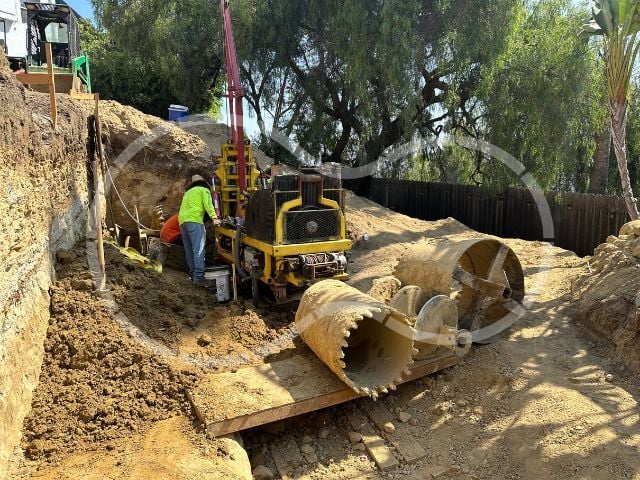
One of the most common drilling surprises is hard rock.
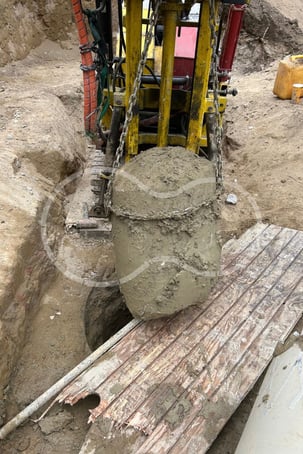
On paper, rock may sound reassuring. In reality, dense bedrock can significantly slow or complicate drilling. Depending on the type and continuity of the material, the drilling crew may need specialized equipment, different tooling, or more time than originally expected. Coring is the solution, yet it is slow and requires special equipment, increasing costs.
A shaft that seemed routine may take far longer to complete once hard rock is encountered. That can affect labor, equipment scheduling, and inspections.
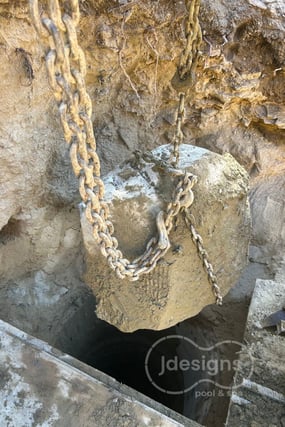
Southern California sites often contain large buried boulders that were not fully identified during preliminary investigation.
Unlike continuous rock layers, isolated boulders create localized obstructions. A shaft may drill normally for part of its length and then encounter a large obstruction directly at the planned location. At that point, the engineer may need to assess whether the shaft should be redrilled, relocated, resized, or addressed with another approved structural solution.
This is one reason field decisions cannot be made casually.
Many homeowners assume groundwater is only a concern near the coast. In reality, water can be encountered in many areas depending on geology, rainfall patterns, local drainage, underground seepage, and seasonal conditions.
When water enters a drilled caisson, it can create a chain reaction of problems: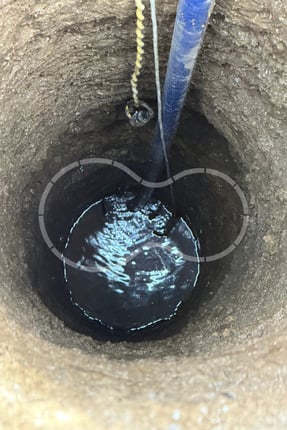
Groundwater is one of the most challenging conditions in deep foundation work because it can affect both safety and constructability.
Some soil profiles appear manageable near the surface, then become looser or less stable as drilling proceeds.
As a shaft gets deeper, sidewall pressure increases. If the soil is weak, fractured, saturated, or poorly bound, material can slough off into the shaft. That can change the shape of the hole, reduce stability, create safety concerns, and prevent the shaft from meeting engineering intent.
This is especially important because foundation work depends on actual conditions at depth, not on assumptions based on the top few feet of soil.
An alternative is to use metal tubing, as shoring to prevent collapse inside the shaft
A cave-in is one of the most disruptive events that can occur during deep foundation drilling.
As depth increases, surrounding pressure rises. If unstable soil, water intrusion, or fractured material is present, parts of the shaft wall may collapse inward. In some cases, the collapse is minor. In others, it can make the shaft unusable until engineers determine the correct next step.
A cave-in typically triggers a pause in work for very good reason: no responsible contractor should proceed blindly once shaft stability is compromised and proper assessment has been done by the soils engineer or city officials.
Difficult conditions do not automatically mean the project cannot move forward. What matters is how the issue is evaluated and managed.
Experienced foundation teams have several methods available, depending on the condition encountered and the direction of the project engineers and inspectors.
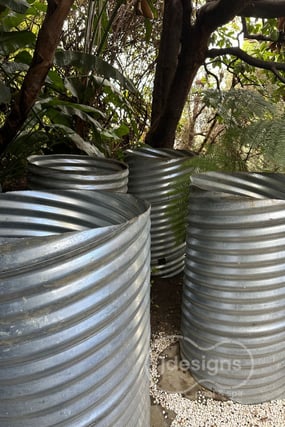
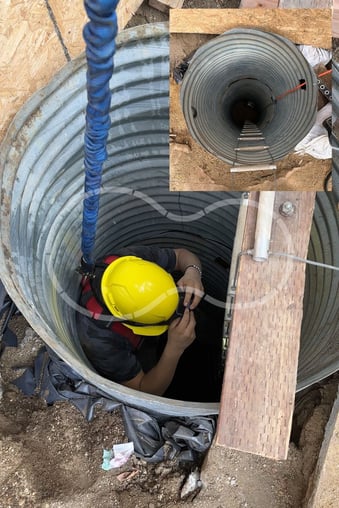
One of the most common stabilization methods is the use of temporary steel shoring tubes, sometimes called casing.
These heavy steel sleeves are inserted into the drilled shaft to support the surrounding soil and reduce the risk of additional collapse. They can help:
In many projects, shoring tubes enable the construction of a shaft that would otherwise be too unstable to use.
When water or unstable soil creates severe sidewall instability, engineers may specify slurry stabilization. In more severe conditions, shoring alone may not solve the problem.
If a shaft experiences repeated collapse or the soil is highly unstable, the engineer may direct the contractor to place lean concrete or controlled low-strength material (CLSM) into the excavation. After it hardens, the crew may re-drill or core through the stabilized zone using a smaller diameter or revised method.
In this method, slurry material is introduced into the excavation to apply pressure against the shaft walls and help hold them in place. This counter-pressure can stabilize the excavation long enough for continued drilling and approved foundation work to proceed. This method requires increasing the shaft size to provide sufficient clearance for the steel cage or structural shaft to be hoisted into place.
This approach can:
It can also add time and cost. However, when used properly, it is often the safest and most effective path forward.
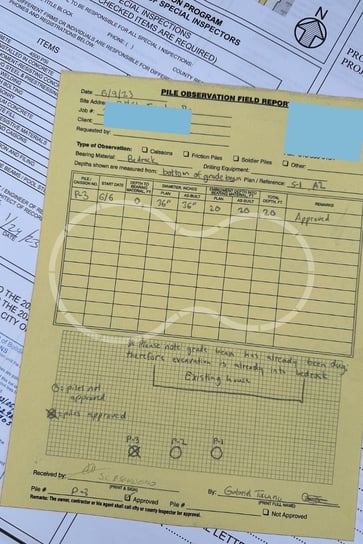
Homeowners are sometimes surprised by how many people may need to inspect or review a problem shaft. In reality, that level of oversight is part of proper construction.
When underground conditions change, multiple professionals may need to evaluate the situation in real time, including:
Depending on the project, these professionals may verify:
This oversight is not bureaucracy for its own sake. It is part of protecting the finished structure and helping ensure compliance with California Building Codes and project-specific engineering requirements.
One of the hardest questions homeowners ask is also one of the most understandable:
“Why wasn’t this discovered before construction started?”
The answer is that some underground conditions simply cannot be fully confirmed until excavation reaches the affected depth.
Even with a thorough soil report, an experienced team, and proper engineering, no contractor can promise exactly what lies 30 or 40 feet below a property in every location. Once new conditions are discovered, additional costs may come from:
That can be frustrating, especially on a high-end project where timing and planning matter.
But those costs exist for an important reason: to protect the foundation, the structure above it, and the investment's long-term performance.
Often, geotechnical engineers are required to be on-site supervising ongoing excavation in real time as well as OSHA officials, incresing the cost significantly. The City of Los Angeles made mandatory this conditions when excavations are done without heavy equipment and by workers that will be inside the shafts.
Sometimes yes. Always, NO.
A well-prepared geotechnical investigation substantially reduces uncertainty. Past construction experience in the neighborhood, topographic context, local geology, and the history of nearby hillside work can all help identify risk.
But uncertainty never disappears completely.
The deeper the excavation goes, the greater the possibility that actual field conditions will reveal something more complex than the initial report suggested. That is simply part of subsurface construction.
The goal is not to pretend uncertainty can be eliminated. The goal is to manage it intelligently.
While no one can remove all subsurface risk, homeowners can take several steps to improve clarity, planning, and peace of mind before construction starts.
For hillside pools and structurally sensitive sites, this should not be treated as optional. The report is foundational to proper engineering. Even on flat lots, we are often required to obtain at least an excavation observation from a geologist, as other conditions, such as expansive soil, may be present, and they will add steps to prevent future structural issues.
A strong answer should include engineering review, documented communication, inspection coordination, and a clear process for field changes.
If the contract is vague about unforeseen site conditions, the financial stress tends to be greater later. Transparency upfront matters.
This is especially important on hillside projects. Even excellent planning does not eliminate every surprise below grade.
You want to hear that the builder coordinates with geotechnical engineers, structural engineers, inspectors, and jurisdictional requirements rather than improvising in the field.
Homeowners benefit from knowing that drilling, inspection, engineering review, and corrective work may sometimes require pauses. That is often part of building correctly, not a sign that the project is off track.
Luxury construction should not mean uncertainty without explanation. It should mean better systems, more transparency, and more thoughtful stewardship of your property.
If unexpected underground conditions arise, homeowners often feel powerless because the problem is out of sight. The best way to stay grounded is to watch how the team responds.
Here are positive signs that the issue is being managed professionally:
By contrast, poor comunication, vague reassurance, pressure to proceed without engineering review, or poor documentation are all reasons for concern.
Many contractors avoid these conversations because they are uncomfortable or simply don't know the answer. Understandably, homeowners do not enjoy hearing about hidden costs or structural uncertainty before a project begins.
But transparency is part of quality construction.
Discussing groundwater, unstable soil, buried rock, and possible cave-ins does not make a project weak. It shows that the team understands the realities of hillside work and respects the importance of informed decision-making.
In well-managed luxury construction, craftsmanship is not only about how the finished pool looks. It is also about how risks are anticipated, how technical problems are solved, and how clearly homeowners are guided through the process.
That is what creates a more stress-free experience and greater peace of mind.
If you remember only a few things from this article, let them be these:
If you are planning a pool on a hillside property, underground conditions are only one part of the larger picture. It is also worth understanding:
The more informed you are before construction begins, the better prepared you will be to protect your investment and make confident decisions.
The most important thing a homeowner can understand before a hillside pool project begins is that the ground below the surface may hold the biggest unknowns of the entire build.
Most projects move forward without major surprises. But when drilling reveals groundwater, unstable soil, boulders, hard rock, or a shaft collapse, the right response is neither guesswork nor panic. It is disciplined engineering, careful inspection, clear communication, and a willingness to adapt.
That is not a sign that the process has failed. It is often the clearest sign that the structure is being taken seriously.
A well-built hillside pool begins with more than a beautiful design. It begins with proper engineering, experienced field judgment, respect for California Building Codes, and a commitment to long-term durability. When those elements are in place, even difficult underground conditions can be addressed with the level of care, transparency, and technical precision that luxury construction deserves.

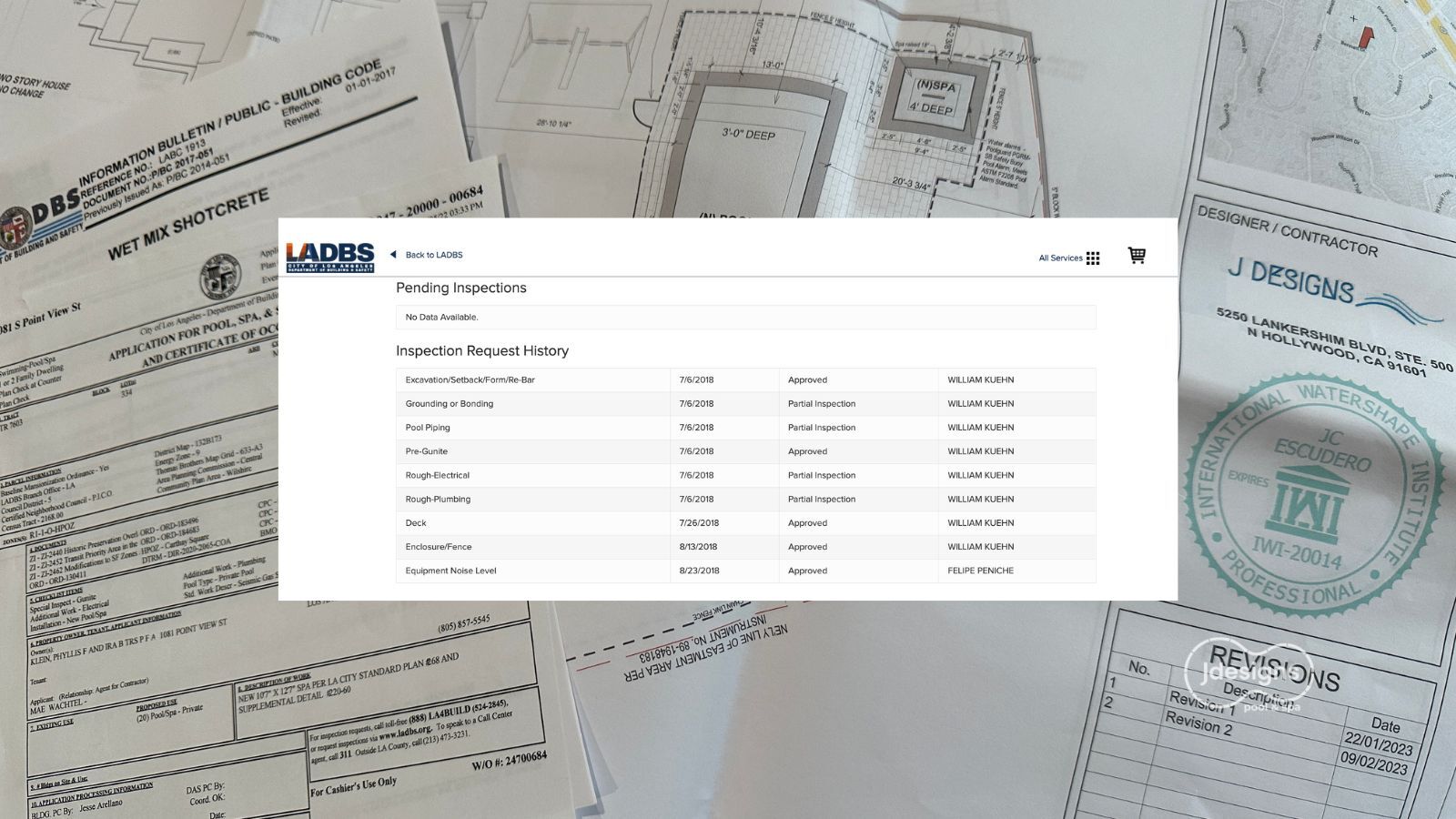
An unpermitted pool in Los Angeles is more than a missing permit. It may also mean there are no approved plans or inspection records confirming how...
 JC Escudero: Sep 2, 2026
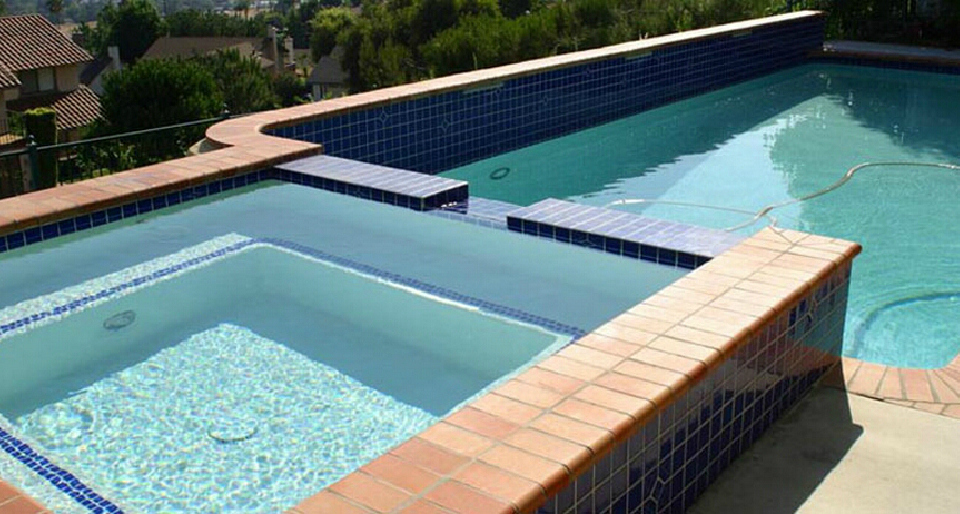
If you own a Spanish Colonial or revival-style home, clay coping can be one of the most beautiful ways to connect your pool while staying true to...
 JC Escudero: Aug 23, 2026
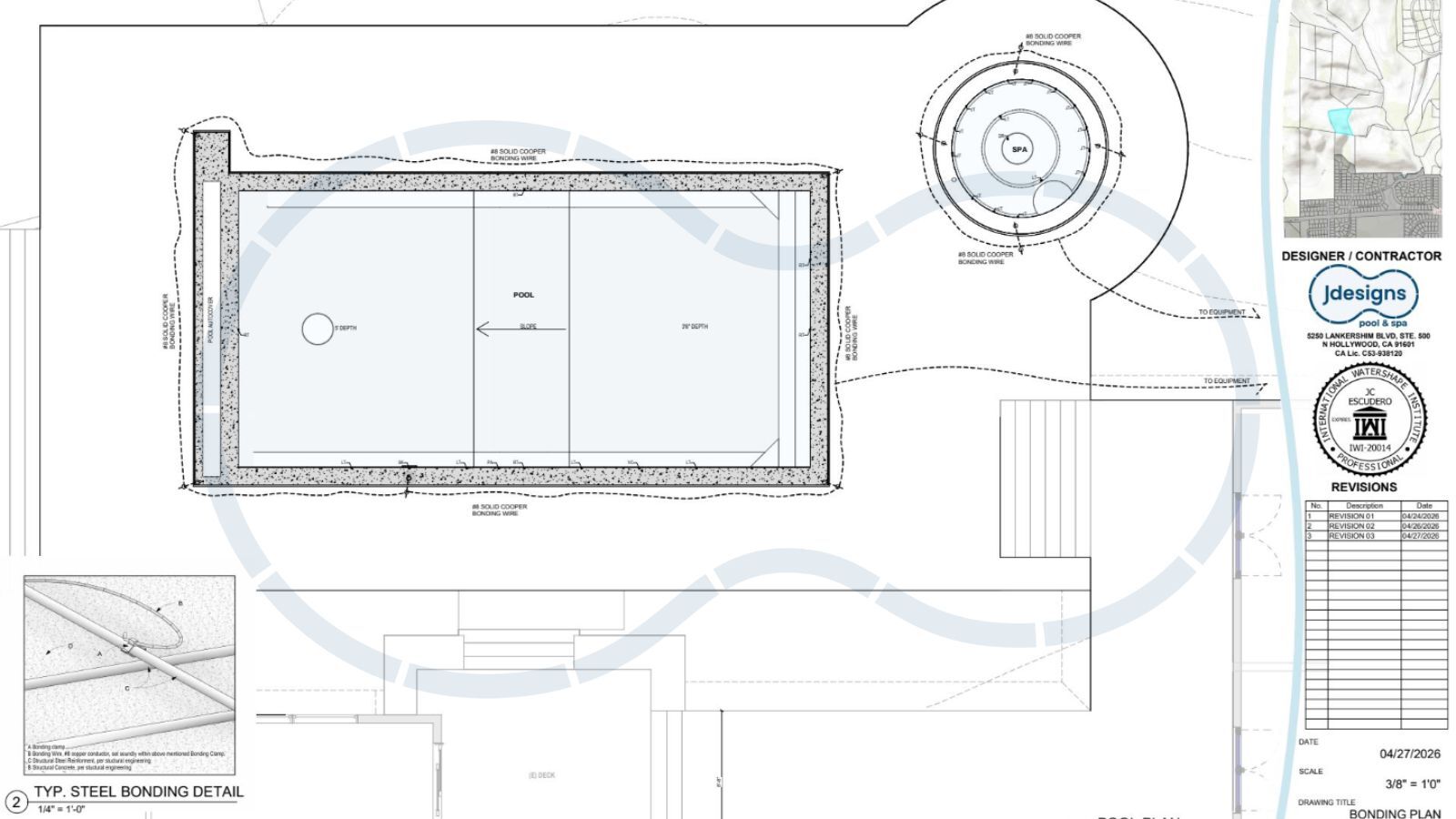
We are all very familiar with the statement that water is an electrical conductor; therefore, this also applies to the pool's surrounding areas and...
1 min read
JC Escudero : Jun 4, 2025
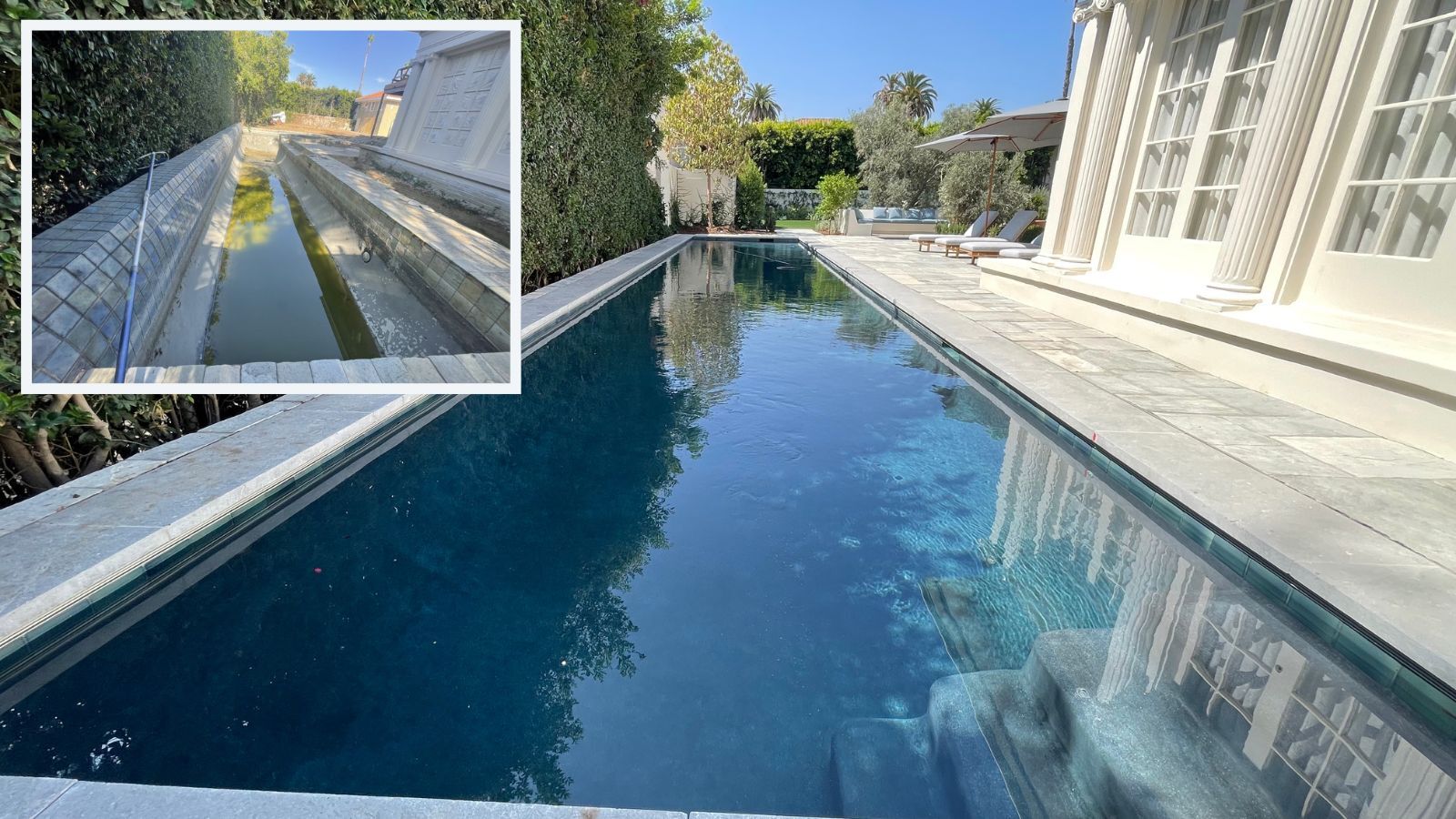
Thinking about remodeling your pool in Los Angeles, but unsure what it will cost? Understanding the real cost, and what drives it up or down, is...
1 min read
JC Escudero : May 10, 2025
Building a pool on a hillside property in Los Angeles can feel both exciting and complex. You may be envisioning a beautiful outdoor retreat with...

1 min read
 Daniela Escudero : May 25, 2026
The allure of customization makes luxury pools stand out, but with flexibility comes risk. Many homeowners believe that, once their pool design is ...