
Stainless Steel Pools in Los Angeles: When Do They Make Sense?
 JC Escudero: Oct 1, 2026
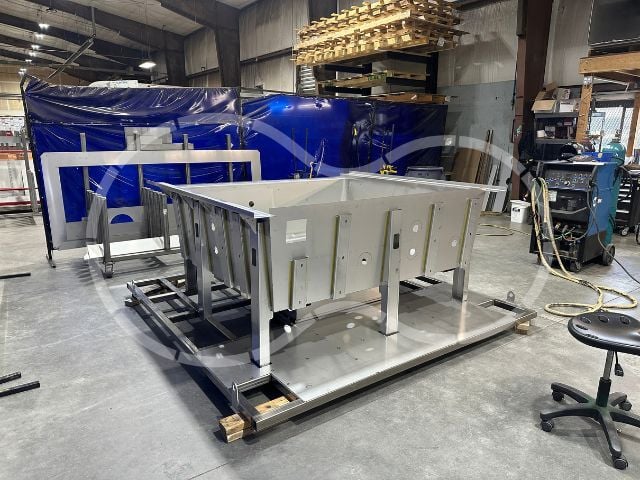
When most homeowners picture a swimming pool, they probably picture a concrete or shotcrete structure built into the ground.
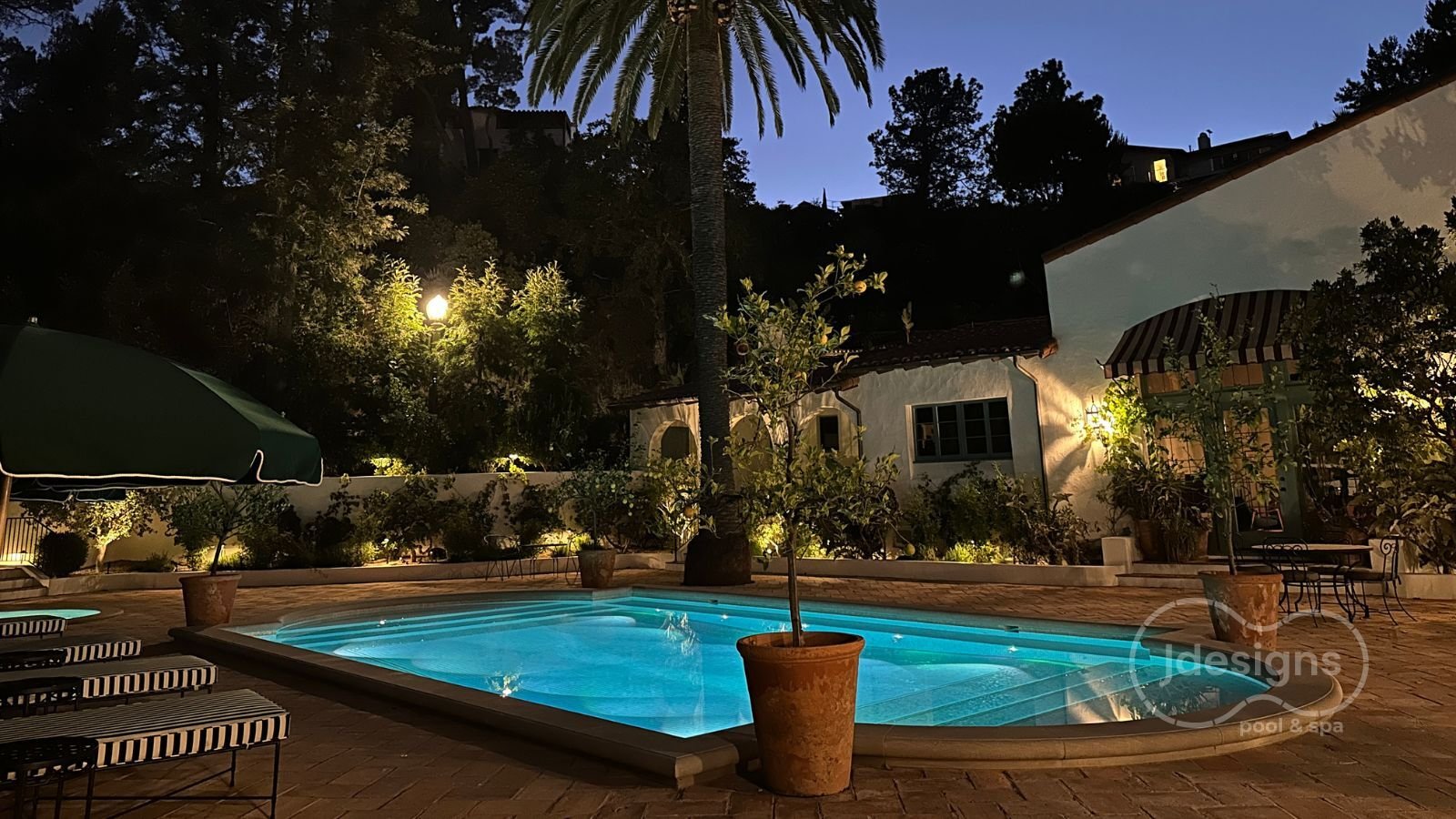
When you start planning a pool in the Los Angeles area, you might run into a frustrating problem. One company quotes you $120,000, while another asks for more than $250,000 for the very same yard with the same finish materials.
This happens because a luxury pool is not just a hole in the ground. It is a highly engineered concrete structure built into your property’s unique land and soil. Because every yard is different, pricing is never one-size-fits-all. If you do not understand your soil, city codes, and material options before signing a contract, you could face significant, unexpected costs mid-construction.
Since 2008, J Designs Pool & Spa has built custom pools across LA’s most challenging landscapes, from flat coastal lots to steep hillside estates. Below, we break down the exact factors that set the baseline price for a luxury pool in 2026. We will also look at hidden building costs and give you a simple framework to plan your budget with confidence.
To build a realistic budget, you must separate the basic pool structure from additional design upgrades and the total backyard hardscape and landscape.
Older online articles might claim that in-ground pools cost much less. However, high-end, custom architectural builds use entirely different engineering standards. Our 2026 price estimates are based on real project data from recent luxury pool builds right here in the Greater Los Angeles Area.
When we talk about a $120,000 to $250,000 price range, we assume the project includes this basic building package:
Picking the lowest bidder just to save money on this basic structure is highly risky. In Southern California, the ground shifts and shakes. Cutting corners on engineering or concrete often leads to cracking, leaking, failed city inspections, and incredibly expensive repair bills later on.
In Los Angeles, your property’s geography dictates your baseline price. Neighborhoods in the Hollywood Hills, Bel Air, Studio City, or Malibu face tough building limits.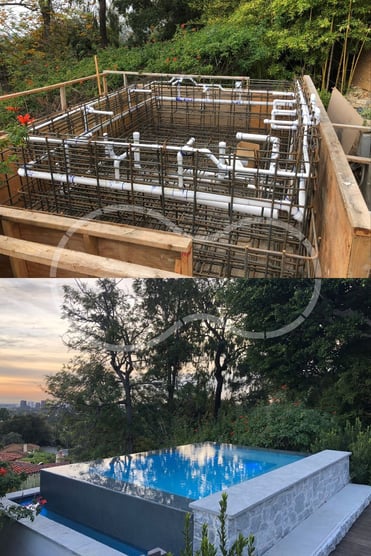
Properties near active fault lines or built on moving clay soils require extra engineering sign-offs. If your yard sits on a slope, city building codes usually mandate deep-foundation support. This means pillars (called caissons) and thick concrete beams (called grade beams) need to be drilled into the hillside to securely anchor the pool to solid bedrock.
Physical access also changes excavation prices. If big trucks cannot drive into your backyard, contractors must use cranes or conveyor belts to move dirt out and bring concrete in. This adds manual labor and time.
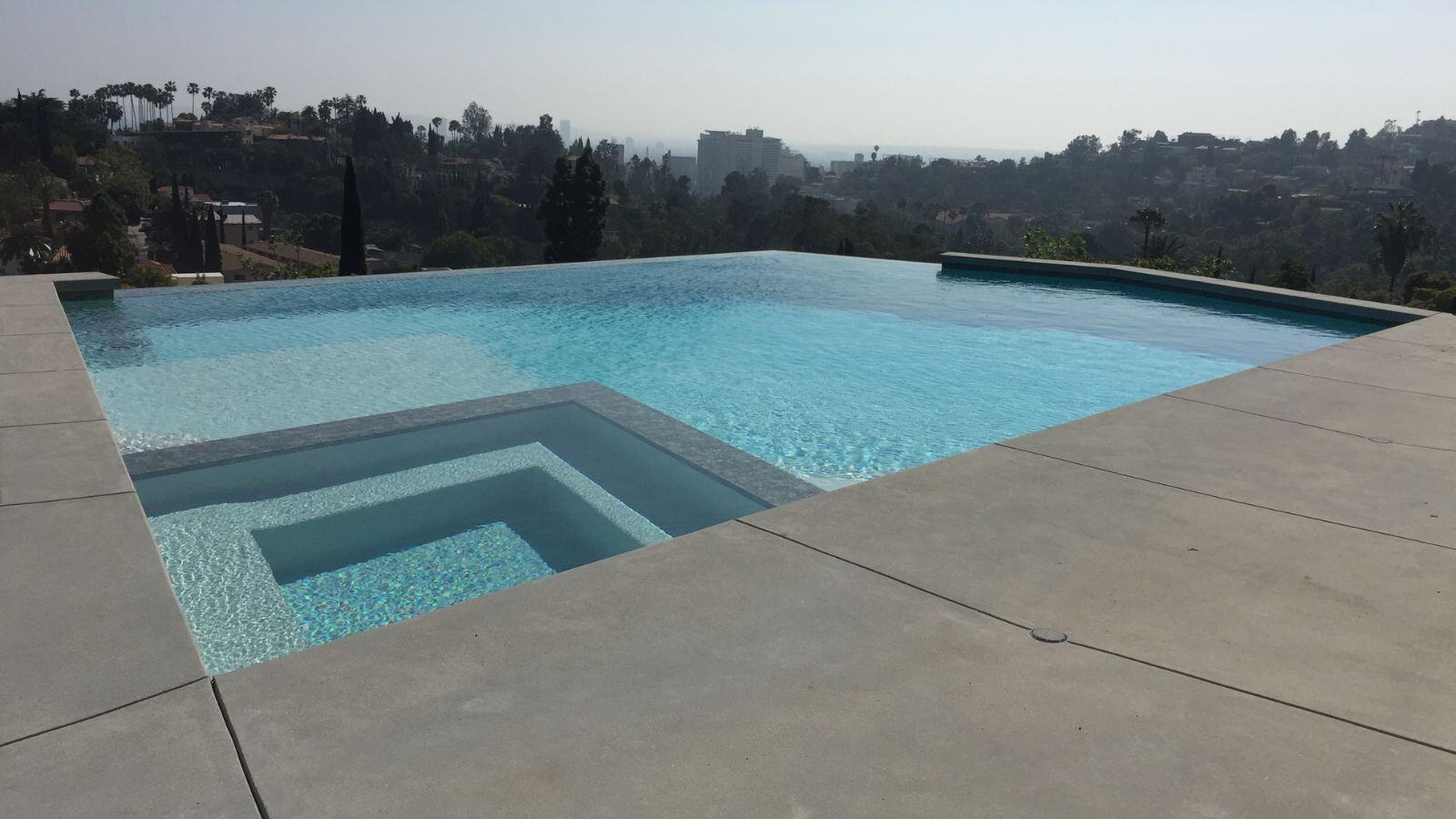
The water's surface area and the shape's complexity determine how much material and how many hours of labor the pool requires. Clean rectangles require exact layout skills, but freeform curves and advanced features like vanishing edges (infinity edges) require complex plumbing calculations and specialized wood forming work.
This phase turns a raw concrete shell into a beautiful feature that matches your home. You should pick materials based on how they look and how long they last.
The mechanical equipment acts as the brain and lungs of your pool. It controls your energy bills, water clarity, and daily maintenance. Cheap equipment packages save money today but lead to high electricity bills and breakdowns within five years.
At J Designs Pool & Spa, we always specify and build with premium equipment packages. This ensures your system connects seamlessly to your smartphone and runs reliably.
One of the most misunderstood costs in a custom pool project is the design phase itself. Some homeowners see detailed plans, elevations, hydraulic and equipment layouts, and site drawings as optional or excessive.
In reality, they are one of the clearest forms of protection in the entire project.
A complete design package is not just about showing what the pool will look like. It is the working document
that builders, engineers, city officials, and subcontractors rely on to build accurately, review for compliance, and coordinate each trade. In practical terms, detailed plans serve as an insurance policy for the homeowner. They reduce guesswork, protect the original intent of the project, and help prevent costly mistakes that are much harder to fix once concrete, plumbing, and hardscape are already in place.
When construction starts without detailed schematics and site plans, the field often fills in the gaps with assumptions. That is when homeowners end up with improvised steps, benches that are too shallow to sit on comfortably, tanning ledges that do not function as intended, awkward transitions between the house and the pool deck, and equipment areas squeezed into leftover space rather than planned properly. These are not small cosmetic issues. They affect how the backyard lives, how the pool performs, and how much rework may be required later.
In Los Angeles, where projects often involve slopes, tight access, structural review, and multiple outdoor features, design accuracy matters even more.
The cost of good planning is almost always far less than the cost of corrections, delays, or change orders caused by incomplete or non existent documents.
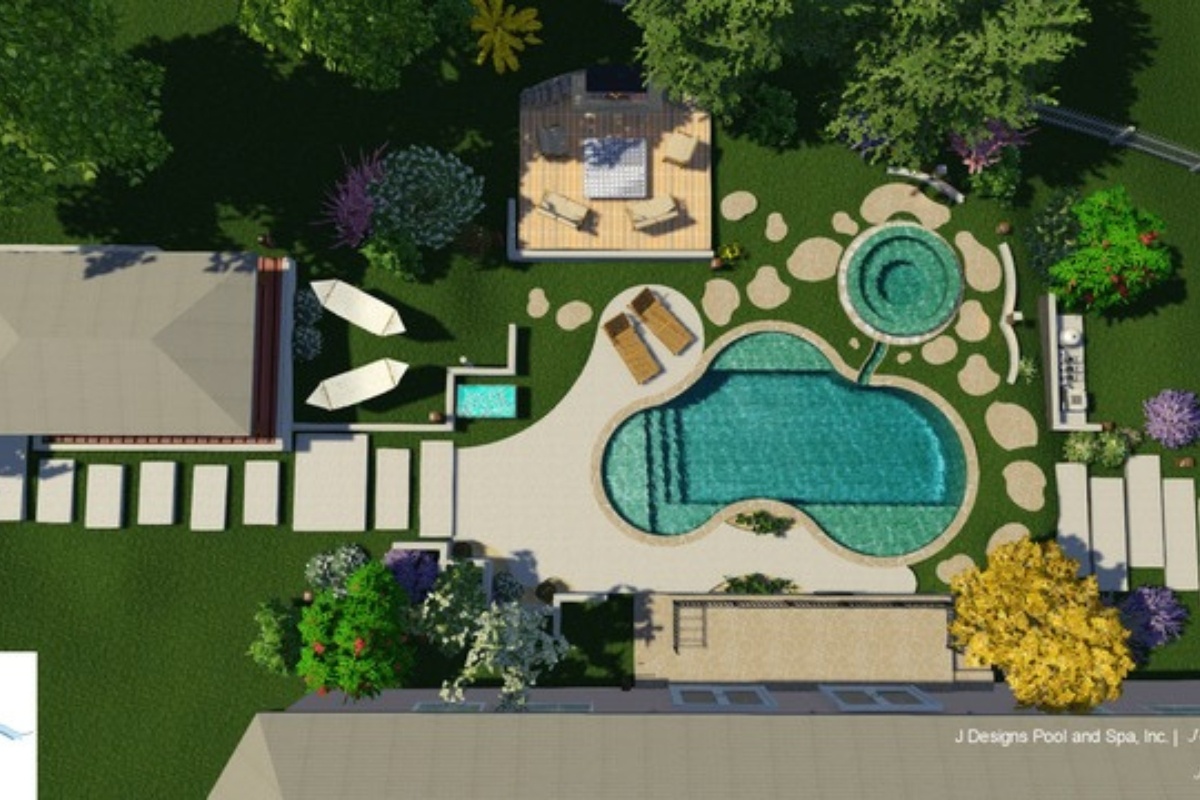
For homeowners trying to compare bids fairly, this is an important distinction. A lower estimate may not include the same level of design detail, coordination, or Comprehensive 3D Renderings needed to deliver a finished backyard with accuracy, compliance, and long-term value.
Another reason pool estimates vary by thousands of dollars is that not every proposal accounts for the same permitting and compliance requirements. In Los Angeles, the cost of construction is not determined by materials and labor alone. It is also shaped by what the city requires for review, approval, inspections, and code compliance.
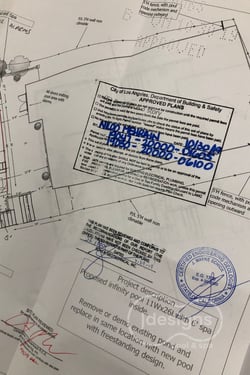
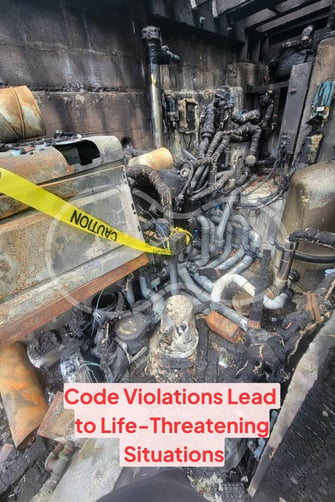
Depending on the property and scope, a pool project may require plan check review, structural engineering approval, grading-related documentation, drainage considerations, safety barrier compliance, and multiple inspections during construction. On hillside or complex properties, those requirements often become more involved. If revisions are needed during plan review, or if the original design did not clearly anticipate local requirements, the project can incur additional design fees, delayed starts, schedule disruptions, and failed inspections, to name a few.
This is where experienced pre-construction planning creates real value. Builders who understand California Building Codes and local review standards can often identify issues before they become delays in the field. That helps homeowners build with more confidence and fewer surprises. It also reinforces the point that two proposals that appear similar at first glance may not cover the same scope. One estimate may reflect a more realistic path to compliance, while another may leave important requirements to be solved later.
For homeowners, the lesson is simple: permit-related costs are not just administrative line items. They are part of what it takes to build correctly, pass inspections, and move a project forward without avoidable setbacks.

A pool budget can look reasonable on paper and still feel incomplete once the rest of the backyard is considered. That is because the pool itself is only one part of the final environment. In many Los Angeles projects, the true investment comes from how the pool integrates with decking, drainage, retaining walls, lighting, outdoor kitchens, shade structures, fire features, landscape, and circulation space.
This is one of the biggest reasons homeowners become frustrated during the estimating process. They may receive a price for the pool shell and core equipment, but not for the work needed to make the entire backyard function as one cohesive outdoor space. Once those adjacent elements are added, the total investment changes significantly.
For example, a project may require new retaining walls to support grade transitions, added drainage to protect hardscape and structures, upgraded pathways for safe circulation, or a pergola to make the space usable during hotter parts of the day. Outdoor kitchens, fire pits, patio heating, and landscape lighting can also add meaningful cost, especially when they require coordinated gas, electrical, drainage, and finish work. None of these items is secondary when the goal is to create a refined, usable outdoor living space. They are often essential parts of the overall plan.
This is why homeowners should separate the cost of the pool itself from the total cost of the backyard transformation. A clear proposal should help identify that difference. Otherwise, a project that seemed affordable early on can grow rapidly once the surrounding space is designed and priced properly.
In Southern California, many homeowners focus on sun exposure, views, and finish materials when planning a backyard. Those matter, but water management often has a greater effect on long-term performance than people expect. If drainage is not handled correctly, even a beautiful new pool environment can develop expensive problems over time.
Backyards with elevation changes, retaining conditions, raised planters, or hillside transitions require careful planning for how water will move during rain, irrigation, and routine use. Surface runoff, deck drainage, planter overflow, and subsurface moisture must be considered before construction begins. If they are not, water can collect in the wrong areas, affect adjacent hardscape, place stress on structures, and contribute to movement, staining, or premature deterioration.
Drainage design is also closely tied to usability. A deck that looks elegant on paper can become uncomfortable or unsafe if water collects near steps, seating areas, or access paths. Poor drainage planning can also create conflicts between the pool, landscape, and surrounding architecture. These issues are rarely inexpensive to correct after the fact because they often involve demolition, regrading, or rebuilding finished work.
This is another reason detailed site planning matters so much. A well-designed backyard not only looks balanced. It also manages water intelligently. That protects both the investment and the day-to-day experience of using the space.
Not every backyard is equally easy to build in, and in Los Angeles, that difference can be dramatic. Access conditions affect excavation, forming, steel delivery, shotcrete placement, hardscape installation, and cleanup. When the site is difficult to reach, labor and logistics increase quickly.
A flat property with open side-yard access is much more straightforward than a hillside property, a narrow urban lot, with no street parking, or a home where trucks and equipment cannot reach the backyard directly. In those situations, contractors may need to use conveyor systems, cranes, hand-carry methods, or extended staging strategies to move dirt, steel, concrete, and finish materials safely through the property. That takes more time, more labor, and often more coordination, even additional right-away permits, and traffic control services.
Jobsite logistics also affect protection costs. Existing driveways, walls, gates, and finished areas may need to be protected during construction. Parking restrictions, neighborhood limitations, and distance from the street can all influence production efficiency. These are not glamorous line items, but they are real cost drivers that separate a straightforward project from a difficult one.
When two estimates differ significantly, access and logistics are often part of the story. One builder may be pricing the actual conditions of the site, while another may be underestimating the difficulty of getting the work done properly.
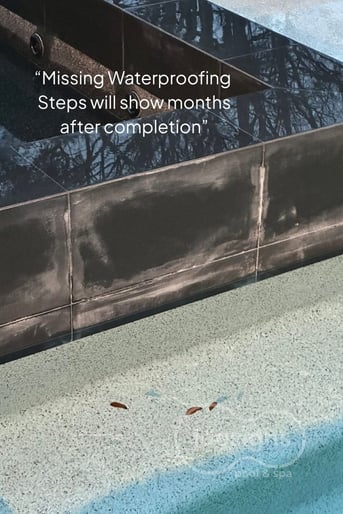
Some of the most disappointing pool projects are not the ones with the most visible defects. They are the ones that were built cleanly, but never planned well enough to feel right when people start using them.
Functional design affects comfort, safety, and long-term satisfaction. Step placement, bench depth, tanning ledge dimensions, swim space, furniture clearances, shade planning, and the relationship between the pool and the house all matter. If these details are not resolved during design, the finished backyard may technically be complete but still feel compromised.
Homeowners often notice these issues only after the pool is finished, specially when critical steps were not included.
The entry steps may be too narrow or awkward. The bench may be too shallow to relax on. The Baja shelf may not fit the furniture intended for it. Walkways may feel tight during entertaining. A fire feature or outdoor kitchen may look impressive but interrupt circulation or sightlines. These are the kinds of mistakes that make a backyard feel less luxurious, less usable, and less tailored than expected.
This is why Customized Design should never be reduced to appearance alone. A well-designed pool backyard should support how the homeowner wants to live, entertain, relax, and move through the space. Good design protects daily usability just as much as it protects aesthetics.
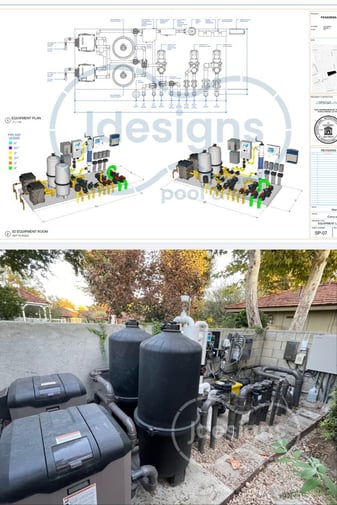
Pool owners often focus on what equipment is being installed, but where that equipment goes and how it is laid out can matter just as much. A premium equipment package can still lead to long-term frustration if it is selected without sufficient consideration of service access, hydraulic efficiency, noise control, and future maintenance.
Equipment areas need to be planned in relation to the house, yard, plumbing runs, and utility connections. Long or inefficient plumbing routes can reduce performance and increase operating costs. Tight equipment pads can make service more difficult and lead to unnecessary labor later. Poor placement near windows, seating areas, or property lines can also create noise and usability issues that were avoidable during design.
This is especially important in luxury projects where automation, heaters, advanced sanitation systems, water features, and integrated controls are part of the plan. As systems become more sophisticated, coordination becomes more important. Homeowners are not just paying for equipment. They are paying for a system that should be reliable, efficient, and serviceable for years to come.
That is why the best proposals do not only list products. They reflect planning. They consider hydraulics, access, layout, and long-term maintenance from the beginning rather than treating the equipment area as an afterthought.
Many pool estimates focus on materials, labor, and visible upgrades, but one of the most important cost factors is how well the project is managed from start to finish. Even a strong design can suffer if scheduling, communication, and trade coordination are weak.
Pool construction in Los Angeles often involves multiple specialists, including designers, engineers, excavators, steel crews, plumbers, electricians, shotcrete crews, tile installers, hardscape teams, landscapers, and inspectors. If these phases are not sequenced properly, delays and rework can occur quickly. A missed detail in one trade can create extra cost for the next.
This is why experienced project management is not just a convenience. It is part of cost control. Clear scheduling, timely selections, coordination between trades, and active oversight help reduce mistakes and protect quality. It also gives homeowners greater Transparency throughout the project, which is critical when managing a large backyard investment.
When comparing estimates, homeowners should remember that price is not the only variable. The process behind the price matters too. A well-managed project is more likely to stay aligned with the original vision, maintain compliance, and avoid disruptions that can turn a promising estimate into a stressful experience.
Many surprise costs in pool construction do not come from luxury upgrades. They come from gaps in planning.
Missing design details, unclear scope, incomplete site evaluation, and unrealistic assumptions often force homeowners into mid-project decisions that increase the budget.
A proposal can appear competitive at the beginning, but if it does not account for realistic site conditions, proper engineering, access needs, drainage coordination, or the level of finish integration the homeowner expects, the final cost can move far beyond the original number. That does not always mean anyone acted in bad faith. Sometimes it simply means the project was not defined with enough precision early on.
This is why experienced homeowners, architects, and construction professionals place so much value on the pre-construction phase. The more clearly the project is designed and documented before work begins, the easier it becomes to compare bids fairly, coordinate trades accurately, and build with confidence. In a high-value backyard environment, planning is not separate from cost. Planning is one of the main ways to control costs.
If you are comparing pool proposals in Los Angeles, the smartest next step is "not to chase" the lowest number. It is to understand exactly what each builder has included, what has been left out, and how thoroughly the project has been planned. A well-designed pool and backyard should be priced with real site conditions, clear documents, accurate engineering, and coordinated scope in mind. If you want clarity before you commit, schedule a design and project review with J Designs Pool & Spa.
This is one of the most effective ways to compare bids fairly, identify hidden costs early, and move forward with greater confidence in your investment.

 JC Escudero: Oct 1, 2026
When most homeowners picture a swimming pool, they probably picture a concrete or shotcrete structure built into the ground.
 JC Escudero: Sep 26, 2026
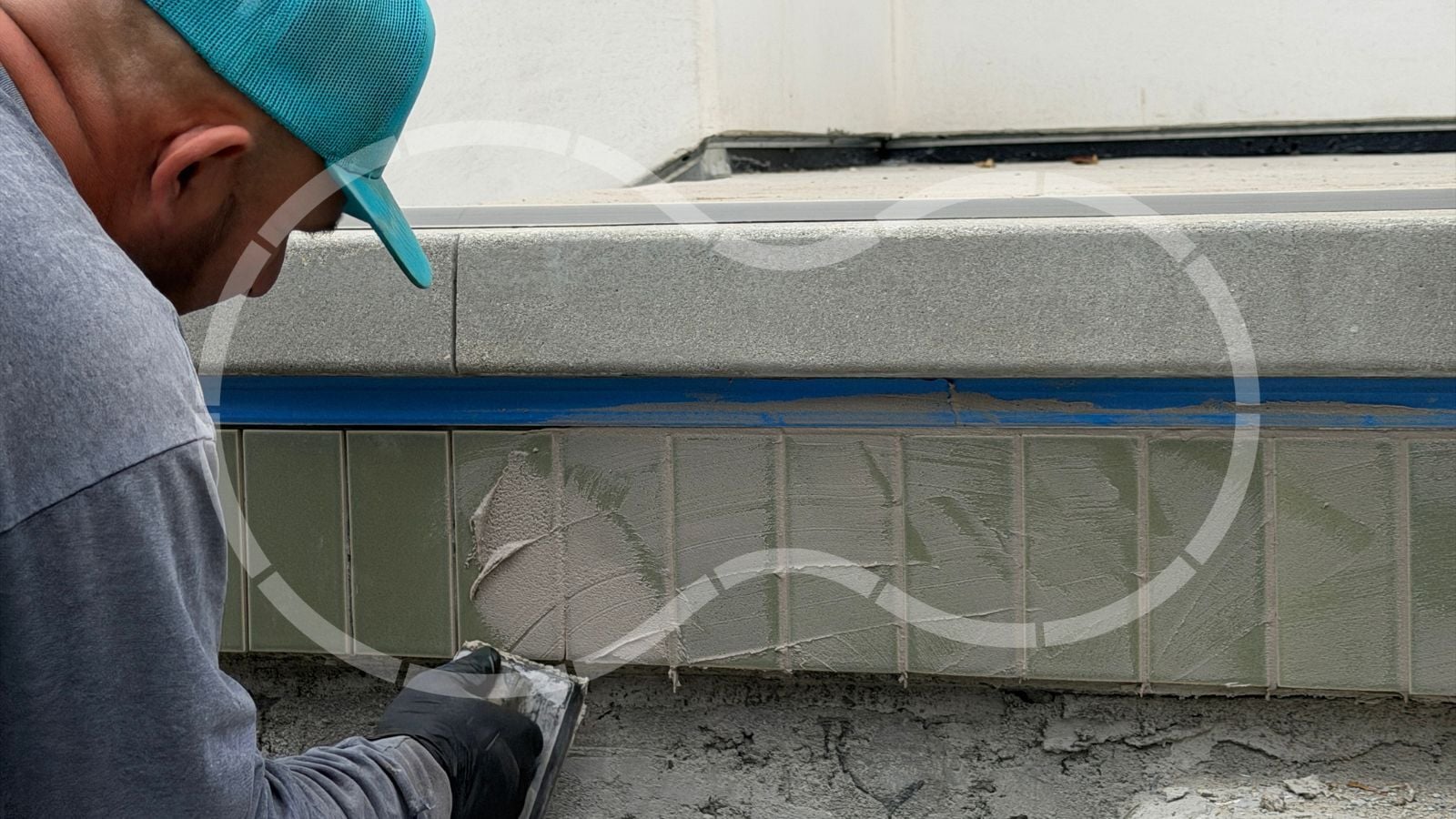
When most homeowners choose tile for a swimming pool, they naturally focus on the tile itself: the color, shape, texture, and overall design, because...
 JC Escudero: Sep 23, 2026
Planning a custom pool involves dozens of decisions about shape, depth, materials, and features. Get one wrong, and you could face expensive rework...
 Daniela Escudero : Apr 25, 2025
Explore pool hardscape options like grass, concrete, pavers, and pedestal decking. Learn costs, pros & cons, and drainage tips for your perfect...
 Daniela Escudero : Dec 16, 2022
Looking to build the pool of your dreams in LA, but don’t know how much a pool costs in 2023? Click here to see 3 main factors impacting your pool...
 JC Escudero : Jun 4, 2025
Learn what really drives pool remodeling costs in Los Angeles. From materials equipment permits or shortcuts. Here's what to know in 2026 before you...