
Stainless Steel Pools in Los Angeles: When Do They Make Sense?
 JC Escudero: Oct 1, 2026
When most homeowners picture a swimming pool, they probably picture a concrete or shotcrete structure built into the ground.
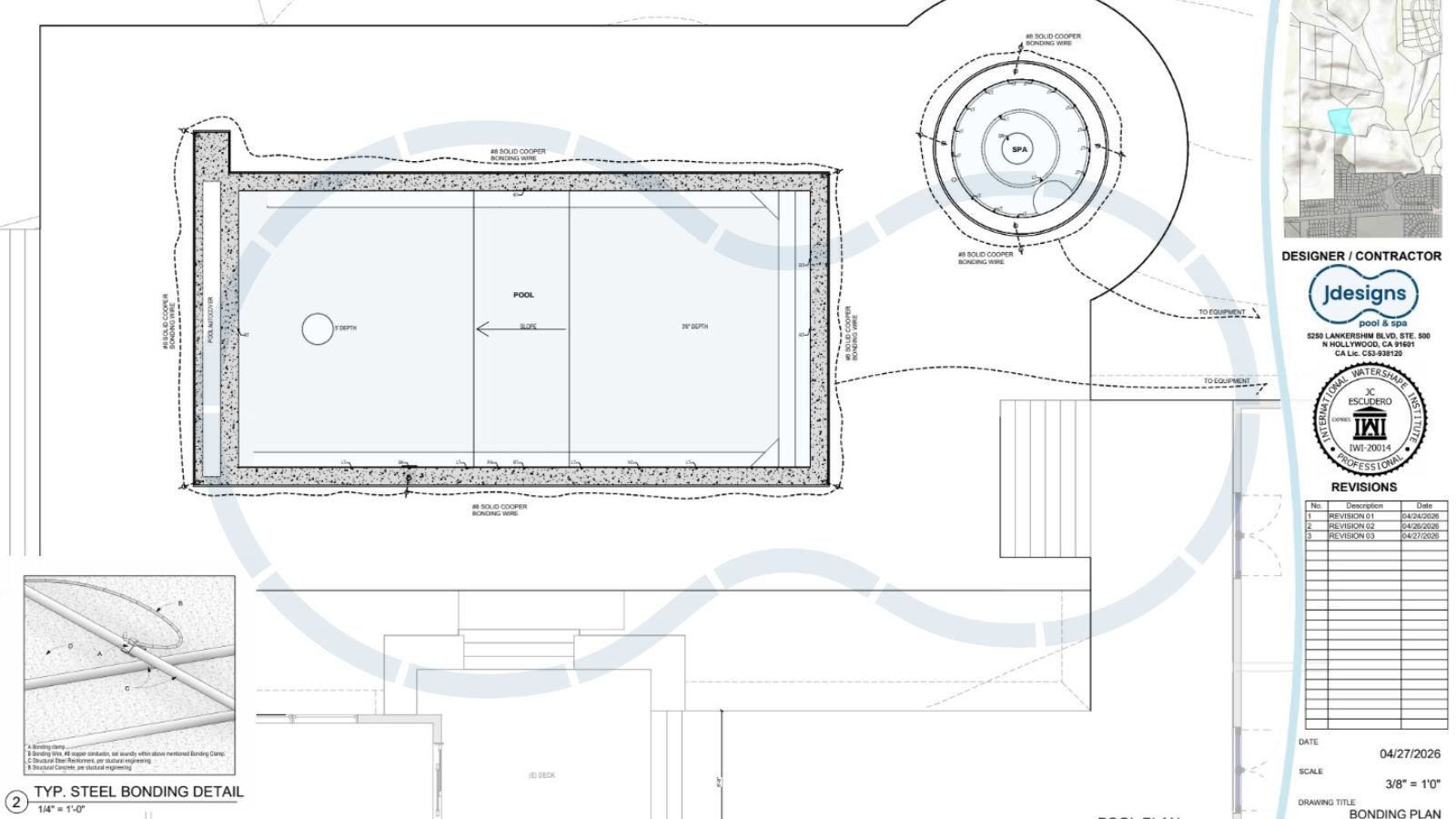
We are all very familiar with the statement that water is an electrical conductor; therefore, this also applies to the pool's surrounding areas and metal components. Before a pool deck is poured, one of the most important safety inspections takes place- an inspection most homeowners will never see once construction is complete.
Look closely at a pool under construction, and you may notice a bare copper conductor looping around the pool shell and connected to the reinforcing steel. It may look like ordinary wire, but it is part of the pool’s equipotential bonding system, which helps connect conductive components around the pool and reduce dangerous potential differences. Because this system is concealed beneath the deck, verifying the continuous bonding grid, approved connections, and required bonding points before concrete placement is essential. Once the deck is poured, a hidden mistake can be difficult, disruptive, and costly to correct.
At J Designs Pool & Spa, we treat this inspection as a critical part of responsible pool construction, not simply another box to check. It is one of the five major inspections we schedule for every new or renovation pool project, helping support code-compliant construction, long-term performance, and peace of mind for the families who will enjoy the pool for years to come.
That bare copper conductor is not simply an extra electrical wire. It is part of the pool’s equipotential bonding system, a required safety network for permanently installed swimming pools under the National Electrical Code (NEC), Article 680.26. Bonding and grounding are related, but they are not the same. Grounding provides a path for electrical fault current to return safely to the electrical system. Equipotential bonding serves a different purpose: it electrically connects the pool’s conductive components so they remain at the same electrical potential.
This distinction is especially important around a pool. If conductive surfaces were at different electrical potentials, a person in the water could unintentionally become part of the path between them. By connecting the required components into a single continuous network, equipotential bonding helps minimize potentially dangerous voltage differences, often called voltage gradients, in the wet environment around a pool.
For homeowners, the key point is simple: grounding helps clear electrical faults, while bonding helps prevent voltage differences from developing between surfaces people may touch. Both systems are essential, and neither replaces the other. That is why the bonding system must be installed correctly and inspected before it disappears beneath the deck.
For a pool to be safe, the water, reinforcing steel, handrails, lighting components, equipment, and nearby conductive surfaces should not be left at different electrical potentials. If a voltage difference exists, a person in or near the water could unintentionally become part of the path for electrical current when touching two conductive surfaces.
Water and wet skin make it easier for electric current to flow, which is why even a small voltage difference warrants careful attention around a swimming pool. Equipotential bonding addresses this risk by connecting the required conductive components into one continuous network, helping them remain at substantially the same electrical potential.
Think of the bonding system as an invisible safety network beneath and around the pool. It does not replace grounding or other protective devices, but it works alongside them to reduce the possibility of a dangerous voltage gradient developing where people swim, walk, and gather. For Los Angeles homeowners, verifying this system before the deck is poured is an important part of building a pool that delivers not only beauty, but also code-conscious safety and peace of mind.
The current National Electrical Code (NEC), requires all conductive components around a permanently installed pool to be bonded together using:
These requirements are found in NEC 680.26(B). The bonding conductor itself does "not" connect to a grounding rod or electrical panel. This surprises many homeowners.
In fact, the NEC specifically states that the equipotential bonding conductor is not required to extend to or be attached to any panelboard, service equipment, or grounding electrode. Its purpose is to create one continuous bonding grid, not to serve as the building's grounding system.
The #8 Copper Bonding Grid Is One of the Most Important Safety Features You'll Never See
In Los Angeles, one of the most recognizable parts of this inspection is the continuous #8 solid copper wire attached to the pool reinforcing steel, and the 3’ grid measured from the water's edge.
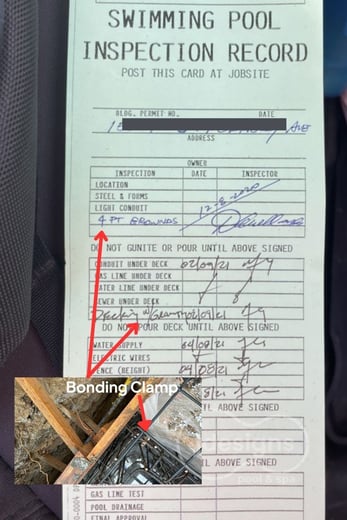
For concrete pools, NEC 680.26(B)(2) requires the perimeter bonding system to be attached to the reinforcing steel at a minimum of four uniformly spaced points around the perimeter of the pool to the 3’ grid around the pool’s perimeter.
Those four connections help ensure that the reinforcing steel and the surrounding deck form a single continuous equipotential bonding system.
During inspection, the city verifies that:
Once concrete covers these connections, they cannot be visually inspected again, which is why this inspection is critical.
The pool shell is only one part of the system.
The NEC also requires bonding of many conductive components that could become energized, including:
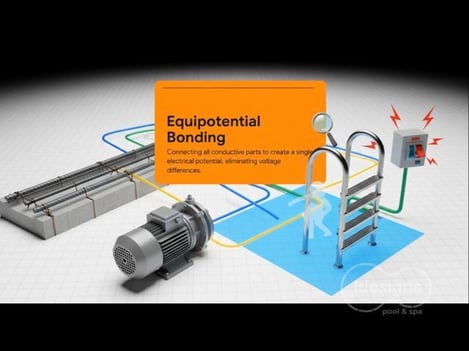
Everything conductive that someone could reasonably touch around the pool should remain at the same electrical potential.
Grounding and bonding serve different purposes.
A properly grounded electrical system can still have dangerous voltage differences around a pool if the bonding system is missing or incomplete.
Concrete pools absolutely require equipotential bonding because reinforcing steel becomes a major part of the bonding network.
In reality, this inspection verifies the operation of one of the most important hidden safety systems in the entire project.
Once the deck is poured, mistakes become extremely expensive, or impossible, to correct.
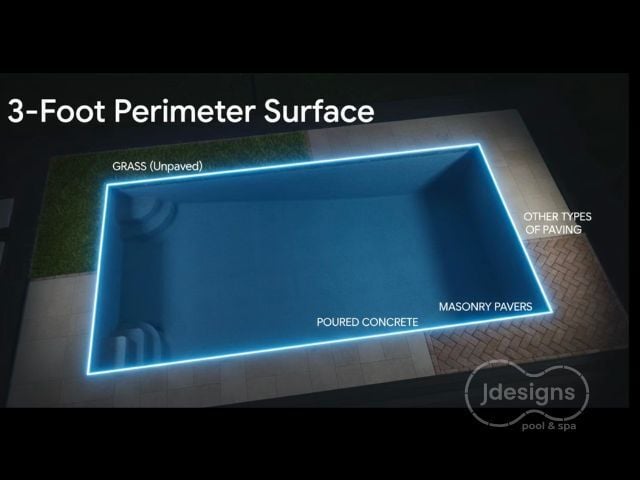
If you selected a material other than a concrete deck for the pool’s deck and you will use pavers or just simple grass up to the pool’s coping, you still need to add the #8 wire that extends 3’ around the pool and is connected to the 4 points, as electricity makes no distinction between the deck material.
Installing a bonding system isn't simply about running a copper wire.
The installer must understand: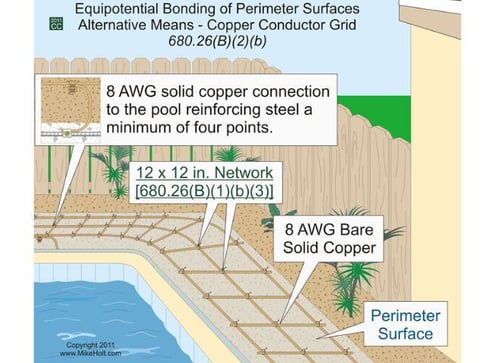
A missed connection, improper clamp, or incomplete bonding path may not be obvious after construction is complete, but it can affect the pool's long-term safety and code compliance.
Homeowners often focus on the visible parts of a swimming pool: tile, plaster, lighting, and water features. Yet some of the most important work disappears forever beneath the concrete.
Equipotential bonding is one of those hidden systems.
Although you'll never see it after construction, it helps create a safer environment by reducing dangerous voltage differences around the pool and bringing the entire installation into compliance with the National Electrical Code.
At J Designs Pool & Spa, we believe homeowners deserve to understand what's behind the concrete, not just what they see when the project is finished.
No. Grounding and equipotential bonding serve different purposes. Grounding helps clear electrical faults, while equipotential bonding minimizes voltage differences around the pool by electrically connecting conductive components together.
The NEC specifies a minimum #8 AWG solid copper conductor because it provides a durable, continuous bonding path that connects all required conductive components of the pool system.
Yes. Older pools may have been built under previous editions of the electrical code or, in some cases, without permits. If you're remodeling an older pool in Los Angeles, your project may trigger upgrades to comply with the current California Electrical Code and local inspection requirements.
Because once the deck is poured, the bonding system is hidden forever. Verifying that it is installed correctly before concrete placement helps ensure the pool meets current code requirements and provides the intended level of electrical safety for years to come.
Our next article explains Pool Permits: Everything you need to know, and if you're ready to start you project click below to book your consultation.

 JC Escudero: Oct 1, 2026
When most homeowners picture a swimming pool, they probably picture a concrete or shotcrete structure built into the ground.
 JC Escudero: Sep 26, 2026
When most homeowners choose tile for a swimming pool, they naturally focus on the tile itself: the color, shape, texture, and overall design, because...
 JC Escudero: Sep 23, 2026
Planning a custom pool involves dozens of decisions about shape, depth, materials, and features. Get one wrong, and you could face expensive rework...
 JC Escudero : Oct 15, 2025
Learn why bonding, grounding, and licensed electrical work are essential for safe, code-compliant pool construction and renovation.

 Daniela Escudero : Sep 17, 2025
Palos Verdes landslides are accelerating. See what the 2025 building ban means for pools, property values, and homeowner options in Rancho Palos...
 JC Escudero : Oct 4, 2025
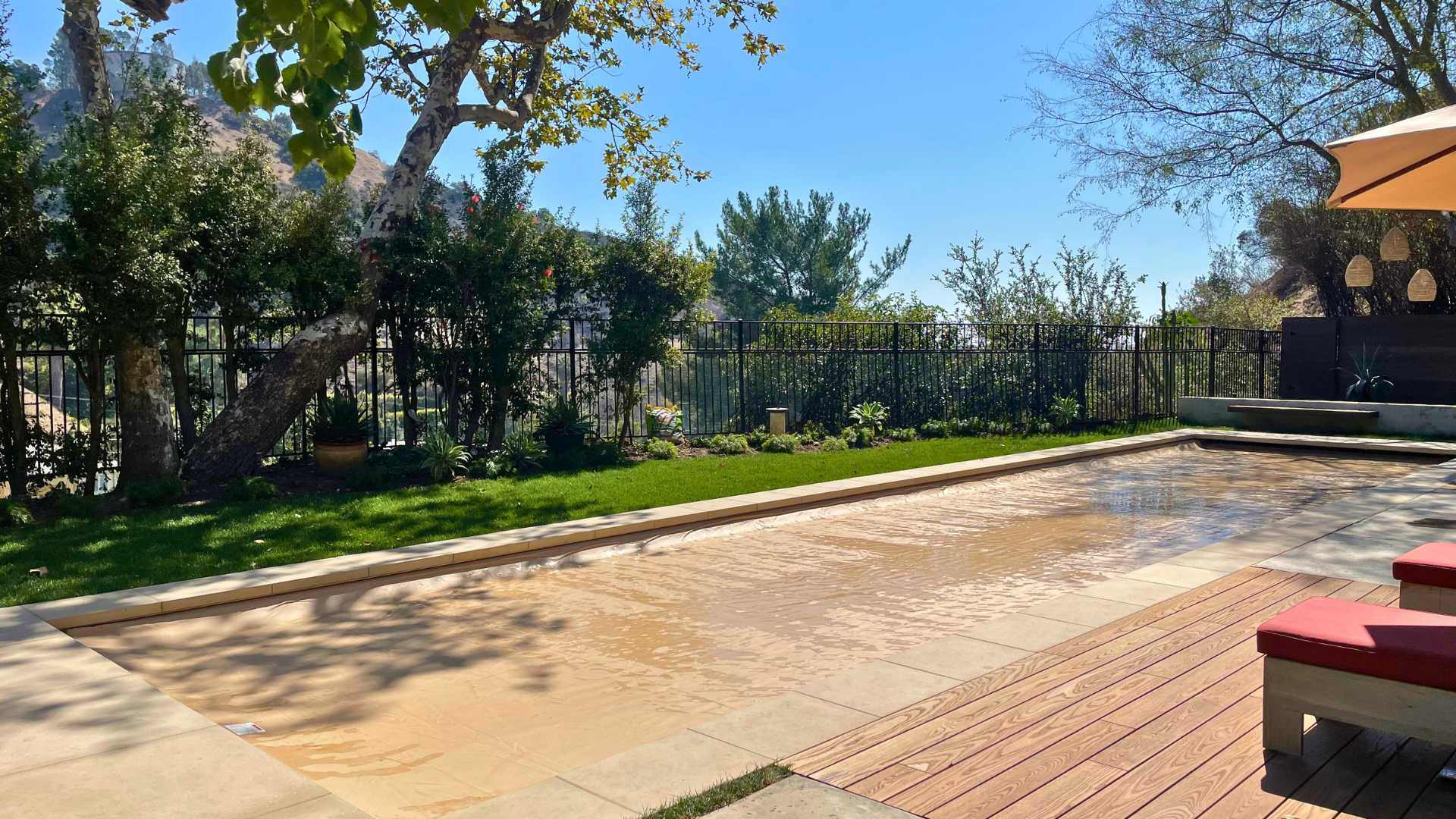
Thinking about an automatic pool cover? Learn about cover types, real installation costs, safety features, and what to expect before you buy.