
Stainless Steel Pools in Los Angeles: When Do They Make Sense?
 JC Escudero: Oct 1, 2026
When most homeowners picture a swimming pool, they probably picture a concrete or shotcrete structure built into the ground.
When most homeowners picture a swimming pool, they probably picture a concrete or shotcrete structure built into the ground.
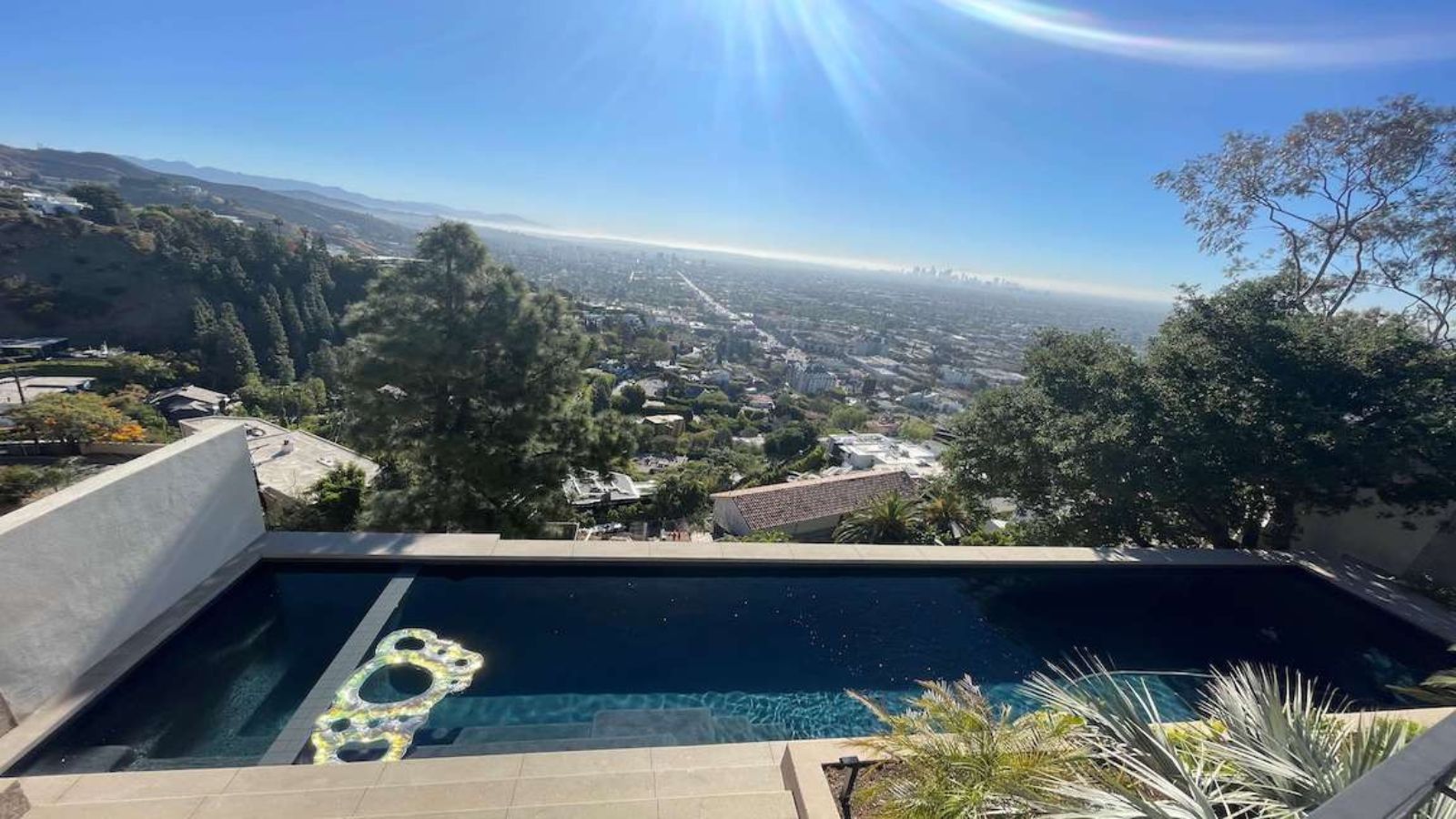
But what if the pool is going on a rooftop? Or what if the backyard is on a steep hillside where excavating equipment can’t reach? Or what if the pool needs to be built above an occupied space, has very limited access, or requires a level of precision that makes traditional construction difficult?
In these situations, another option may be worth considering: a stainless-steel pool vessel.
Stainless steel has been used for decades in commercial and architectural aquatic applications, and today it is becoming more common in high-end residential pool design.
But there is something important to understand:
Stainless steel isn’t automatically a better pool than concrete.
It is simply a different construction method, and in the right application, it can offer some very significant advantages.
After more than 25 years in the pool industry, I have learned that good pool design starts with understanding the property, the structure, the environment, and the homeowner's goals before deciding how to build the pool. The material should follow the project, not the other way around.
A stainless-steel pool is essentially an engineered metal vessel.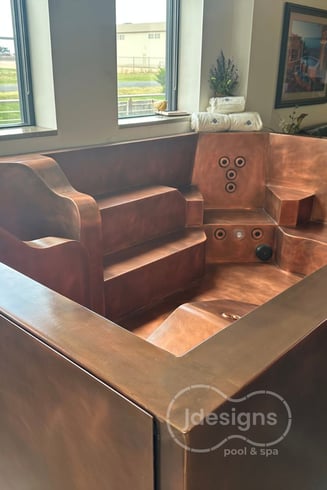
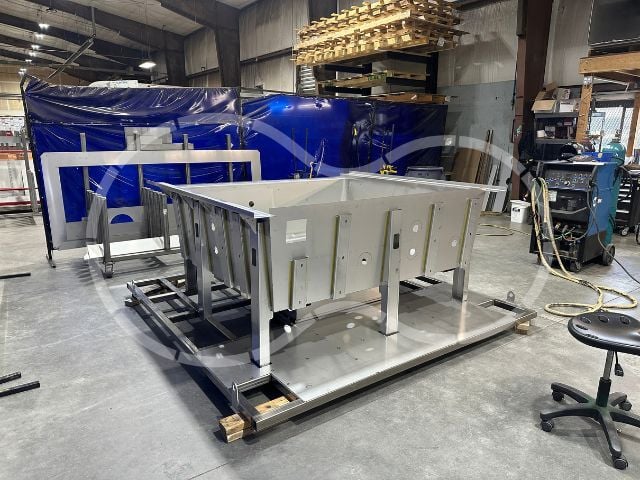
Instead of forming the pool shell from reinforced concrete or shotcrete on site, the pool structure is fabricated from stainless-steel components that are cut, formed, welded, and finished to create the pool's shape.
Depending on the manufacturer and design, much of this work can be completed in a controlled fabrication facility before the vessel arrives at the property.
Think of it this way:
A traditional pool is largely built on-site. A stainless-steel pool can have a significant portion of its structure built before it arrives on site. That difference can matter a lot on certain projects.
Water is heavy. A 20,000-gallon swimming pool contains approximately 167,000 pounds of water. For comparison, a Boeing 737-800 airplane weighs 91,300 lbs
Add to that weight is the structure, tile, coping, equipment, decking, and everything else associated with the project. So the foundation is critical. When a pool is built on the ground, the earth supports the structure.
But when the pool is elevated, the equation changes. A rooftop pool, an elevated pool, or a pool constructed over an occupied space may require the structural engineer to carefully evaluate every pound being placed on the building.
This is where a stainless-steel vessel can become very interesting.
Because the stainless structure can be significantly lighter than a comparable concrete structure, it may reduce the permanent structural load the building or supporting structure must carry. That does not mean a stainless-steel pool can simply be placed anywhere.
A structural engineer still needs to determine exactly what the building, foundation, framing, and supporting structure can safely carry.
But reducing the pool's weight can sometimes open design possibilities that would be much harder with conventional construction.
Another major difference is where the pool is actually built. Traditional shotcrete construction requires many operations to take place at the property:
A stainless-steel vessel can shift a significant portion of the fabrication process away from the property.
The individual components can be manufactured, assembled, and welded in a controlled environment before delivery. This can provide several advantages. The fabrication environment can offer better control over measurements, welding, surface preparation, and quality-control procedures than a constantly changing construction site. It can also reduce the amount of work that needs to happen in a tight backyard or difficult-to-access location. But prefabrication doesn’t eliminate construction.
The site still needs proper engineering and preparation, and the vessel still needs to be transported, positioned, supported, connected, and finished correctly.
The advantage is that the construction process is different, not that the engineering disappears.
One of the biggest concerns with any pool is water containment. This becomes even more important when a pool is located above something you don’t want to get wet. Imagine a rooftop pool above a living area. Or a pool on a terrace above a finished room. Or an indoor pool inside a luxury home.
A leak can become much more than a pool problem.
Water can migrate into:
ceilings, walls, flooring, electrical systems, insulation, finished living spaces
A properly fabricated stainless-steel vessel can provide a continuous welded water-containing structure. That can reduce joints and potential leak paths associated with other construction systems. But once again, the details matter. Penetrations, drains, fittings, overflow systems, connections, welds, and transitions all need proper design and fabrication.
A stainless-steel pool isn’t leak-proof simply because it is stainless steel.
Not All Stainless Steel Is the Same
This is one of the most important things a homeowner should understand. When someone says, “It’s stainless steel,” that doesn’t tell you enough. Stainless steel comes in many grades, and they don't all have the same corrosion resistance.
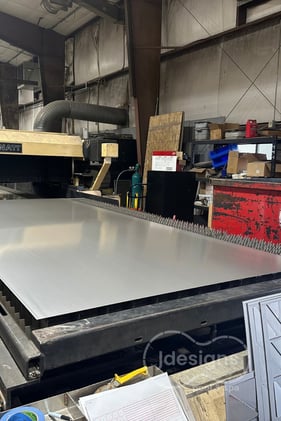
Two grades you’ll commonly hear about are 304 and 316/316L stainless steel.
316 and 316L contain **molybdenum, which generally provides better resistance to chloride-related corrosion than 304.
That is particularly important in aquatic environments because pool water contains chlorides.
Saltwater pools deserve even more attention because salt chlorine generators intentionally introduce chloride into the water. But here’s what homeowners need to understand: Even 316L isn't corrosion-proof.
Stainless steel depends on a very thin protective oxide layer on its surface. Under the right conditions, that protective layer can be damaged or compromised.
High chloride concentrations, poor water chemistry, deposits, crevices, elevated temperatures, contamination, and improper fabrication can all contribute to corrosion problems.
That’s why the grade of stainless steel matters. But the grade is only one piece of the puzzle.

A stainless-steel pool is not simply a big piece of stainless steel. It is a fabricated and welded structure. That means the quality of the welding and fabrication process matters. Cutting, grinding, forming, welding, cleaning, finishing, and inspection all affect the finished product. The welding process can also affect stainless steel's surface characteristics. That is why proper fabrication practices and appropriate welding standards matter.
AWS D1.6, for example, is the Structural Welding Code covering stainless-steel structural assemblies.
For a high-end pool project, I would want to know who is fabricating the vessel, what grade of stainless steel is being used, how it is welded, how the welds are inspected, and what quality-control procedures are followed.
What Is Passivation? Here’s another word that homeowners may not hear very often: Stainless steel protects itself by forming a very thin passive oxide layer.
During manufacturing and welding, the surface can be exposed to heat, iron contamination, grinding debris, and other contaminants. Proper cleaning and passivation procedures help restore and protect the stainless-steel surface.
ASTM A380 and ASTM A967 are two important standards associated with cleaning, passivation, and treatment of stainless-steel components.
You don’t necessarily need to understand the chemistry behind passivation as a homeowner. But you should understand the concept:
A high-quality stainless-steel pool isn’t simply about buying a certain thickness of metal. It is about the entire fabrication process. Which alloy and thickness are specified? A 12-gauge Type 304 stainless steel for certain components; that is one system’s specification, not an industry-wide minimum. Ask for the thickness of each wall, floor, and support member on your actual drawings.
This is a question I expect homeowners to ask. “Can I have a saltwater pool with stainless steel?”
The answer isn’t simply yes or no. It depends on the stainless-steel grade, the design, the environment, the water chemistry, temperature, fabrication, and how the stainless components are exposed to the water and surrounding atmosphere. Remember, a saltwater pool is still a chlorine pool. A salt chlorine generator uses salt in the water to produce chlorine.
That means you need to consider the chloride environment when selecting materials. This is one reason proper water chemistry matters. A beautifully fabricated stainless-steel pool can still have problems if the water is consistently maintained outside the manufacturer’s recommended parameters.
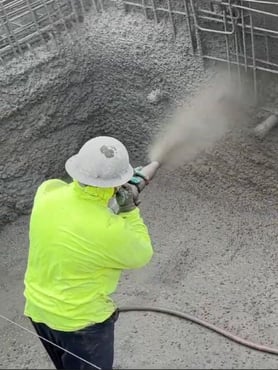
So which is better? I don’t think that’s the right question. Shotcrete and stainless steel are different construction systems, and each can make sense in different situations.
Shotcrete can be an excellent choice when:
Stainless steel may be worth considering when: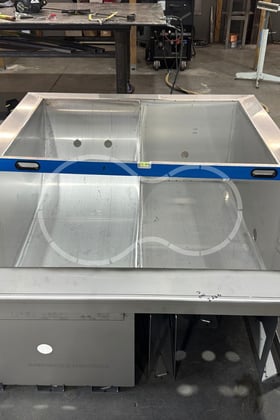
Neither material automatically wins.
The right question is:
Which construction system makes the most sense for this particular property?
Here in Los Angeles, this question becomes especially interesting. Hillside construction can present challenges that simply don’t exist on a flat property. Before excavation begins, a hillside project may require extensive coordination between:
Depending on the site, the pool may require caissons, grade beams, retaining structures, special foundations, or other engineered solutions. In certain elevated or difficult-access applications, a lighter prefabricated stainless-steel vessel may be worth evaluating. But don't confuse lighter with structurally simple.
A stainless-steel pool on a hillside still requires serious engineering. In fact, the more challenging the site, the more important the engineering becomes.
Its combination of strength, relatively low structural weight, prefabrication, precision fabrication, and welded water containment can make it particularly interesting for specialized architectural and structural applications.
But stainless steel isn’t magic. The material grade matters. The engineering matters. The welding matters. The fabrication matters. The surface preparation matters. And the water chemistry matters.
That’s why, when we’re evaluating a pool project, we don’t start by asking:
“What material should we use?”
We start by asking:
“What does this property require?”
Then we look at the structure, the soil, access, location, architecture, budget, desired design, long-term maintenance, and the engineering requirements. Sometimes the answer is a traditional reinforced shotcrete pool. Sometimes another construction system makes more sense. And sometimes, a precision-fabricated stainless-steel vessel can open the door to a design that would be much harder to achieve with conventional construction.
At J Designs Pool & Spa, we believe homeowners should understand the “why” behind their pool, not just the “what.”
Could a stainless steel pool solve a challenge that a conventional pool cannot? If your Los Angeles property has a rooftop terrace, a steep hillside, or limited construction access, it may be worth considering. But the right material depends on the site, not on a trend.
The engineering and construction behind it are what allow that beautiful design to perform for years to come.

* Pictures courtesy of Diamond Spas
**Molybdenum is a strong steel and cast iron alloys that resist extreme heat, pressure, and corrosion
JC Escudero: Oct 1, 2026
When most homeowners picture a swimming pool, they probably picture a concrete or shotcrete structure built into the ground.
 JC Escudero: Sep 26, 2026
When most homeowners choose tile for a swimming pool, they naturally focus on the tile itself: the color, shape, texture, and overall design, because...
 JC Escudero: Sep 23, 2026
Planning a custom pool involves dozens of decisions about shape, depth, materials, and features. Get one wrong, and you could face expensive rework...
JC Escudero : Sep 26, 2026
Learn why epoxy grout is ideal for pool tile, offering water, stain, and chemical resistance, color stability, UV protection, and durability.
 JC Escudero : Oct 30, 2025
Discover how to design the best indoor pool for your home. Learn about costs, HVAC, waterproofing, and key tips to create a beautiful,...
 Daniela Escudero : Dec 7, 2025
Learn the top pool building pain points, from communication issues to weather delays, and how to avoid them with a clear, stress-free design-build...