
 Daniela Escudero
Stainless Steel Pools in Los Angeles: When Do They Make Sense?
 JC Escudero: Oct 1, 2026
When most homeowners picture a swimming pool, they probably picture a concrete or shotcrete structure built into the ground.

For many Los Angeles homeowners, a pool is no longer just a recreational feature. It is part of a larger outdoor living environment that must perform reliably, look refined, and operate with as little friction as possible. When a backyard includes premium finishes, integrated lighting, heating, water features, spa functions, and outdoor entertaining areas, managing that environment manually becomes increasingly inefficient.
That is where pool automation becomes more than a convenience upgrade. In 2026, it is one of the most practical ways to protect comfort, improve efficiency, simplify maintenance, and support the long-term performance of a high-value pool system.
At J Designs Pool & Spa, we see automation as part of a broader design and construction strategy, not as an isolated gadget. The right system should support the way a pool is actually used, reduce avoidable strain on equipment, help maintain healthier water, and give homeowners greater confidence whether they are at home, entertaining guests, or away from the property.
In this guide, we will cover:
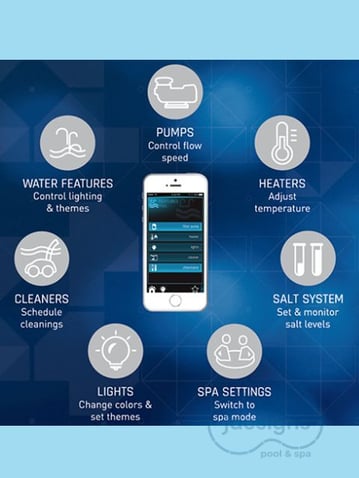
Pool automation is a control system that connects the major functions of a pool and spa into one coordinated platform. Depending on the system design, that can include:
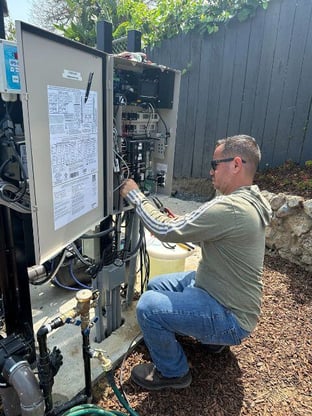
Instead of adjusting equipment one component at a time, automation allows these functions to be managed through a central interface, wall panel, mobile app, or integrated smart-home environment.
For a luxury property, this matters because pools today are more complex than they were even a decade ago. They often include multiple bodies of water, advanced sanitation systems, variable-speed equipment, landscape lighting, fire features, spas, and outdoor living zones that must work together seamlessly. A well-designed automation system helps bring those elements into one reliable operating strategy.
In 2026, pool automation is not simply about turning equipment on and off remotely. It is increasingly about better system intelligence, more precise control, and more informed oversight.
At the same time, automation platforms have become more capable. Newer systems can support app-based scheduling, equipment alerts, integrated heating logic, water chemistry monitoring, and in some cases more adaptive control behavior based on usage patterns or sensor feedback.
Homeowners are paying closer attention to:
High-end homeowners increasingly expect from their homes overall: comfort, responsiveness, efficiency, and less dependence on daily manual intervention.
Manual pool care still works for some basic pools, especially when the system is simple and the homeowner or service provider is closely involved. But as the pool environment becomes more sophisticated, manual management creates more room for inconsistency.
That approach can be workable, but it is reactive. It leaves more opportunity for missed adjustments, unnecessary run time, wasted energy, inconsistent water chemistry, and avoidable wear on equipment.
Automation allows the pool to operate on coordinated schedules and logic rather than on memory and manual repetition. For example, a system may be configured to:
The difference is not just convenience. It is operational consistency.
For homeowners who entertain often, travel regularly, or expect their outdoor space to function at a high level without constant attention, automation is often the more realistic long-term approach.
For a high-end home in Los Angeles, pool automation should be viewed as part of the overall quality of living on the property.

A luxury pool environment should feel calm, controlled, and intentional. If heating is inconsistent, water chemistry drifts, the spa takes too long to prepare, or multiple systems require separate handling, the experience becomes fragmented. That does not align with the expectations of a refined outdoor space.
Well-planned automation supports:
For many clients, the true value is not only time savings. It is reducing uncertainty and bringing the backyard closer to the standard of the rest of the home.
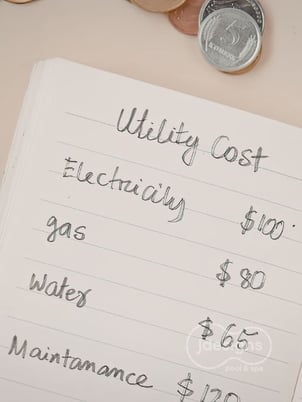
One of the most common questions homeowners ask is how much pool automation costs. The answer depends heavily on whether the project is a retrofit, a remodel, or part of a new construction build specially a complex system.
Pool automation pricing usually depends on:
For a simpler retrofit with basic app-based control of pump, heater, and lighting, costs may start in the lower range of the market, $3,000 to $5,000 dollars and limited to 2 or 3 functions. For more advanced systems that include valve actuators, spa integration, chemical automation, expanded lighting, water features, and upgraded control panels, costs rise accordingly and can reach $10,000 to $20,000+ dollars.
For luxury properties, the more accurate mindset is this: automation is not a single device purchase. It is a system design decision. A lower initial price may not be the better value if it limits expandability, creates compatibility issues, or fails to support the way the pool is actually used.
A thoughtful proposal should evaluate both present needs and likely future additions, such as:
The short answer is YES, just like most appliances they are designed to save you time and money. Specially when the pool is a central part of the home’s lifestyle and entertainment value.
Automation tends to be most worthwhile when:
The key is proper planning. Poorly matched automation can create frustration, while a well-designed system can meaningfully improve how the pool performs every day.
One of the strongest practical arguments for automation is energy management.
Pools consume energy through circulation, heating, lighting, and auxiliary features. When those systems run longer than necessary or operate without coordination, operating costs rise quickly.
Automation improves efficiency by allowing:
This is especially relevant in Los Angeles, where outdoor living is used for much of the year and homeowners often want comfort without excessive operating costs. A modern automation system can support that balance by improving control rather than relying on constant manual oversight.
Water chemistry is another area where automation can offer substantial value.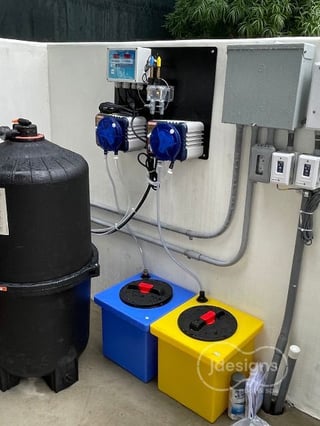
Manual chemistry management often depends on periodic testing and corrective action after imbalance appears. That can lead to swings in pH, sanitizer levels, scaling conditions, or cloudy water if monitoring is inconsistent.
More advanced automation setups may support:
This matters because water quality is not only about appearance. It affects swimmer comfort, sanitation performance, equipment condition, and the longevity of interior surfaces.
For higher-end pools with premium finishes and specialized equipment, stable chemistry is part of protecting the investment, not just maintaining aesthetics.
AI is becoming part of the conversation around modern pool systems, but it is important to define it carefully.
In most cases, AI is not “running the entire pool” autonomously in the way marketing language sometimes suggests. What is emerging instead is a more practical layer of AI-assisted management and data-informed oversight.
This may include:
Some high-end systems and connected platforms are moving toward more intelligent analysis of sensor data, runtime behavior, and environmental conditions, and actual local utility rates. In practical terms, this can help homeowners and service teams respond faster to issues such as:
AI-assisted pool management should be viewed as an enhancement to skilled design, installation, and service, not a substitute for them. The system still needs sound hydraulics, proper programming, quality equipment, and knowledgeable support behind it.
Several respected system families continue to lead the pool automation category. Pentair, Hayward, Jandy, and Poolside Tech are commonly discussed in the market, each with different strengths depending on the application.
The right choice depends less on brand marketing and more on project-specific fit.
.jpg?width=307&height=409&name=Automation%20Vertical%20Blog%20Visual%20(1).jpg)
Pentair is often considered for broad equipment integration, app-based controls, and compatibility within Pentair-centered equipment environments mostly. It can be a strong option when the project already includes or is planned around Pentair equipment.
Hayward systems are often selected for integrated control environments and product ecosystem compatibility. For some homeowners and builders, Hayward offers a straightforward path when other equipment on site.
Jandy is widely recognized in automation and is often considered for homeowners seeking a simple integrated control, polished user interfaces, and a robust automation platform tied to Jandy equipment only.
Poolside Tech is frequently discussed in more design-sensitive or premium control conversations, especially where interface design and elevated control experience matter alongside system functionality. Far more advanced and designed to work with any brand system in the market.
The better question is:
Which system best fits the equipment plan, control priorities, expandability needs, and long-term service strategy for the specific pool?
That is where professional guidance matters most.
When evaluating automation options, look beyond surface-level app features.
A modern automation system should offer dependable, intuitive control from a phone or tablet. If the app experience is weak, the system often feels outdated quickly.
Can the system grow with the property? This is important if future plans include spa upgrades, additional lighting zones, water features, solar integration, or chemistry automation.
Heating control should be easy, accurate, and coordinated with actual use patterns, especially for pools paired with spas or seasonal heating strategies.
Some systems support monitoring and dosing capabilities that improve consistency and reduce reactive maintenance.
Look for scheduling flexibility, variable-speed pump logic, and system settings that support lower operating waste.
For some homeowners, voice control or broader smart-home integration is useful. For others, reliability and ease of operation matter more than novelty. It is important to prioritize function first.
A better system provides meaningful alerts, not just basic notifications. This becomes even more valuable as AI-assisted features continue to develop.
A sophisticated control system should still be practical to support over time. Long-term service access, diagnostics, and compatibility all matter. Specially remote acces availability for troubleshooting or diagnostics.
Probably the most important question is the support system, not only the technology constant upgrades and advancement but how effective is the on demand support when something is not working. Traditionally all manufacturers provide from 1 to 3 year warranty.
Installation depends on whether the automation is part of:
Automation should be planned early. This allows the control strategy to be coordinated with:
This is the ideal scenario because the system can be designed holistically rather than patched in later.
A retrofit may still be highly successful, but it requires more careful evaluation. The installation team should review:
For older pools, retrofitting automation can also reveal where the system was never designed for efficient modern control in the first place. In those cases, automation may work best when paired with equipment modernization.
If you have an older system most likely the utilities, like the gas line or electric wiring will require to be upgraded or no longer work properly. In Los Angeles title 24 Energy efficiency its mandatory not optional for all pool equipment components.
Automation delivers the best results when it is selected and installed thoughtfully. Problems usually arise when the system is treated like a simple add-on rather than part of the pool’s operating design.
Common mistakes include:
A familiar name does not automatically mean the best fit for the property or equipment plan.
If underlying components are inefficient or incompatible, automation alone may not solve the problem.
The app matters, but so do hydraulics, equipment logic, electrical planning, and serviceability.
A system that cannot expand may become limiting if the homeowner later adds lighting zones, solar, a spa upgrade, or chemistry control.
Even advanced equipment can underperform if wiring, programming, sequencing, or integration is handled poorly. This is consistent with a broader truth in luxury pool work: technology only performs well when the planning behind it is equally strong.
Like every other piece of equipment in your home, the internet access, speed and conectivity are paramoiunt. Under estimating or undersized connectivity will have the worst user experience. The most advanced equipment can underperform.
Wireless signals can weaken across a property, and pool equipment is no exception. For more reliable automation performance, a hardwired connection is often recommended instead of relying solely on outdoor Wi-Fi coverage.
For many high-end projects, automation is only one part of a larger modernization plan.
It often makes sense to evaluate automation alongside:
When these systems are planned together, the result is often more cohesive, more efficient, and easier to operate over time.
This is particularly important for Los Angeles homeowners who use their outdoor spaces as true extensions of the home and expect their pool environment to feel refined, current, and dependable throughout the year.
Pool automation in 2026 is no longer just about novelty. At the high end of the market, it has become an important part of delivering a better ownership experience.
The right system helps bring order to complexity. It can improve comfort, support water quality, reduce wasted energy, protect equipment, and make a sophisticated backyard easier to enjoy. As connected systems continue to evolve, AI-assisted alerts and predictive insights are adding another layer of value, especially for homeowners who want greater visibility and fewer surprises.
Technology is only as good as the planning behind it. A successful automation upgrade depends on proper equipment selection, sound integration, realistic programming, and a clear understanding of how the pool should perform both now and in the future. If you are considering a new pool, a remodel, or an automation upgrade, J Designs Pool & Spa can help you evaluate the right control strategy for your property, your lifestyle, and your long-term investment goals.
 JC Escudero: Oct 1, 2026
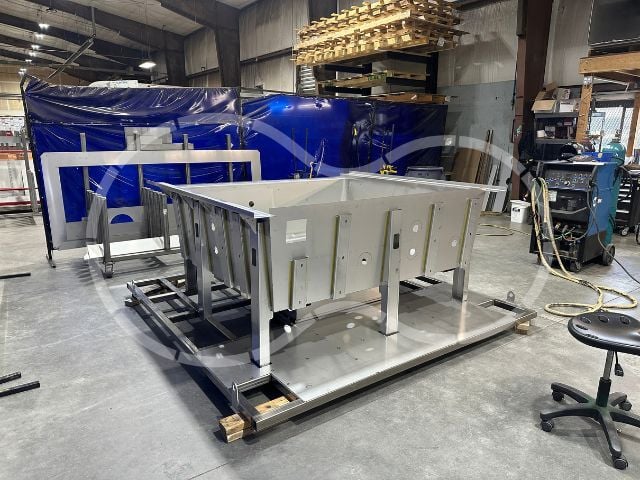
When most homeowners picture a swimming pool, they probably picture a concrete or shotcrete structure built into the ground.
 JC Escudero: Sep 26, 2026
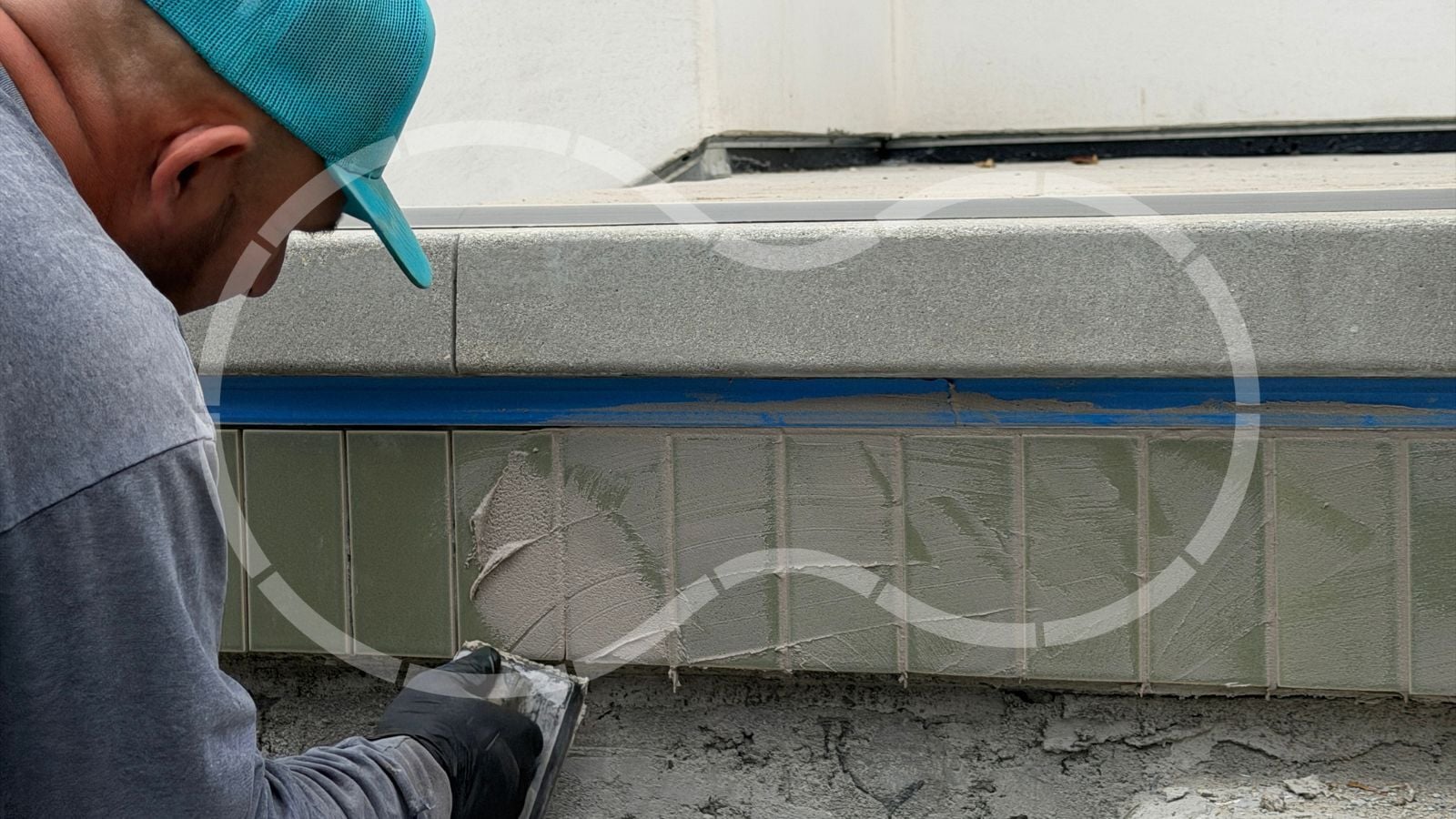
When most homeowners choose tile for a swimming pool, they naturally focus on the tile itself: the color, shape, texture, and overall design, because...
 JC Escudero: Sep 23, 2026
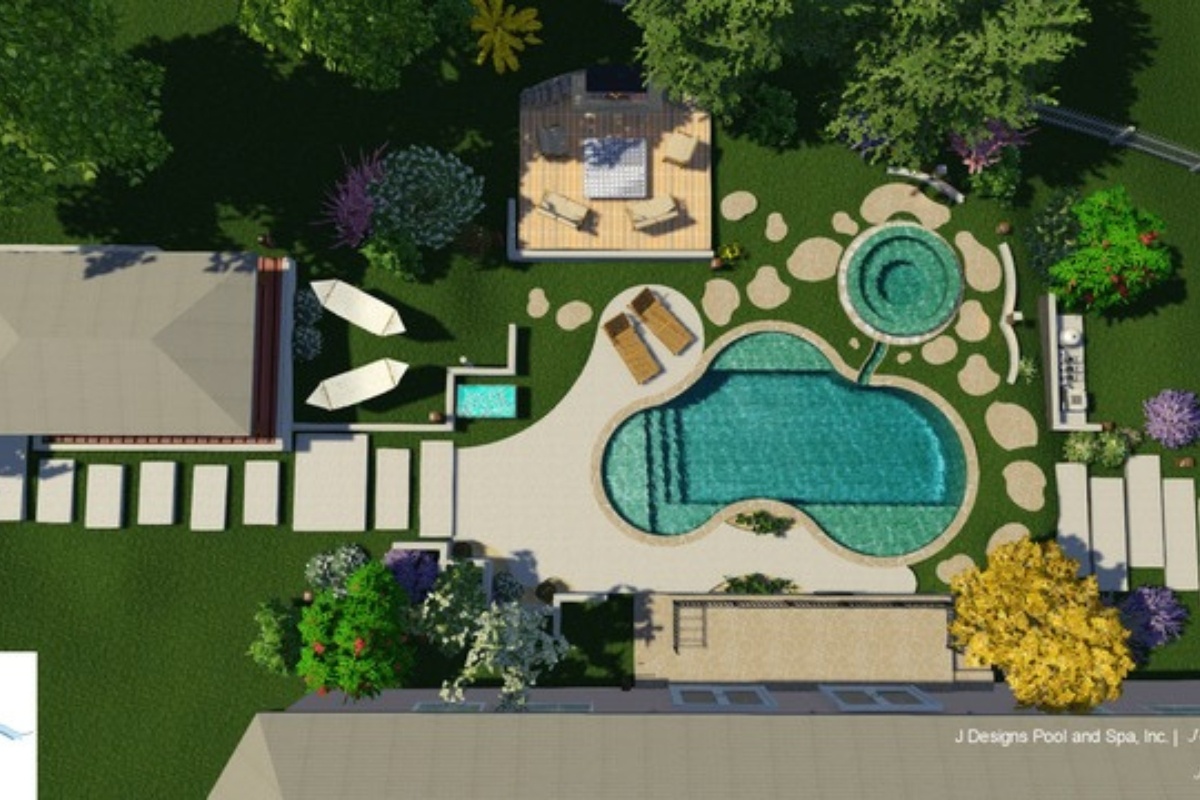
Planning a custom pool involves dozens of decisions about shape, depth, materials, and features. Get one wrong, and you could face expensive rework...
 JC Escudero : Mar 12, 2026
Learn why CO₂ pool systems gently control pH, reduce harsh acid use, protect plaster and equipment, keeping balanced water for eyes, skin, in Los...
 JC Escudero : May 24, 2025
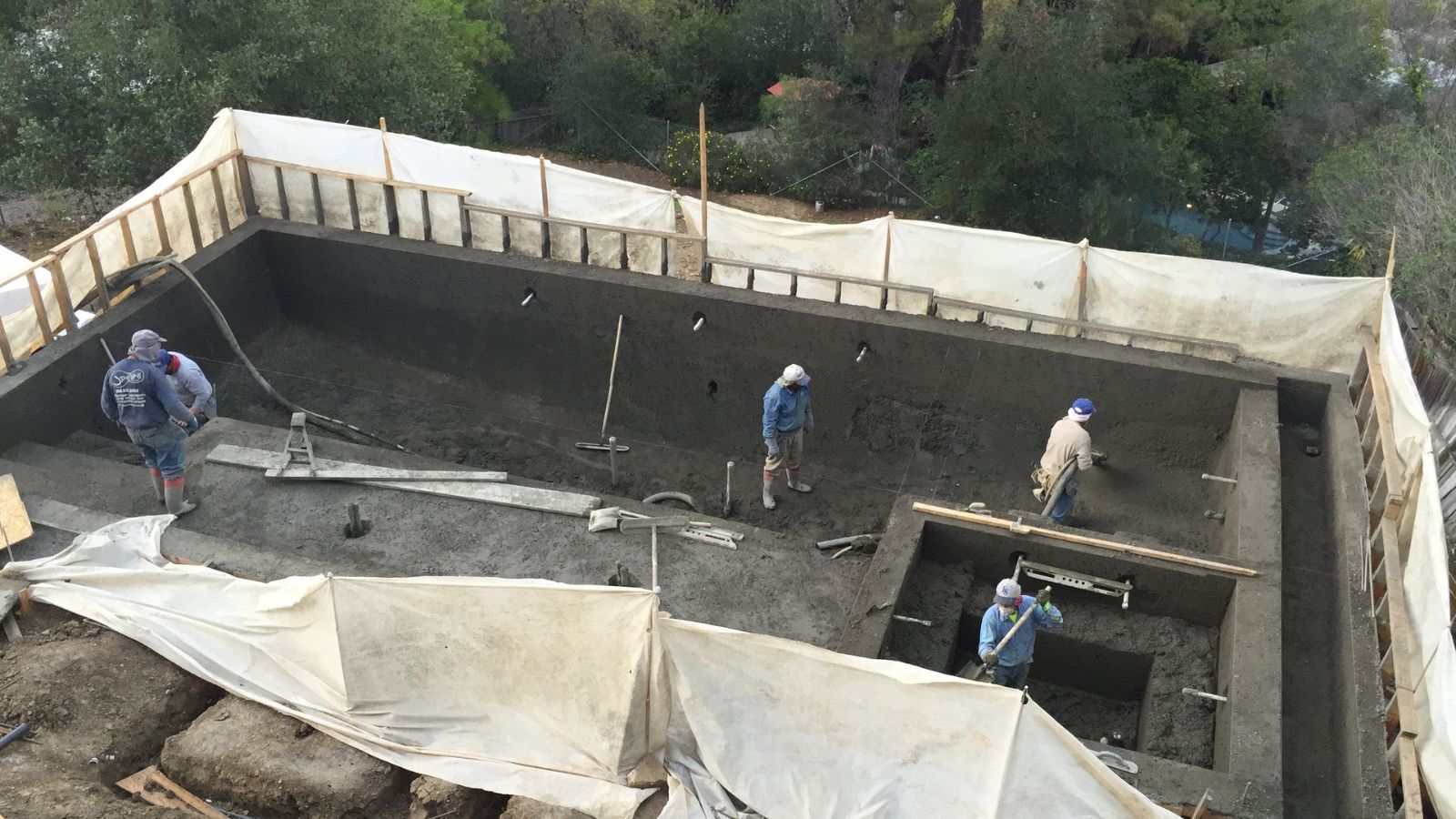
Learn what makes a shotcrete pool durable and code-compliant. Understand ASA/ACI nozzleman certifications, steel ratios, curing, and crack prevention.
J Designs explains how to read your pool contract the right way payments, insurance, lien releases, plans and warranties that keep your project safe.