
What Is a Pool Skimmer? How It Works and Why It Matters
 JC Escudero: Sep 19, 2026
Your pool's circulation doesn't simply begin at the pump.
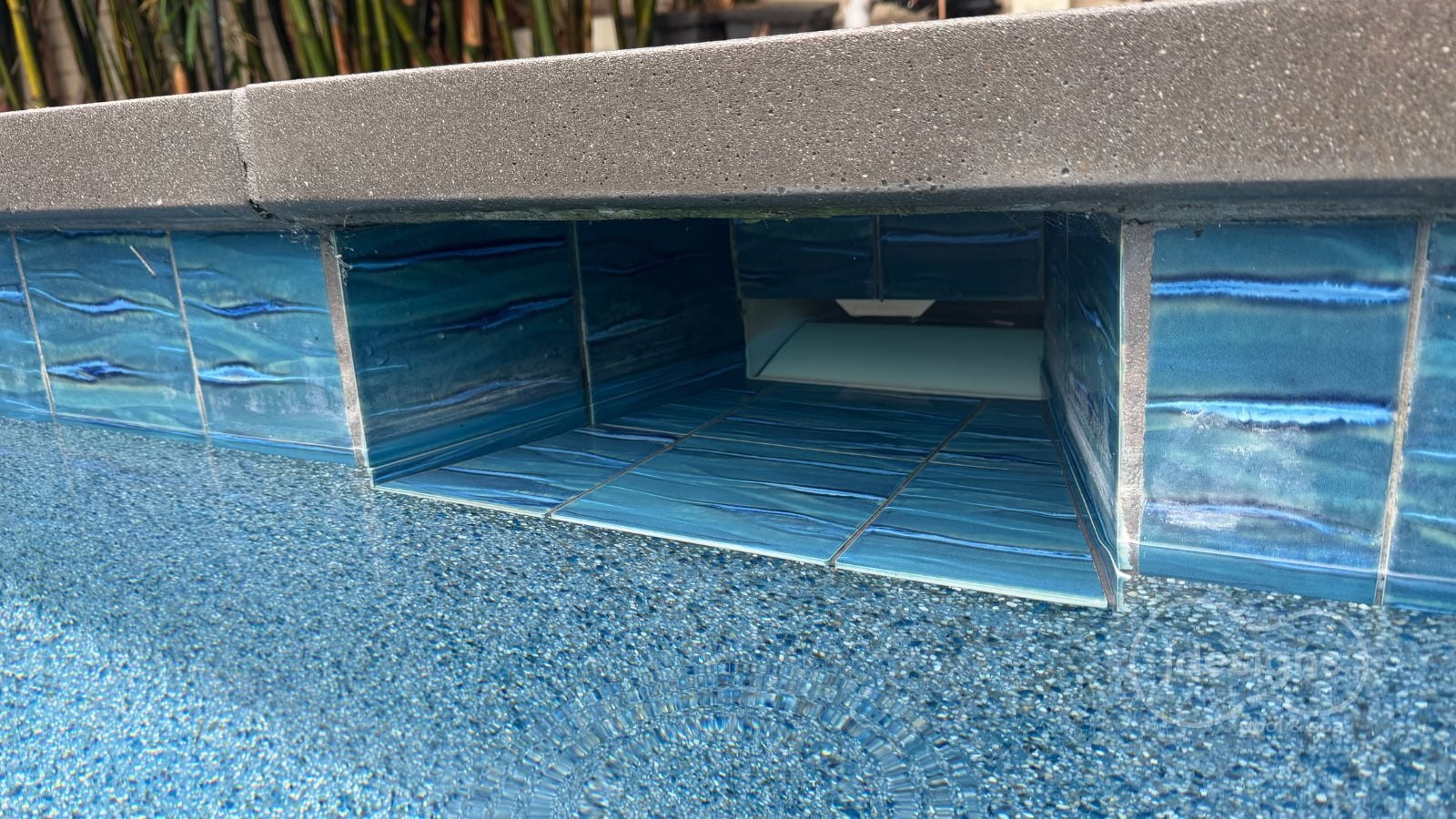
Your pool's circulation doesn't simply begin at the pump.
For most residential swimming pools, one of the most important starting points is the skimmer: the opening at the waterline that draws surface water and floating debris into the filtration system. But installing a skimmer isn't enough.
Its plumbing size, location, elevation, surrounding landscaping, prevailing winds, water level, internal components, and even how it was structurally installed can dramatically affect how effectively it performs.
A poorly designed or improperly installed skimmer can cause weak surface circulation, debris buildup, poor filtration, air entering the plumbing, pump problems, leaks, and costly structural repairs.
In this article, we'll explain how a pool skimmer actually works, what affects its performance, the construction mistakes we frequently find, and what homeowners in Los Angeles should look for when diagnosing circulation problems.
Have you ever noticed leaves, pollen, or dust collecting in one area of your pool even though the pump is running? Or wondered why a newer, more powerful pump did not solve a circulation problem? The answer may be at the waterline: your pool skimmer.
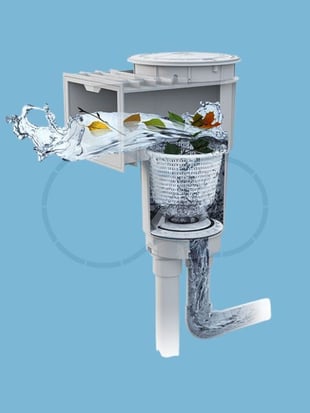
But what is a skimmer? The skimmer is the opening on the surface of your pool that draws in surface water, leaves, and floating debris. From there, the water moves to the pump and filter, helping to keep your pool clean and properly circulating.
A skimmer does more than catch leaves. It is one of the main places where water enters the circulation system
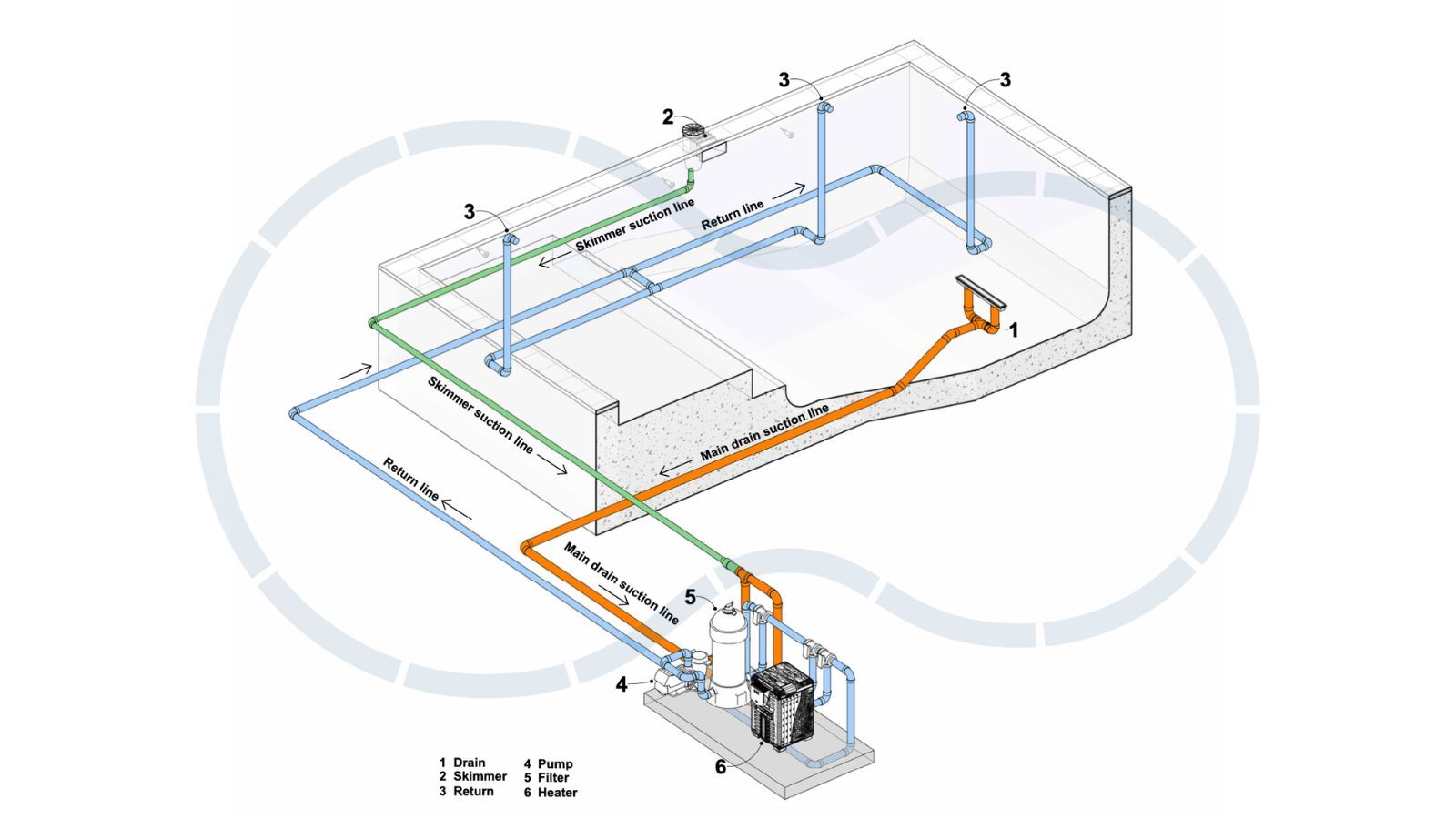
Pool → skimmer → pump → filter → return lines → pool
The skimmer draws surface water into the system, where its basket catches larger debris before the water continues to the pump and filter. Your pool may also draw water through main drains or other suction outlets, but the basic principle remains the same: the pump cannot filter water it cannot receive.
When circulation is weak, many homeowners assume they need a larger pump or longer filtration cycles. That is not always the case.
Think of the skimmer and plumbing like a drinking straw. If the straw is too small, too long, partly blocked, or full of sharp bends, pulling harder does not necessarily solve the problem. The same is true for pool circulation.
Water flow can be affected by:
- Undersized or aging plumbing
- Long pipe runs, elbows, valves, and fittings
- Equipment located far from the pool
- The pump sitting above or below the pool
- A low water level
- A dirty or damaged basket
- A missing weir or diverter, where applicable
- The way the skimmer and main drain are connected
A skimmer also has a rated flow limit, and the entire system must operate within its design and safety requirements. More gallons per minute does not automatically mean better circulation. Sometimes the real restriction is between the skimmer and the equipment, not at the pump itself.
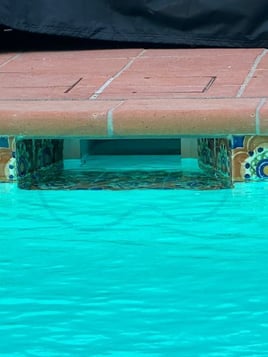 A skimmer can function properly yet perform poorly if it is placed in the wrong location.
Floating debris moves with wind and surface currents. Effective skimmer placement considers the pool’s shape, return-line locations, normal wind direction, nearby walls, buildings, trees, and other landscaping.
This is especially important in Los Angeles, where hillsides, canyons, and changing terrain can influence local wind patterns. The conditions around the pool matter just as much as the equipment in the equipment room.
Landscaping can also change over time. A small tree or hedge may eventually redirect wind and cause leaves to collect in a part of the pool the skimmer doesn't reach well. When circulation changes, look at the surrounding property, not only the pump and filter.
The distance between the skimmer and the equipment matters. Smaller pipes and longer runs create more resistance, and every turn or fitting adds to that resistance.
Elevation matters, too. If the pump is above the pool’s water level, it must pull water uphill. This can make priming harder, especially with long pipe runs or small air leaks. If the pump is below the pool, gravity can help keep water available, but the system still needs proper design.
Consider equipment location, pipe sizing, and hydraulic design before you start construction or remodeling. Correcting these issues later can be more expensive and disruptive.
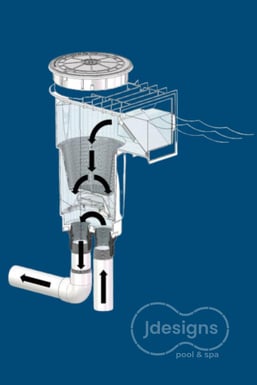
A pool skimmer may look like a simple plastic box, but several parts work together to support surface circulation:
- Weir: The moving flap that helps guide surface water and keeps debris from floating back out
- Basket: Catches leaves and larger debris before they reach the plumbing and pump
- Throat: The opening where surface water enters
- Suction ports: Connect the skimmer to the circulation plumbing
- Diverter: On some systems, helps balance flow between the skimmer and another suction source
- Lid: Provides access for cleaning and maintenance
A missing, broken, clogged, or incorrect part can affect circulation. A damaged skimmer body or an improperly installed connection can also contribute to air leaks, water loss, cracking, or structural problems over time.
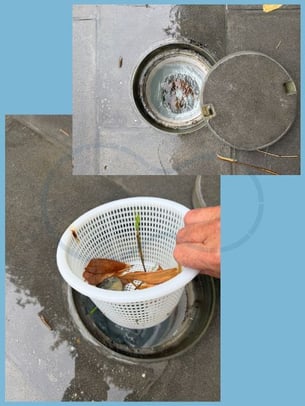
You don't need to be a pool professional to spot early warning signs. Ask:
- Is the water level within the recommended range?
- Is the skimmer basket clean and in good condition?
- Is the weir present and moving freely?
- Is floating debris moving toward the skimmer?
- Are there recurring air bubbles at the pump?
- Does the pump have trouble staying full of water?
- Does debris consistently collect far away from the skimmer?
One symptom doesn't prove the skimmer is the problem. The pump, filter, valves, plumbing, water level, and overall pool design can all affect circulation. But these signs are useful clues.
Your skimmer may be one of the smallest visible components of your pool system, but it has an important job. Its location, plumbing, elevation, water level, internal parts, and installation all affect how effectively your pool removes debris and delivers water to the equipment.
So, before replacing the pump or blaming the filter, start by looking at how water gets to them. A properly planned hydraulic system can support clearer water, more reliable equipment performance, and fewer costly surprises during a remodel or repair.
At J Designs Pool and Spa, we help clients look beyond quick fixes so they can make informed decisions that protect their pool, their investment, and their peace of mind. If you are planning a new pool, remodel, or troubleshooting an existing circulation problem, we are here to help you evaluate the full system with clarity and personalized guidance. And if you are not quite ready to talk yet, explore more of our pool education resources to keep learning what your pool really needs.
 JC Escudero: Sep 19, 2026
Your pool's circulation doesn't simply begin at the pump.
After heavy rain, don't automatically shock your pool or add chemicals. Test the water first.
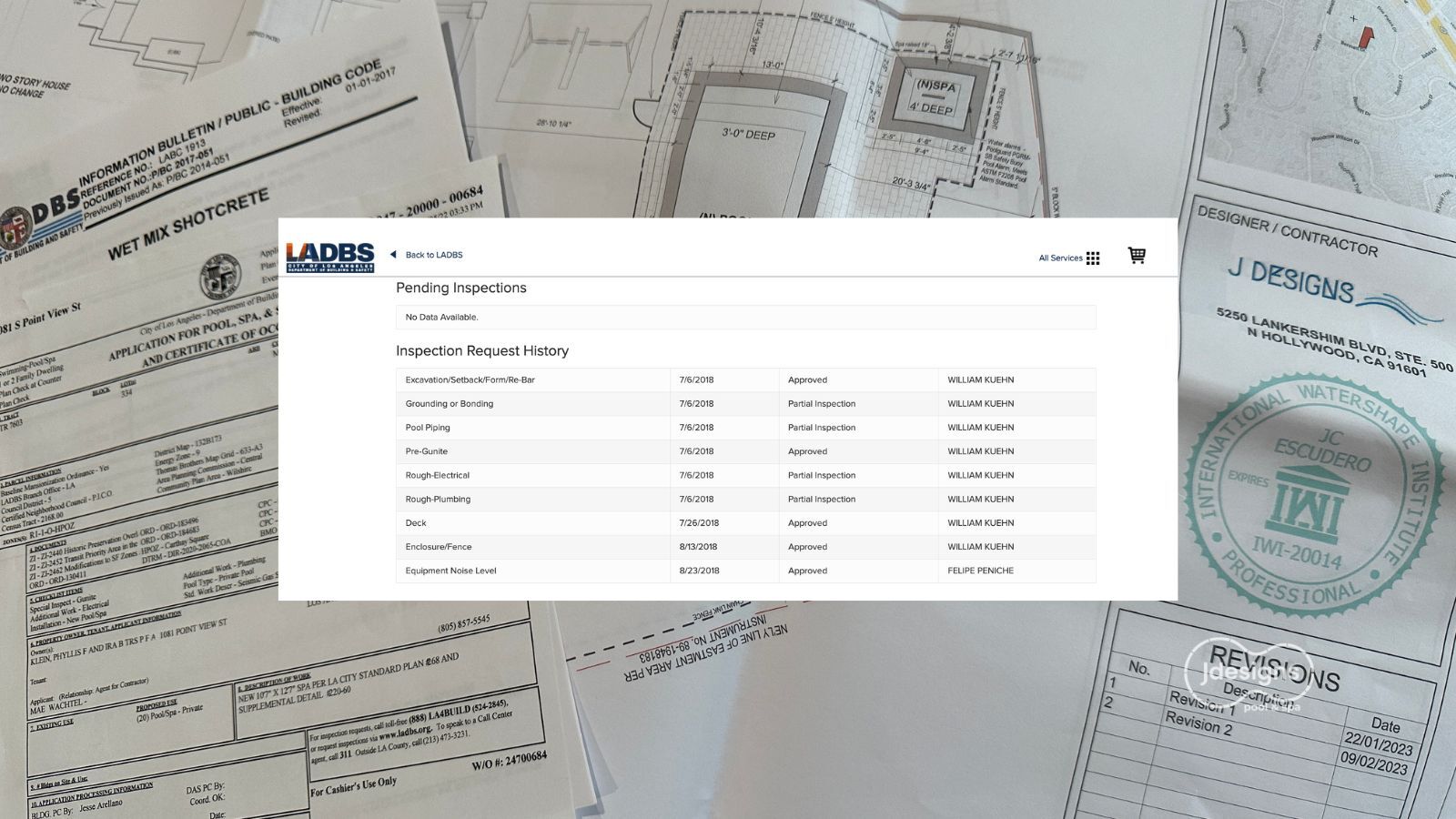
An unpermitted pool in Los Angeles is more than a missing permit. It may also mean there are no approved plans or inspection records confirming how...
1 min read
JC Escudero : Aug 16, 2024
Owning a swimming pool is a luxury; proper maintenance keeps it clean and enjoyable. Are you finding it challenging to keep your pool water crystal...
1 min read
An unpermitted pool in Los Angeles is more than a missing permit. It may also mean there are no approved plans or inspection records confirming how...
1 min read
After heavy rain, don't automatically shock your pool or add chemicals. Test the water first.