
Buying or Selling a House With an Unpermitted Pool in Los Angeles: Risks, Fines & What to Do
An unpermitted pool in Los Angeles is more than a missing permit. It may also mean there are no approved plans or inspection records confirming how...
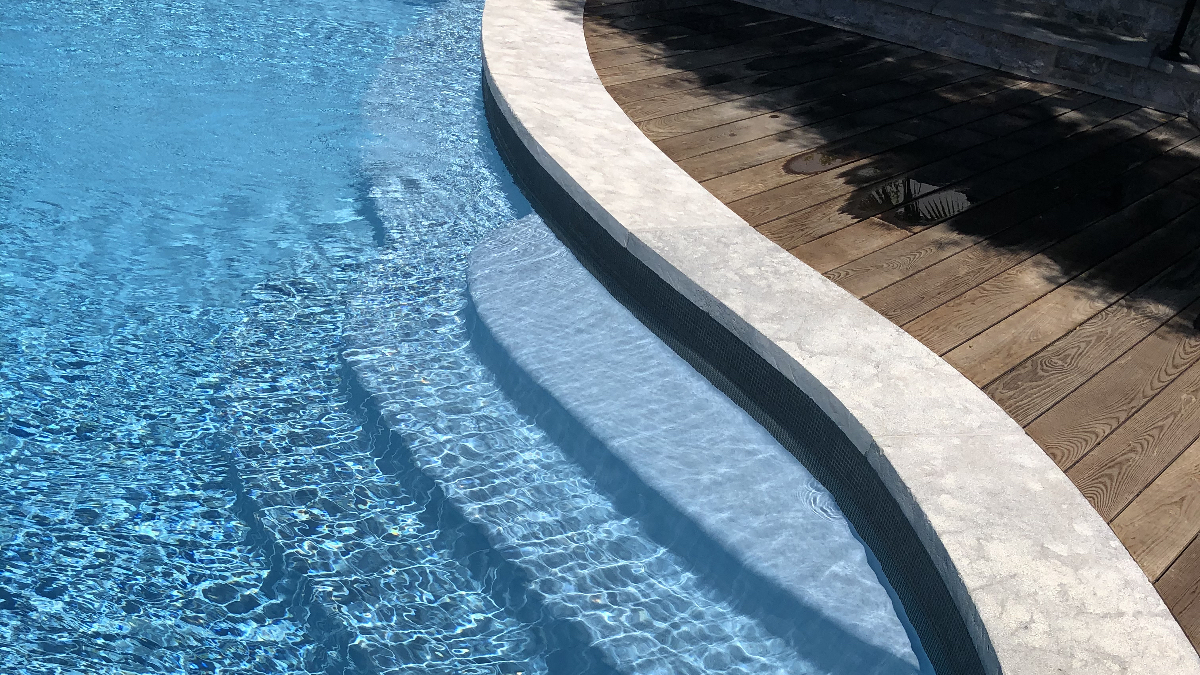
If you’re planning a new pool or renovating an older one, it’s completely normal to feel unsure about what’s happening around the pool’s edge. Maybe you’ve noticed cracks forming along the perimeter, tiles popping off, or coping pieces that feel loose underfoot. Or perhaps you’ve noticed discoloration from coping or early signs of water damage, and you're not sure what’s causing it. These issues can be stressful, and most homeowners worry about what they mean for the long-term health of their pool.
What we see time and time again is that these problems almost always trace back to how the coping was chosen, installed, and waterproofed. Coping isn’t just a decorative border. It has a long architectural history as the structural termination point of the pool wall. When it’s selected wisely and installed correctly, it ties the bond beam, waterline tile, and deck into a functioning system. When it’s not, cracks, leaks, and structural movement show up quickly.
As builders who have repaired hundreds of coping failures, we’ve learned exactly what causes these failures and how homeowners and designers can avoid them.
In this guide, you’ll learn: - What pool coping is
- The best materials for long-term durability - Materials you should never use - Proper TCNA installation and waterproofing practices - Coping profiles and how to choose the right one - Cantilever vs coping, which is better and why - Special considerations for saltwater pools - Lifespan and signs of failure - Maintenance you shouldn’t skip - Installation costs in Los Angeles - And how to prevent problems before they start.
By the end, you’ll know precisely how to choose, specify, and verify the right coping for your pool, whether you’re building new or renovating a pool that deserves a fresh start. As builders who have repaired hundreds of coping failures, we’ve learned exactly what causes these failures and how homeowners and designers can avoid them.
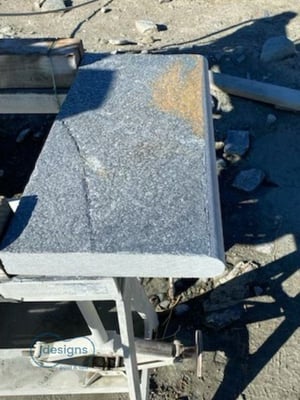
Coping acts like a cap and control joint for the top of the pool wall. It helps manage movement between the shell and the deck, protects the bond beam from constant water exposure, and directs water away from vulnerable edges. When it’s treated as a purely aesthetic choice rather than a structural component, the result is usually cracks, loose tiles, and moisture getting into places it shouldn’t. Coping does five essential jobs:
- Protects the structure by preventing water from seeping behind the tile
- Creates a safe edge for sitting, grabbing, and entering/exiting the pool
- Allows independent movement between the pool and deck
- Improves drainage by directing water away from the pool
- Completes the look of the design with a clean architectural finish.
When coping is missing, poorly installed, or made from the wrong material, it exposes the bond beam to moisture and movement, and that’s when homeowners start seeing cracks, leaks, and expensive repairs.
One of the most overlooked decisions in design is the shape of the coping. The profile affects safety, comfort, durability, and the pool's overall appearance.
![Copy of Copy of [TEMPLATE] Vertical Blog Visual](https://www.jdesigns.com/hs-fs/hubfs/Blog%20-%20Visual%20Assets/Coping%20blog/Copy%20of%20Copy%20of%20%5BTEMPLATE%5D%20Vertical%20Blog%20Visual.jpg?width=214&height=286&name=Copy%20of%20Copy%20of%20%5BTEMPLATE%5D%20Vertical%20Blog%20Visual.jpg)
A rounded front edge.
Pros: Soft edge, great for holding onto, popular in traditional designs
Cons: Not ideal for ultra-modern pools

Square Edge Coping Clean, modern, and minimal.
Pros: Great for contemporary pools, sharp lines
Cons: Must be installed perfectly to avoid chipping
Softened edges with a natural look.
Pros: Great for rustic or natural landscapes
Cons: Slightly uneven surface may catch water
A concrete deck is poured to overhang the pool edge.
Pros: Seamless look; cost-effective in some cases
Cons: Prone to cracking if expansion joints are not done perfectly
You’ll find a comparison section below (Cantilever vs Coping) with more details to help homeowners make a clear decision.
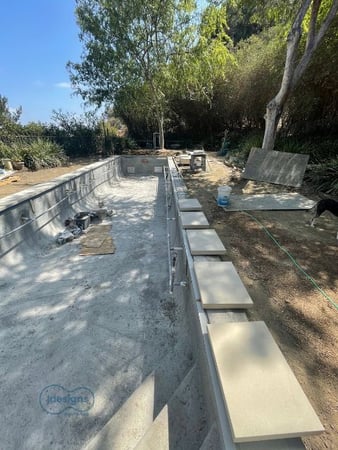
Consistent, cost-effective, and widely used, it's actually the oldest option used in pools.
Pros: Uniform appearance, budget-friendly, easy to replace
Cons: Can fade without sealing; color variation between batches
Best For: Standard residential pools, renovations, modern looks on a budget
A premium choice for both homes and architectural projects. Stone has been used for centuries, and it's the most durable material for pools.
Stones: Travertine, limestone, granite, marble
Pros: Timeless, durable, stays cool when finished properly
Cons: Must be selected carefully in freeze zones; some soft stones don’t perform near salt systems
Best For: High-end residential design, organic landscapes, luxury renovations
A growing favorite for modern homes.
Pros: Highly durable, fade-resistant, chemical-resistant
Cons: Requires skilled installers; may be slippery if the wrong finish is chosen
Best For: Sleek, modern pools; contemporary architecture
Classic, textured, and durable.
Pros: Great grip, long-lasting, charming aesthetic, though more traditional
Cons: May fade in intense UV climates; needs sealing
Best For: Historic homes, traditional landscapes
Even high-density hardwoods like Ipe and Cumaru eventually absorb water, expand, contract, and break down under UV and chemical exposure.
Why wood fails:
- Swelling and movement create gaps
- Surface cracking occurs in sun exposure
- Fasteners loosen over time
- Water penetrates into the bond beam
- Maintenance requirements become overwhelming
Wood looks beautiful for a short period, but it is never a reliable long-term coping solution.
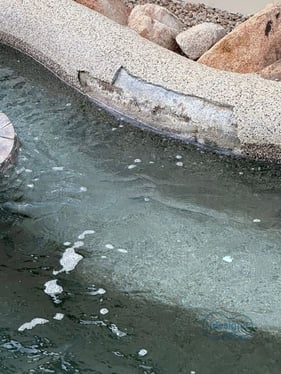
These materials fail consistently:
- Soft limestone or sandstone → flakes, crumbles, absorbs water
- Low-density composites → warp, fade, delaminate
- Glossy or low-traction tiles → become dangerously slippery
- Any non-UV-stable or water-sensitive products
-Most Woods only a few can stand the elements
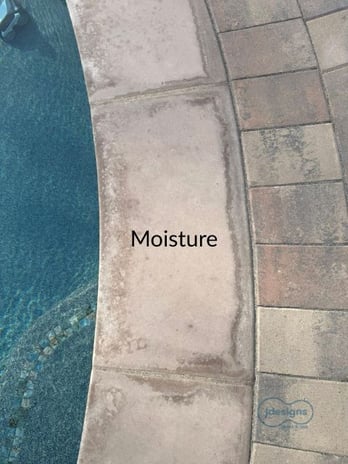
- Any material that is exposed to the elements, submerged or not, will crack "Like Plaster" in this picture
I insist, If a material cannot handle chlorine, salt, constant moisture, or UV exposure, it will not last.
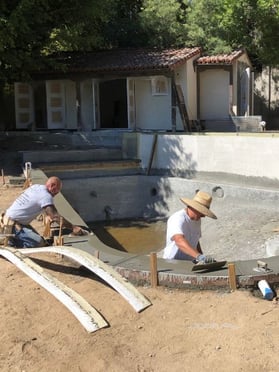
This is one of the most common comparisons homeowners search for.
The deck is poured to extend over the pool edge.
Pros: Clean, seamless look - Often more cost-effective on new builds
Cons: Very prone to cracking if expansion joints fail - Can feel warmer underfoot - Harder to repair because the deck and coping are one piece
A separate border piece is installed directly onto the bond beam.
Pros: Better movement control, especially in earthquakes - Easier to repair or replace - More options for shape, texture, and traction
Cons: Slightly higher upfront cost depending on material.
In Los Angeles, architects and builders overwhelmingly prefer traditional coping for longevity and ease of future maintenance.
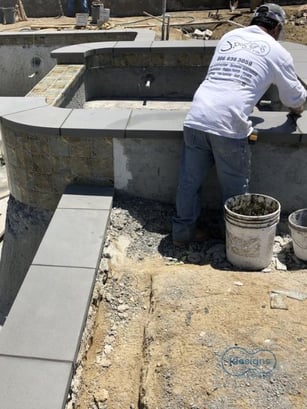
Even the best material will fail if installed incorrectly. The Tile Council of North America (TCNA) specifies strict guidelines for wet environments.
A proper installation includes:
- Prepared bond beam free of dust and contaminants
- Thin-set or mortar rated for submerged use
- Waterproofing membrane behind the tile/coping intersection - 1–2% slope away from the pool
- Movement joints according to TCNA EJ171 - Backer rod and flexible sealant at expansion joints
- Bond beam isolation from deck movement.
Skipping waterproofing or movement joints is the #1 cause of coping failure in Southern California.
Water that enters behind the coping expands and contracts with temperature. That movement pushes the tile off, cracks the coping, and eventually damages the bond beam.
Efflorescence, the white chalky staining you see, is a sign that water has already entered the structure.
A proper waterproofing system should include:
- A membrane bonded to the pool shell
- Seamless transitions to the tile line
- Crack-isolation layers where needed
- Waterproofing products compatible with stone or porcelain. This step is non-negotiable for long-term durability.
.jpg?width=200&height=266&name=Remodel%20cost%20Vertical%20Blog%20Visual%20(3).jpg)
Saltwater systems are gentle on skin but harsh on coping.
Use These for Saltwater:
Porcelain, Dense limestone, Granite, High-quality travertine (premium grade only)
Avoid with Saltwater:
Soft limestone, sandstone, anything highly porous. Salt crystals work their way into pores, causing surface breakdown over time. Sealers help, but choosing the right material is more important.
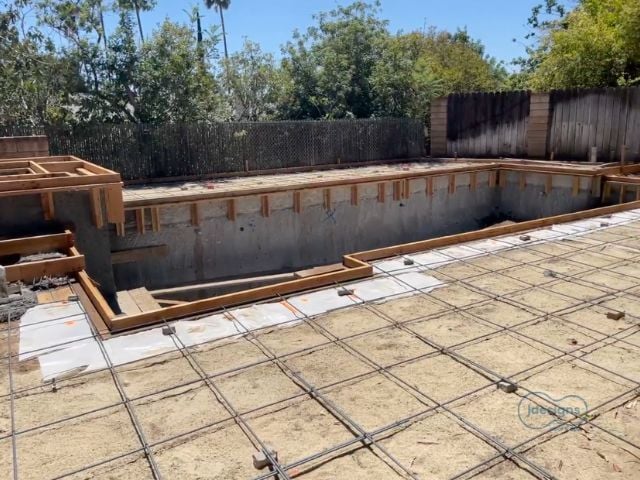
- Proper formwork with stable edges
- Clean, structurally sound bond beam
- High-quality mix with correct slump
- Joint layout that aligns with deck movement
- Surface finish that meets traction standards
Because coping edges are only 1.5–2 inches thick, they cannot meet ACI steel coverage requirements. This is why steel near the surface rusts, telegraphs through the concrete, and eventually cracks the coping.
Avoid: Rebar near edges - The use of steel mesh - Fiber additives that discolor - Curing compounds incompatible with sealers
Around water, safety matters. A minimum coefficient of friction is required by code.
ANSI A137.1 requires a minimum DCOF ≥ 0.42 for wet walking surfaces.
- Textured travertine - Tumbled limestone - Brick
- Polished porcelain - Glossy tile - Honed marble
Choosing the right finish is just as important as choosing the right material.
![Copy of [TEMPLATE] Vertical Blog Visual](https://www.jdesigns.com/hs-fs/hubfs/Blog%20-%20Visual%20Assets/Expansion%20Joint%20Blog/Copy%20of%20%5BTEMPLATE%5D%20Vertical%20Blog%20Visual.jpg?width=260&height=347&name=Copy%20of%20%5BTEMPLATE%5D%20Vertical%20Blog%20Visual.jpg)
The deck and the pool move differently, especially in earthquake-prone areas like Southern California.
A proper expansion joint:
- Prevents the deck from pushing into the coping - Stops tile shear - Protects the bond beam
Reduces cracking along the perimeter. Skipping this joint is one of the most common (and costly) contractor shortcuts.
Average Lifespan:
- Natural stone: 20–30+ years - Porcelain: 20+ years
- Precast concrete: 10–20 years
- Pour-in-place: 10–15 years
Signs Your Coping Is Failing:
- Loose or rocking pieces
- Cracking or delamination
- Waterline tile separating
- Efflorescence appearing repeatedly
- Chipping along the edges
- Water intrusion behind tile. If you’re seeing any of these, it’s usually time for a professional evaluation.
- Reseal stone every 1–2 years
- Clean with pH-neutral products only
- Avoid pressure washing delicate stone
- Inspect the expansion joint yearly
- Look for early signs of cracking. Regular maintenance helps you avoid extensive future repairs.
- Pre-cast Concrete: $40–$65/lf
- Natural Stone: $55–$120/lf
- Porcelain: $60–$110/lf
- Brick: $45–$85/lf
- Pour-In-Place Concrete: $50–$95/lf
- Precast installation: $75–$95/lf
- Natural stone installation: $80–$120/lf
- Porcelain installation: $70–$110/lf
- Brick installation: $60–$90/lf
- Pour-in-place installation: $80–$100/lf
In addition, certain setting materials may be required by the manufacturers, which we strongly recommend following, as they know their materials and tolerances.
Removal & Disposal (Renovations): $15–$30 per linear foot. Costs vary based on:
- Complexity of curves and cuts - Site access - Waterproofing system required - Thickness and weight of material - Custom finishes or profiles
At J Designs Pool & Spa, we guide homeowners, architects, and designers through these decisions every day. Our goal is to help you build a pool that is beautiful, safe, and structurally sound for decades. If you ever want a second opinion on coping materials or installation details, we’re here to support you, no pressure, just clarity.

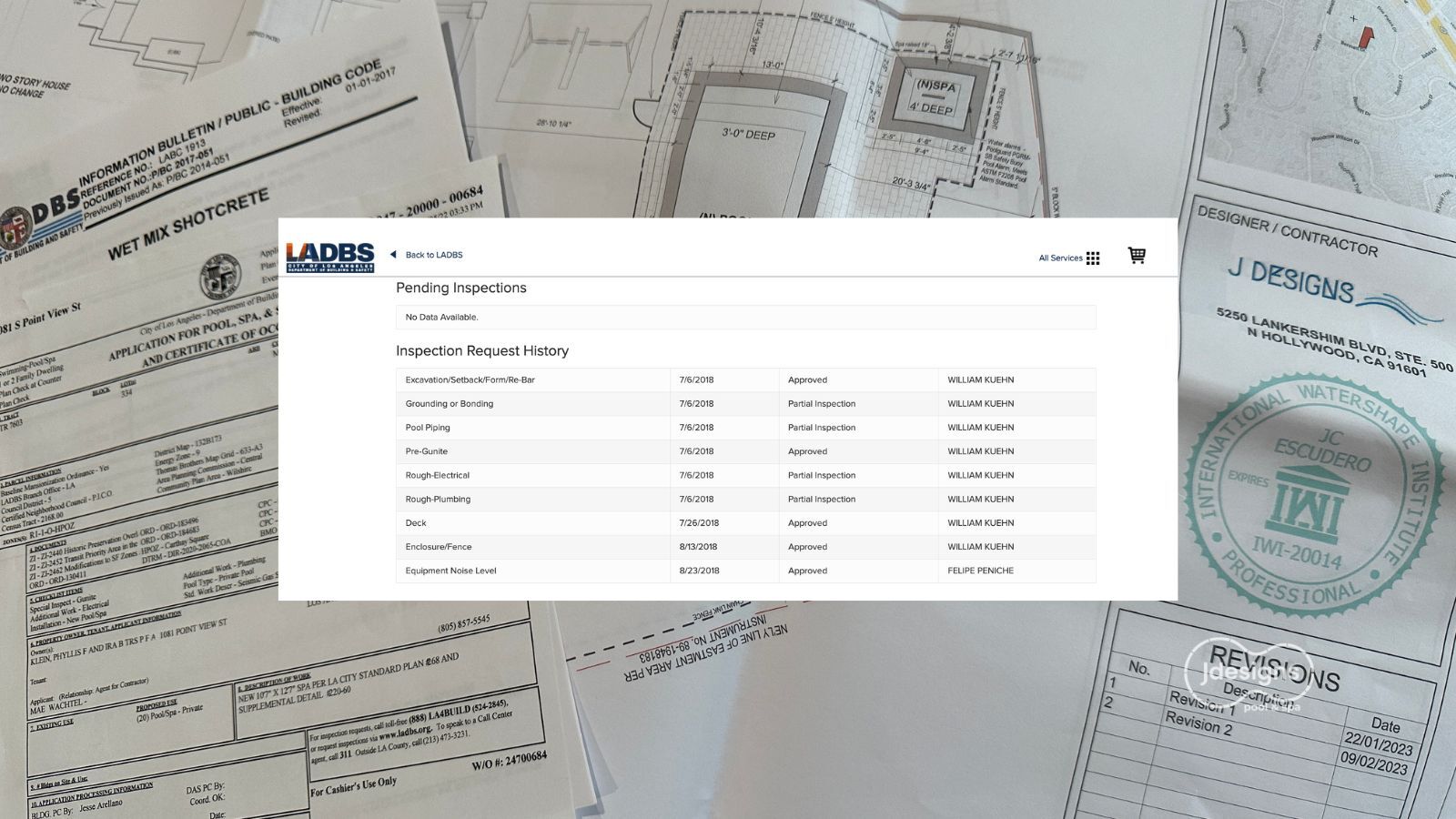
An unpermitted pool in Los Angeles is more than a missing permit. It may also mean there are no approved plans or inspection records confirming how...
 JC Escudero: Sep 2, 2026
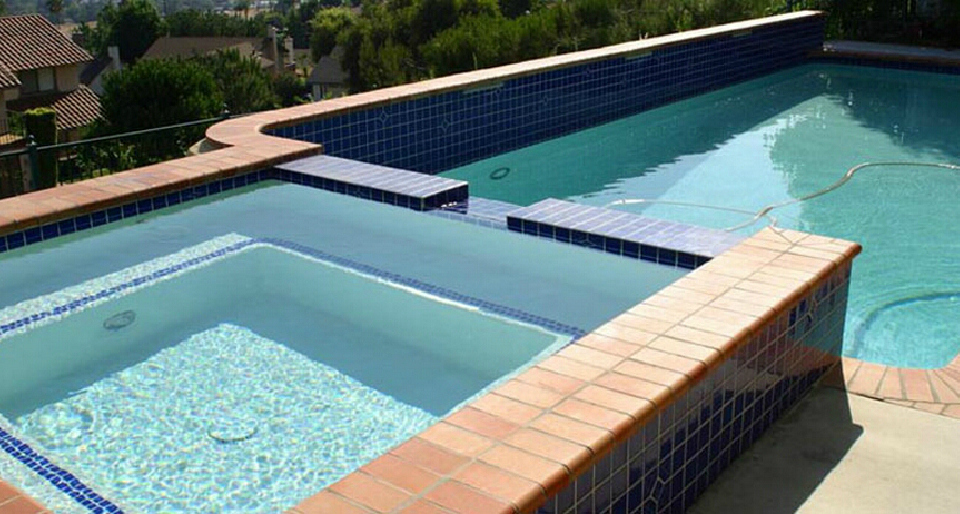
If you own a Spanish Colonial or revival-style home, clay coping can be one of the most beautiful ways to connect your pool while staying true to...
 JC Escudero: Aug 23, 2026
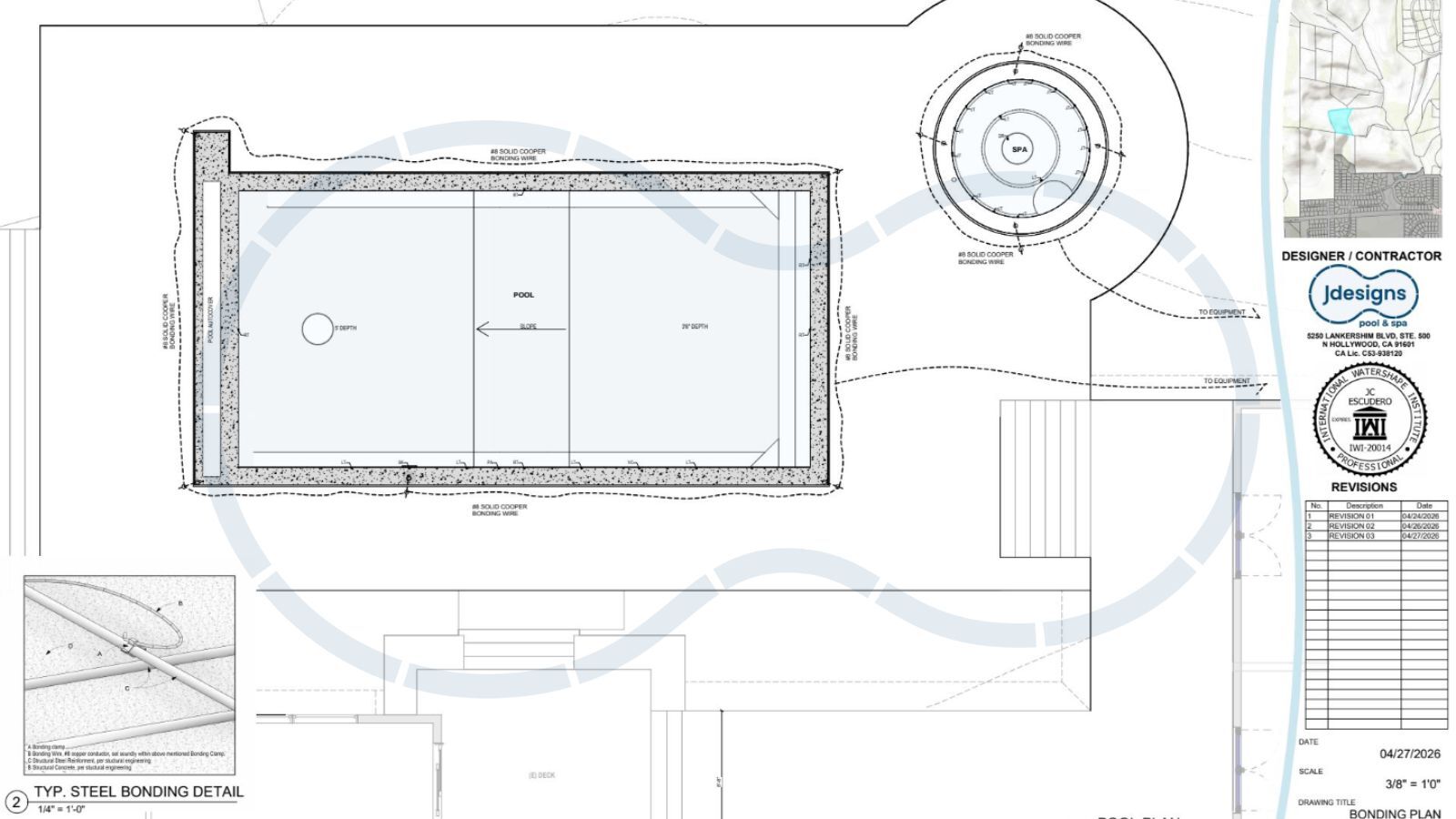
We are all very familiar with the statement that water is an electrical conductor; therefore, this also applies to the pool's surrounding areas and...
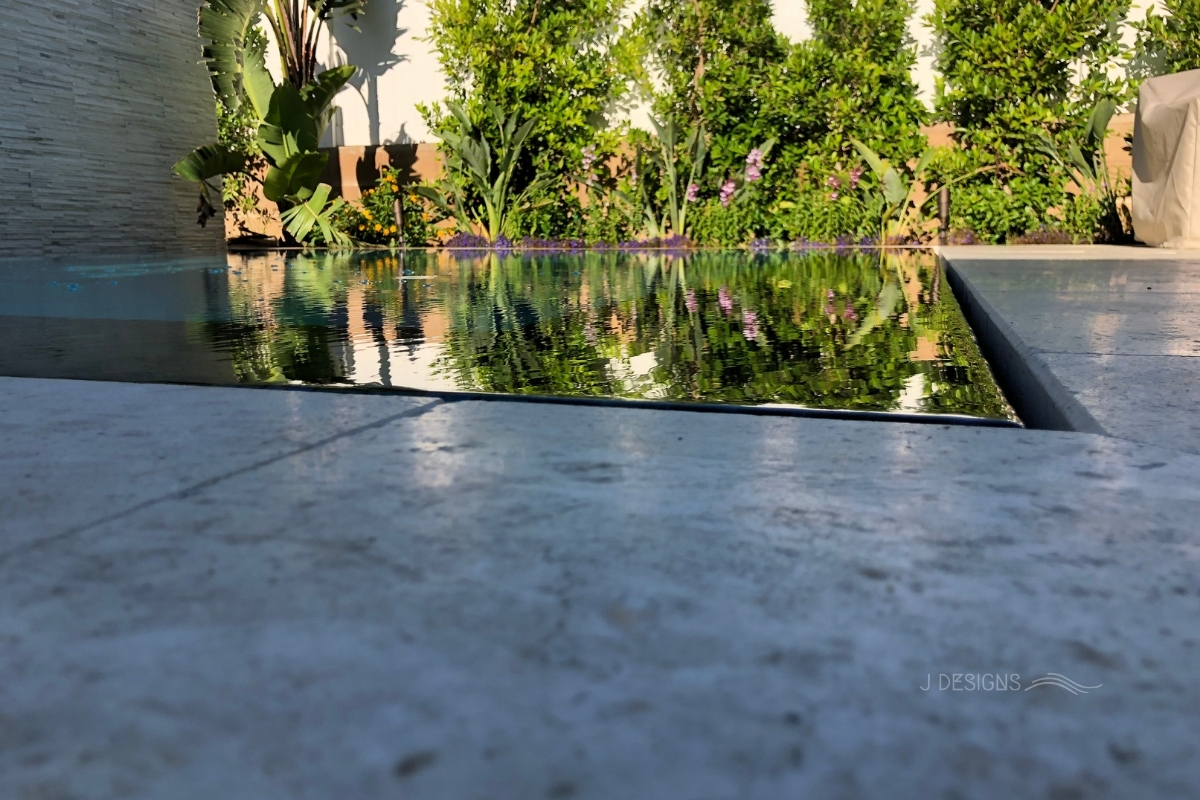
5 min read
JC Escudero : Dec 3, 2025
Have you ever seen a pool that looks like a mirror? Water blends seamlessly into the edge, perfectly level with the deck, flowing evenly in every...
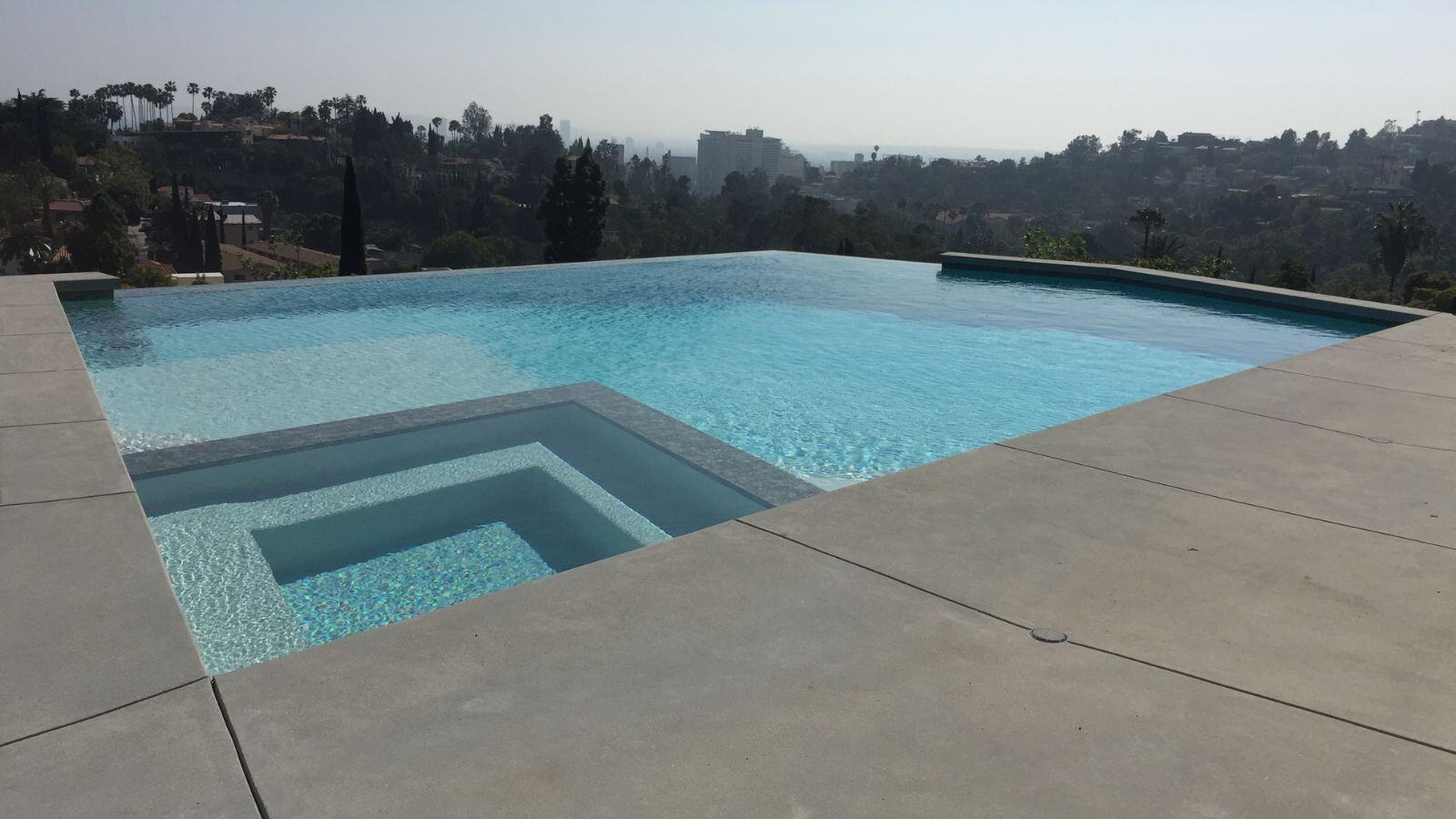
1 min read
 Daniela Escudero : Apr 25, 2025
So, you’ve decided to get a pool—fantastic! But wait… what goes around the pool? That’s where hardscaping comes in. Hardscape is a fancy way of...
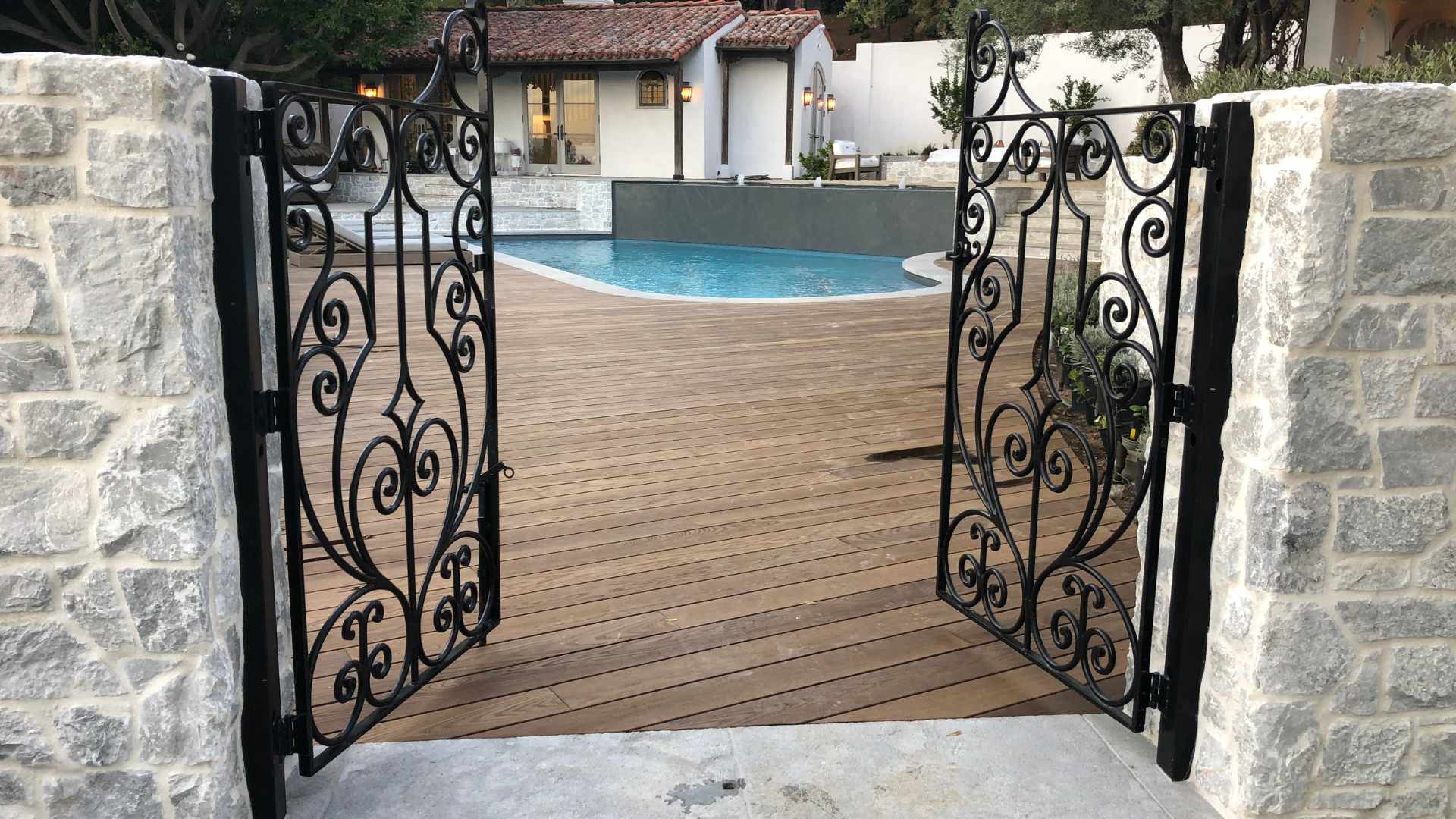
1 min read
JC Escudero : Nov 1, 2025
Trying to choose the right decking material for your pool area and feeling stuck between natural wood and composite?