
How 3D Pool Design Prevents Construction Mistakes
 JC Escudero: Sep 23, 2026
Planning a custom pool involves dozens of decisions about shape, depth, materials, and features. Get one wrong, and you could face expensive rework...
Introduction
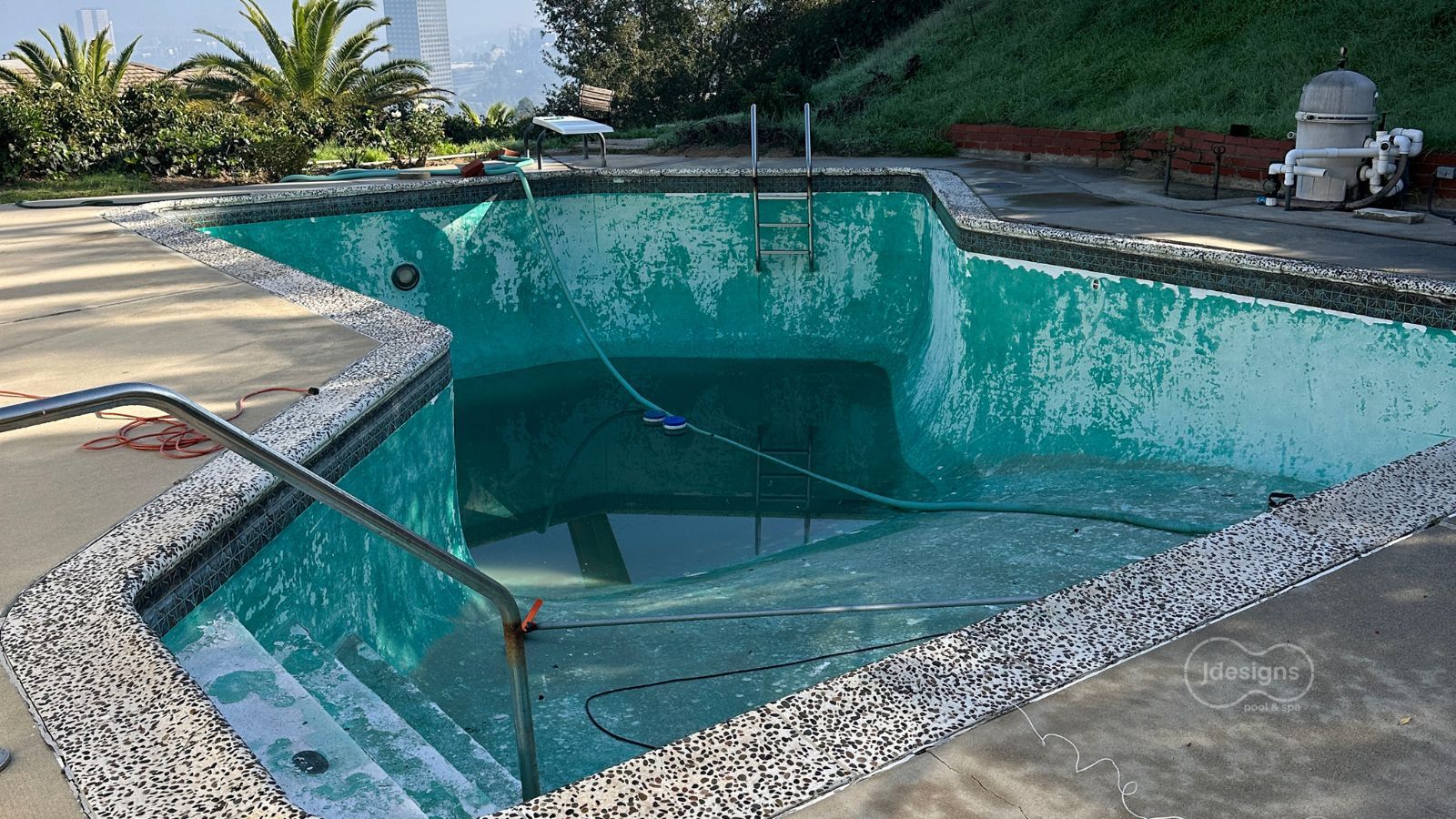
In Los Angeles, many residential swimming pools were built 40, 50, or even 60 years ago. Over time, these structures begin to show the effects of aging materials, outdated construction methods, and decades of exposure to water, chemicals, and ground movement.
After more than 25 years designing, building, and renovating pools, I’ve seen firsthand how these issues often begin with a simple phone call from a homeowner saying, “My pool is leaking.”
But what starts as a leak investigation can quickly become a much deeper conversation about structural integrity, design limitations, and the pool's long-term future.
This three-part blog series walks you through that journey, from the first phone call to uncovering the hidden problems inside aging pools and ultimately to building a brand-new pool inside the existing shell.
It’s a process we call The Pool Inside a Pool Solution, and it has helped many homeowners transform an old problem into an entirely new backyard experience.
The phone rings.
“Hello, J Designs, how can I help you?”
On the other end of the line, I usually hear something like this:
“Hi… my pool is leaking, and I need someone to come take a look and tell me what can be done.”
After more than 25 years designing, building, and renovating swimming pools here in Los Angeles, I receive calls like this all the time. Over the years, I’ve noticed a very clear pattern.
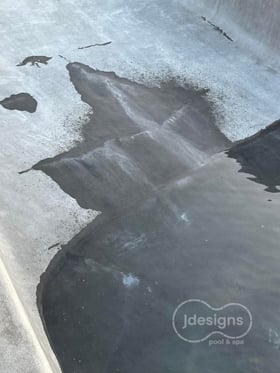
Here in Los Angeles, thousands of residential pools were built between the 1960s and the early 1980s. At the time, backyard pools were booming. Families were building them everywhere, and many of those pools are still in use today.
But most homeowners don’t realize something important.
Many of these pools are now 40, 50, sometimes even 60 years old, and that’s when problems begin to show.
Just like any structure constantly exposed to water, chemicals, and ground movement, swimming pools eventually begin to age. These are some of the facts we face over time:
Add to that the fact that we live in earthquake country, where the ground is constantly shifting, and it’s not surprising that many of these pools are now reaching the end of their original lifespan.
That’s why the phone calls about leaking pools seem to be increasing every year.
And after enough experience with these situations, I usually begin thinking about three possible causes, even before I step onto the property.
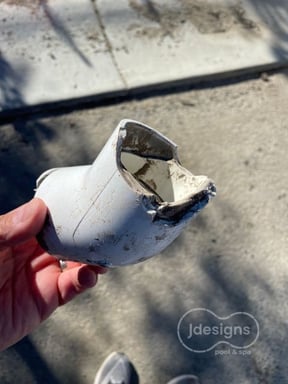
At that point in the conversation, even before I visit the property, I usually start thinking about three possible issues.
Not because I’ve seen the pool yet, but because after many years working on these types of projects, the patterns repeat themselves. In most cases, the problem falls into one of three categories:
1. The plumbing system has failed
2. The pool structure itself is failing
3. The original installation was done poorly
Each of these situations requires a very different approach, and sometimes the only way to truly understand the problem is through proper inspection, leak detection, and, occasionally, some exploratory demolition.
And identifying which one you’re dealing with is the first step to solving the problem correctly.
But more often than not, the first place we start looking is the plumbing system.
And that’s because plumbing failures are usually the most common and the least catastrophic of the three, although they can still become costly if the pipes are buried deep under the yard or beneath surrounding hardscape.
In some cases, large portions of the yard may need to be opened up just to reach the plumbing lines and repair the system.
Sometimes the issue is something you can actually see with your own eyes. Other times, the leak is hidden underground and requires a more detailed investigation to locate. Either way, the plumbing system is usually where the journey begins.
So let’s start there.
When we start investigating a leaking pool, plumbing is usually the first place we look. Over the years, I’ve seen these situations fall into two common scenarios. Some are relatively simple to identify and repair, while others require a much deeper investigation.
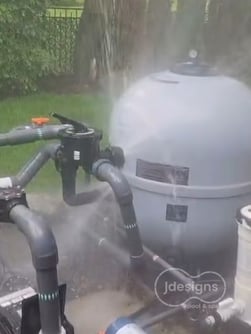
In some cases, the problem is actually visible. You might see water leaking from areas such as:
When this happens, the repair is often fairly straightforward.
It may involve a small area of demolition to expose the damaged pipe or connection, followed by the necessary repair or replacement.
These fixes are usually less invasive and more economical, though they can sometimes be temporary rather than permanent.
And depending on the repair location, they may not always be the most aesthetically pleasing once everything is patched back together.
When the pool leak is easy to identify, this is usually the best-case scenario.
Other times, the problem is not visible at all.
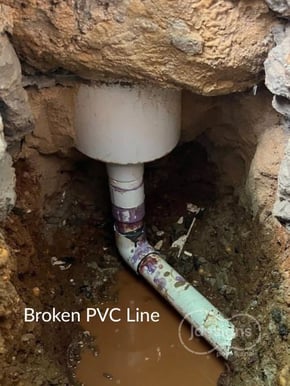
In these situations, the leak is usually discovered through professional leak detection, pressure testing, or exploratory demolition to trace where the water is escaping.
When the investigation leads us deeper into the pool system, we sometimes discover that the plumbing issues are part of a much larger problem.
At that point, a more extensive renovation may be required. This could involve replacing major components such as:
In many cases, portions of the pool deck and surrounding hardscape or the pool plaster itself may also need to be removed to properly access and replace these systems.
When we reach this stage, the next step is always to evaluate something very important:
Is the original pool structure still sound?
But once homeowners begin to understand the scope of work involved, the next question almost always comes up.
Once we begin discussing a larger renovation, most clients pause and ask a very logical question. It usually sounds something like this:
“If we’re already doing all this work… can we change the pool?”
And the answer is yes, in many cases we can.
This is when homeowners begin to think about improvements they’ve wanted for years but never thought were possible. Things like:
Many of these modifications are absolutely possible, but they do require careful planning and the guidance of a soil and a structural engineer who should always evaluate these options and validate the renovations.
This is especially important when modifying depths, adding new loads, or altering the original shell.
In some situations, hillside properties or lots with specific grading conditions may require additional review from local building departments. Fortunately, those situations are more the exception than the rule. In many cases, these renovations offer homeowners an opportunity to finally create the backyard they’ve always imagined.
But sometimes another solution begins to emerge.
As we continue discussing renovation possibilities, sometimes the project becomes more complex than originally expected. With aging concrete and plumbing, outdated systems, structural modifications, and code upgrades, the scope of work can grow significantly. And that’s when we sometimes introduce what I call the Pool Inside a Pool Solution.
Instead of trying to rebuild around a deteriorating structure, we can build a brand-new pool inside the existing shell. Yes, literally a pool inside an existing pool.
For many homeowners, this idea comes as a complete surprise. But in the right circumstances, it can actually be one of the most practical and effective solutions. Rather than demolishing the entire existing pool, which can be extremely disruptive and expensive, the old shell can sometimes serve as a structural container for a completely new pool built inside it.
This allows us to install:
Instead of living with the pool someone installed in 1965, homeowners suddenly have the opportunity to design the backyard oasis they’ve always wanted.
Depths can change - Shapes can evolve - New features can be added.
What started as a leaking pool problem can sometimes become the beginning of a completely new backyard experience. And that’s where the real journey begins.
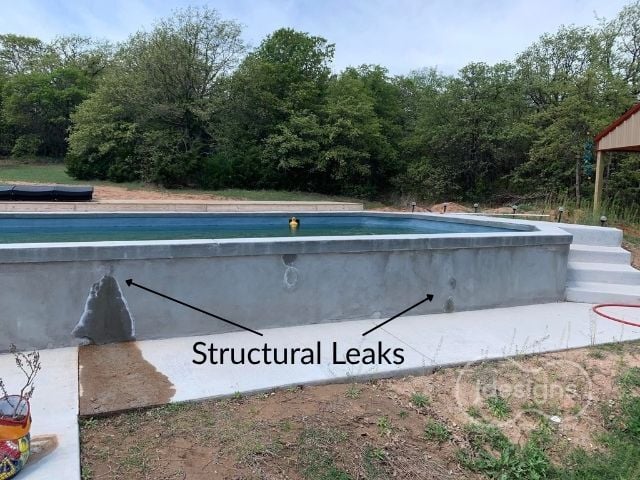
By the time we reach this point in the conversation, we’ve usually explored several possibilities and discussed them carefully with the homeowner. But before any renovation can begin, we need to understand one critical factor:
Sometimes the signs are already visible. Other times, the problems only reveal themselves through deeper investigation.
In the next part of this series, I’ll walk you through what happens when we begin examining the structure itself, including what we sometimes discover inside aging pools here in Los Angeles.
Because once we start looking beneath the surface, the story of an old pool can become far more complex than most homeowners expect.
While we complete the next article, we recommend reading the following article: Reshaping your Pool

 JC Escudero: Sep 23, 2026
Planning a custom pool involves dozens of decisions about shape, depth, materials, and features. Get one wrong, and you could face expensive rework...
 JC Escudero: Sep 19, 2026
Your pool's circulation doesn't simply begin at the pump.
After heavy rain, don't automatically shock your pool or add chemicals. Test the water first.
 JC Escudero : May 10, 2025
Discover the role of caissons in pool excavation. Learn how they stabilize the foundation and enhance pool stability. Dive into this comprehensive...
 JC Escudero : Aug 21, 2024
Learn how Caissons provide stability for hillside pools in Los Angeles. Discover types, benefits, and expert tips for secure hillside pool...
 JC Escudero : Sep 25, 2025
Drainage is often overlooked in SoCal pools. Learn how poor planning can damage your home and what to do to prevent flooding, erosion, and costly...