
Stainless Steel Pools in Los Angeles: When Do They Make Sense?
 JC Escudero: Oct 1, 2026
When most homeowners picture a swimming pool, they probably picture a concrete or shotcrete structure built into the ground.
8 min read
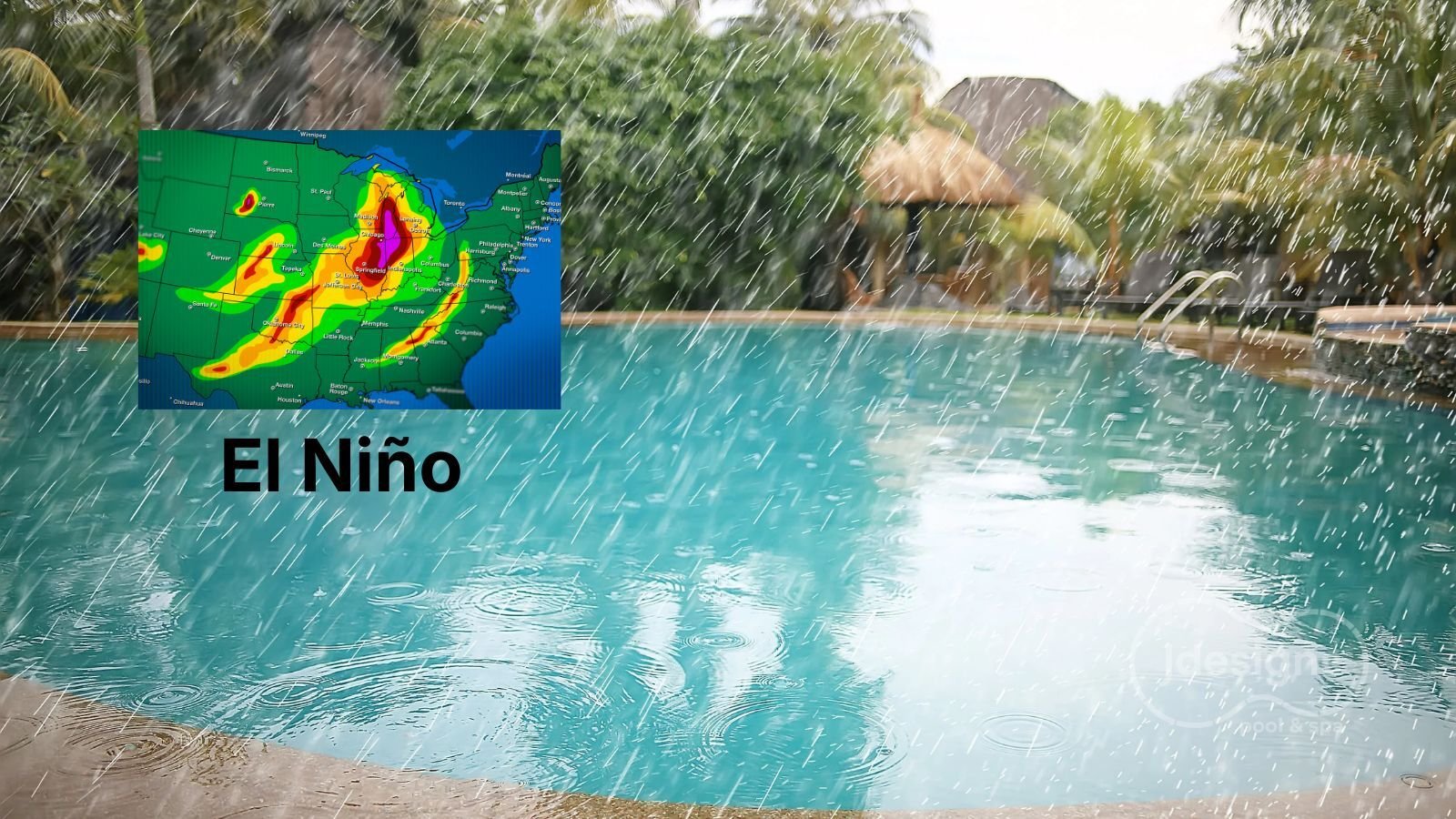
After heavy rain, don't automatically shock your pool or add chemicals. Test the water first.
Rain can dilute chlorine, change the water balance, bring dirt and contaminants into the pool, raise the water level, and put more work on your filtration system. What your pool needs after a storm depends on what actually happened to the water.
One other important warning: don't completely drain your pool simply because it's muddy and filled up during heavy rain. When the surrounding soil is saturated, groundwater pressure around the pool can create serious problems for an empty pool shell.
Our approach at J Designs is simple: test first, figure out what changed, then treat the actual problem.
A big storm just passed through Los Angeles, and your pool doesn't look the same.
Maybe it's cloudy.
Maybe it's turning green.
Maybe the water is almost to the top of the coping.
And one of the first questions homeowners ask us is:
"Should I shock the pool?"
Before you start adding chemicals, the first thing we need to figure out is what actually happened to the water.
At J Designs, that's how we approach post-rain pool problems.
We don't assume that shock will fix everything, because sanitation may be only one part of the problem. Chlorine may be low, but pH and alkalinity may also have changed. The storm may have introduced dirt and organic debris. The filter may be overloaded. The pool may be overflowing.
Sometimes several of those things are happening at the same time.
We've maintained, repaired, and upgraded pools throughout Southern California for years, and one of the biggest things we want homeowners to understand is this:
Don't treat what you haven't tested.
Let's go through what we actually look at after heavy rain and how you can decide what your pool needs next.
This is usually where homeowners want to start.
Our answer is: not until you test the water.
Shock addresses a sanitation problem. But after a storm, we don't yet know whether sanitation is the only problem.
Rain can dilute the water already in your pool. At the same time, wind and runoff may have introduced leaves, soil, pollen, insects, mulch, grass clippings, and other contaminants.
Your chlorine is working on all of that. But your pH and alkalinity may have changed too, and there may also be a filtration or circulation problem.
So assuming shock will resolve everything isn't the right answer.
If testing shows that your chlorine has dropped significantly, the pool has a high sanitizer demand, or algae is beginning to develop, then shock may be part of the solution.
If your chlorine is still where it should be and the water is otherwise balanced, adding a large amount of chlorine simply because it rained may be unnecessary.
Test first. Then make the decision based on the pool in front of you.
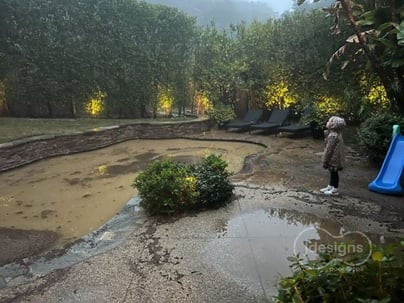
It can.
Heavy rain adds a significant amount of new water to the pool, which can dilute the concentration of chlorine already present.
But dilution isn't the only thing happening.
Think about everything that comes with a Southern California storm.
Leaves and dirt blow into the water. Landscaping runoff may carry soil and other organic material toward the pool. Dust, pollen, and smaller particles end up in the water even if you don't immediately see them.
Your chlorine has to sanitize all of that.
So when homeowners tell us, "My chlorine was fine before it rained," that doesn't necessarily mean something unusual happened.
The chlorine didn't simply disappear.
It was diluted, and it may have been consumed while dealing with everything the storm brought into the pool.
That's why we want to test it rather than guess.
Yes, and this is one reason we don't want homeowners focused only on chlorine.
Your pool is a balanced system.
Chlorine matters, but so do pH and total alkalinity.
Heavy rainfall introduces additional water, which can shift the chemical balance. Rainwater can alter pH levels, and contaminants brought in by the storm can introduce further variables. If total alkalinity drops too low, it may be difficult to stabilize pH. Significant pH changes, either way, can also affect your sanitizer's effectiveness.
This is where adding products without a proper test kit can create a bigger problem.
We've seen homeowners buy a product online or add something because the label sounds like it matches the problem they're seeing.
But if you don't know what's already in the water, you can adjust one thing and create a problem somewhere else.
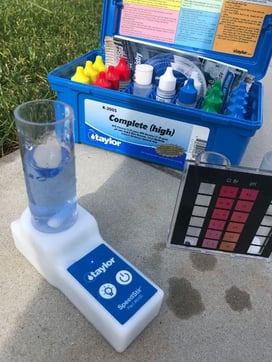
At minimum, we want to know:
After a significant overflow or multiple days of heavy rain, additional testing may be useful depending on the condition of the pool.
The point isn't to test everything just because you can.
It's to understand what you're treating and how the products will interact before you start adding them to the water.
Here's a situation we see regularly after storms.
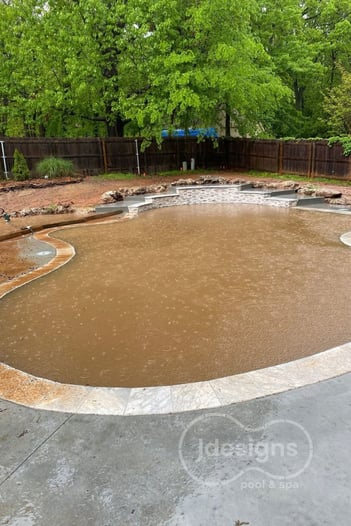
We arrive, and the pool is completely full or even overflowing. The water clarity is poor, sometimes so much that you can't see the drains at the bottom.
At the same time, the equipment area may have water collecting around it.
At that point, we're not standing there thinking, "Which chemical should we dump in first?"
There is a process.
First, we need to understand the water level and make sure there is a proper place to discharge excess water if the pool needs to be lowered.
Then we test the water.
After that, we can decide what the pool actually needs.
Maybe the solution is primarily:
Or it may require a combination of those things.
Cloudiness can come from fine particles suspended in the water, low sanitizer levels, an overloaded filter, poor circulation, or several of these factors working together.
That's why there isn't one bottle on the shelf that fixes every cloudy pool after a storm.
Rain doesn't make the water green by itself.
Usually, algae has been given an opportunity to grow.
A storm can reduce the amount of available sanitizer while introducing more contaminants for that sanitizer to deal with.
If the filter is dirty or circulation is reduced, conditions become even more favorable for algae.
This can happen quickly, especially if the pool wasn't in ideal condition before the storm.
If you start seeing green water, don't wait several more days hoping the filtration system will take care of it on its own.
But we still come back to the same starting point:
Test it first.
Then you can determine the appropriate sanitizer treatment, correct the water balance, remove debris, and ensure the filtration system can do its job.
Do not completely drain your pool.
This is one of the post-rain decisions we take very seriously.
After prolonged or heavy rainfall, the soil surrounding the pool can become saturated.
That creates hydrostatic pressure around the pool shell.
If you remove the water weight inside the pool while there is significant groundwater pressure outside it, the pool shell may shift or lift.
That can turn a water-level problem into a much bigger structural problem.
Lowering an overly full pool to a safe operating level is completely different from emptying it.
When we find an overflowing pool, one of the first things we want to identify is where that excess water can safely go.
If there isn't an appropriate drainage outlet, that's something we need to understand before we start moving large amounts of water.
Don't overthink it, but don't take a shortcut here either.
This is the part generic advice sometimes skips.
There is a process.
If we arrive after a storm, we're looking at the whole situation, not only the color of the water.
We want to know:
Only after answering those questions do we decide what comes next.
Sometimes people expect the professional answer to be complicated.
Often, it isn't.
The difference is that we're trying to identify the problem before choosing the treatment.
Possibly.
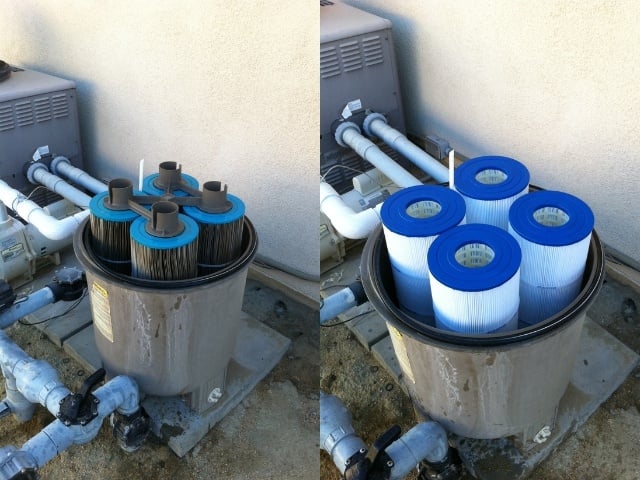
After heavy rain, your filtration system may be dealing with significantly more material than it normally does.
Even after you remove larger leaves and debris, the filter may still be capturing fine dirt and organic material that you can't easily see.
If your circulation is reduced or your filter pressure has climbed, the filter may need attention.
Depending on the type of system you have, that might mean cleaning a cartridge filter or backwashing a filter designed for backwashing.
You may also need to run the pump longer while the water clears and chemistry stabilizes.
But running the pump for 24 hours doesn't accomplish much if the filter is completely loaded with debris.
The pump, filter, and water chemistry have to work together.
Once the storm has passed and it's safe to be outside, don't wait several days to check the pool.
Ideally, test it within the first 24 hours.
Waiting until the pool turns green is waiting for the pool to tell you that the problem has already gotten worse.
If you test early, you may catch a relatively small change before it becomes an algae or water-clarity problem.
After making adjustments, test again as needed to confirm the water is moving back in the right direction.
Testing your pool within the first 24 hours after heavy rain is one of the simplest and most effective ways to prevent small water chemistry changes from becoming expensive pool problems.
Maybe, but don't make the decision based only on whether the water looks okay from the deck.
Test it.
Make sure the chemistry is in the appropriate range and verify that your equipment is operating normally.
And pay attention to visibility.
If the pool is cloudy enough that you cannot clearly see the drains or bottom of the pool, nobody should be swimming in it.
That's not just a water-quality issue. It's a safety issue.
Storms can also leave branches and other debris around the pool and deck, so take a few minutes to look around before anyone gets back into the water.
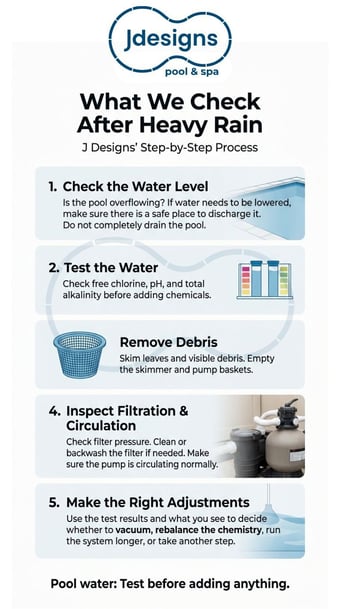
If you're standing outside after the storm wondering where to start, here's the order we'd recommend:
That's a much better approach than throwing shock into the water and hoping everything works itself out.
If you've tested the water, cleaned the pool and filtration system, and things still aren't improving, it's probably time to get another set of eyes on it.
We would also recommend professional help when:
At J Designs, we're not looking only for the fastest way to make the water blue again.
We want to understand why it happened and whether something else contributed to it.
If there's one thing we want you to remember after a heavy Los Angeles rainstorm, it's this:
Test the pool before you add anything.
Don't assume the answer is shock.
Don't completely drain a full pool because the water level makes you nervous.
And don't ignore the filter, circulation, drainage, or debris while concentrating only on chemistry.
Once you understand what changed, the next step is usually much clearer.
If more rain is expected, prepare the pool and surrounding property before the storm arrives. Use our Pool Storm Preparation Checklist to work through the things you can check ahead of time.
At J Designs, we help Los Angeles homeowners maintain, repair, and upgrade their pools. If you're dealing with water that won't clear, an overflowing pool, or a post-storm problem you're not comfortable diagnosing yourself, we can help you figure out what's actually happening before you start throwing solutions at it.
 JC Escudero: Oct 1, 2026
When most homeowners picture a swimming pool, they probably picture a concrete or shotcrete structure built into the ground.
 JC Escudero: Sep 26, 2026
When most homeowners choose tile for a swimming pool, they naturally focus on the tile itself: the color, shape, texture, and overall design, because...
 JC Escudero: Sep 23, 2026
Planning a custom pool involves dozens of decisions about shape, depth, materials, and features. Get one wrong, and you could face expensive rework...
 JC Escudero : Mar 29, 2025
Improper expansion joints can lead to cracked pool tiles and costly repairs. Learn how to prevent damage with proper soil prep and structural design.
Hiring a pool service company? Learn how to choose the right provider with 5 expert tips on licensing, pricing, services, and safety compliance.
Serving Los Angeles homeowners with VGB-compliant pool design and inspections. J Designs and Poolwerx help keep your pool safe and fully compliant.