
How 3D Pool Design Prevents Construction Mistakes
 JC Escudero: Sep 23, 2026
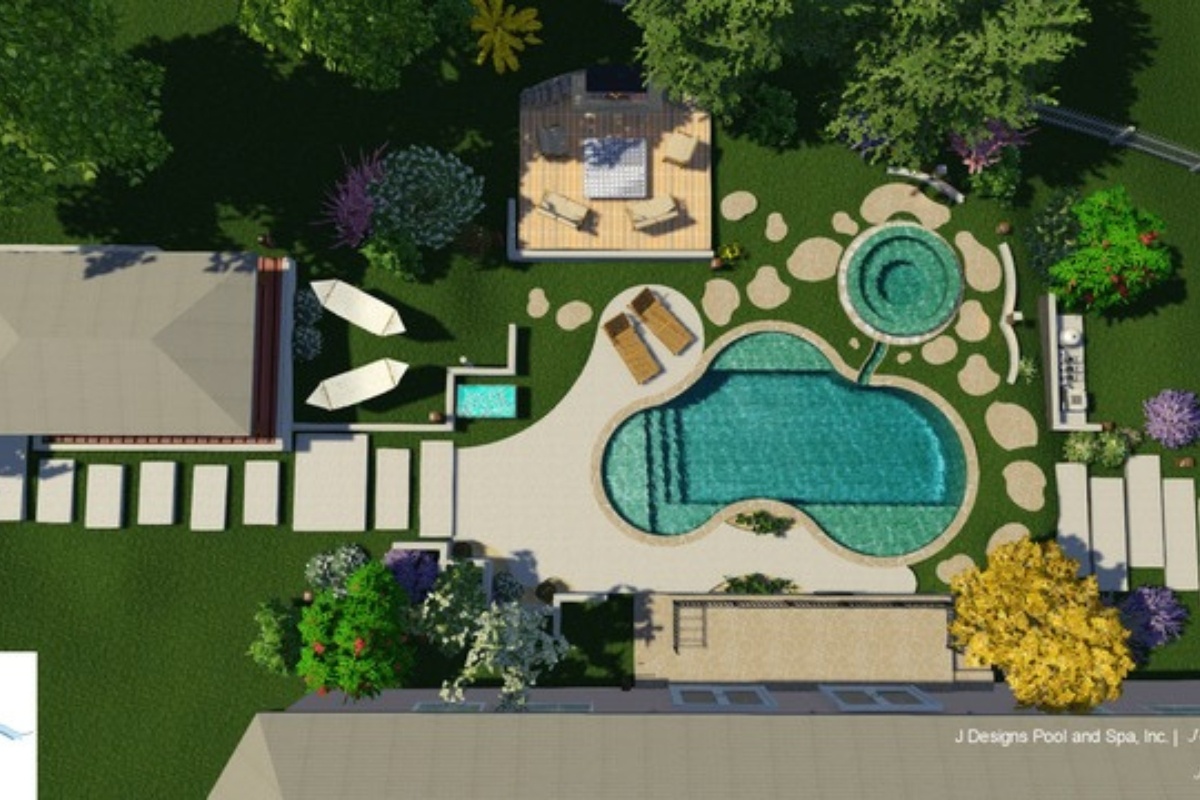
Planning a custom pool involves dozens of decisions about shape, depth, materials, and features. Get one wrong, and you could face expensive rework...

An infinity pool may look simple at first. To many homeowners, it can seem like a pool with one edge missing.
In reality, it is much more complex.
Unlike a traditional pool, an infinity pool does not hold all its water within a single enclosed shell. Instead, water flows over a carefully engineered edge into a hidden catch basin below, then circulates back through the system.
That overflow edge creates the vanishing-edge effect, also known as a negative-edge or disappearing-edge pool. While the visual effect may appear effortless, the system behind it is not. An infinity pool relies on structural engineering, hydraulic design, elevation control, and waterproofing, all working together.
That is why infinity pools can fail when they are treated like standard pools, especially on hillside properties in Los Angeles, where soil movement, slope conditions, drainage, and structural loads all matter.
A well-designed infinity pool is not just about appearance. It is about building a beautiful structure that performs safely, reliably, and smoothly for years to come. Join me in this article to review the facts to build an Infinity pool the right way.
.png?width=367&height=308&name=August%2011%20(1).png)
The vanishing edge is the part of the pool where water flows over the wall in a smooth, level sheet.
When it is designed correctly, the water appears to blend into the horizon, whether that is the ocean, the city skyline, the mountains, or the surrounding landscape.
This detail creates the infinity effect.
But for that effect to look clean and effortless, the edge has to be engineered with extreme precision. Even small problems with leveling, flow rate, structural movement, hydraulic balance, or edge geometry can make the water look uneven, noisy, turbulent, or visually broken.
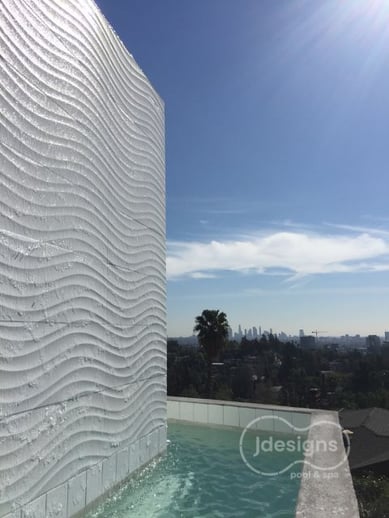
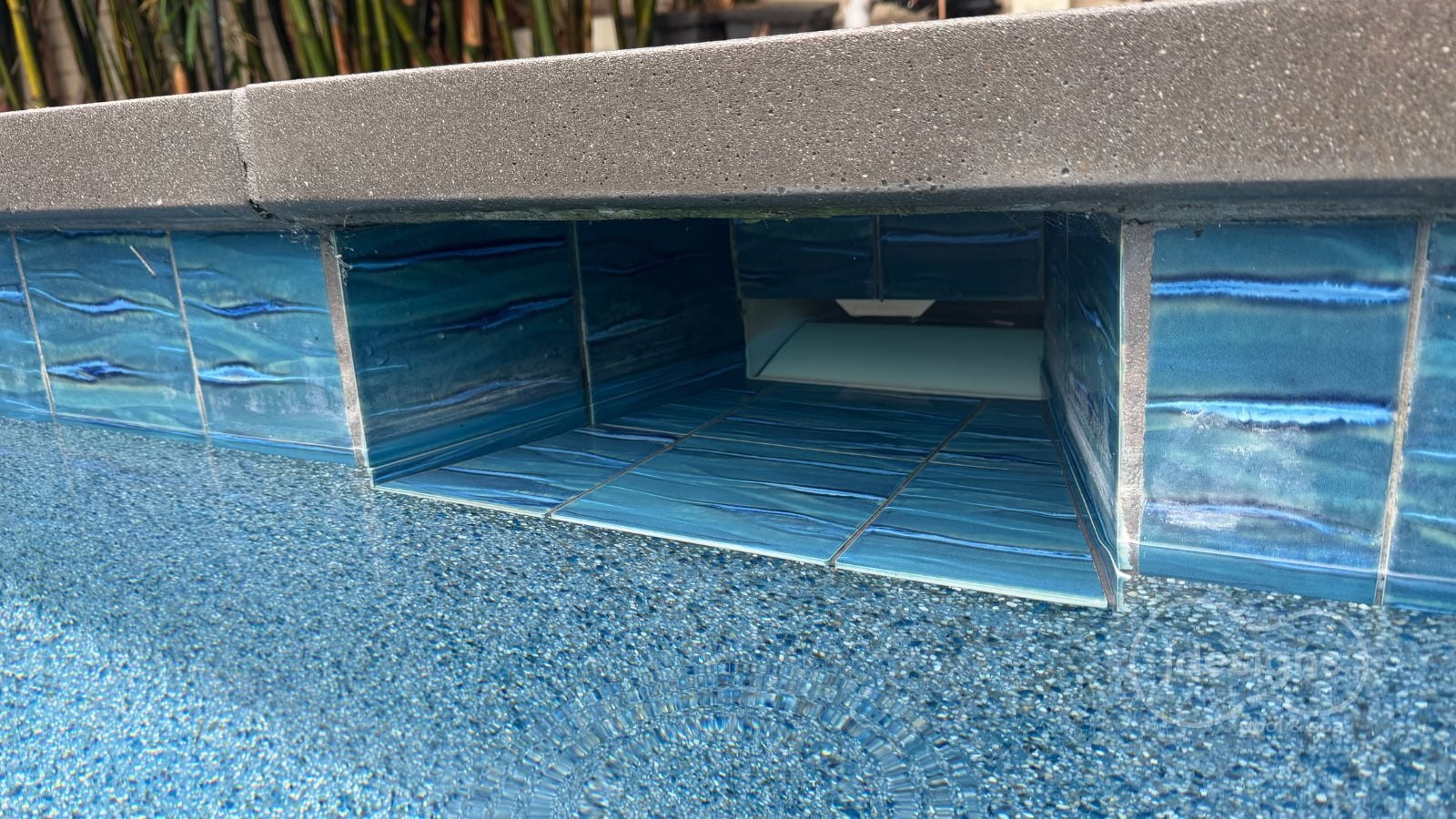
What many homeowners do not realize is that all of the water flowing over the infinity edge has to go somewhere. That water is collected in a hidden trough below the edge called the catch basin.
The catch basin captures the overflow and sends it back into the pool’s circulation system. In many ways, it works like a second, smaller pool connected to the main structure.
It must be designed to handle:
If it is undersized or poorly engineered, the system can flood, lose balance, or disrupt the infinity effect.
Infinity pools require more advanced hydraulic design than traditional pools. Water must flow continuously at the right rate to keep the overflow edge smooth and even.
If the flow is too weak:
If the flow is too strong:
That is why pump selection, pipe sizing, water velocity, surge calculations, filtration capacity, and edge leveling all have to work together with precision.
One of the biggest misconceptions about infinity pools is that they are mainly about appearance.
In reality, the visual effect is the result of careful design, structural engineering, hydraulic performance, soils analysis, waterproofing, and construction precision.
A successful infinity pool is not just about water spilling over the edge.
It is about designing a pool that creates a seamless visual effect while safely controlling moving water in changing outdoor conditions.
That is why infinity pools require far more planning, precision, and long-term expertise than most traditional pools
One of the biggest risks with infinity pools is what some pool builders quietly call the “poor man’s infinity pool,” a shortcut version designed to look like a luxury vanishing-edge pool without the engineering, structural support, or hydraulic precision required for it to function properly.
At first glance, these pools can appear impressive. But the reality underneath is often far different. Contractors may cut corners on structural support, water management, drainage, waterproofing, soil stabilization, or elevation calculations simply to imitate the visual effect at a lower cost.
Over time, homeowners may experience:
On hillside properties in Los Angeles, these problems can become especially serious. Instead of adding value, a poorly designed infinity pool can become a liability.
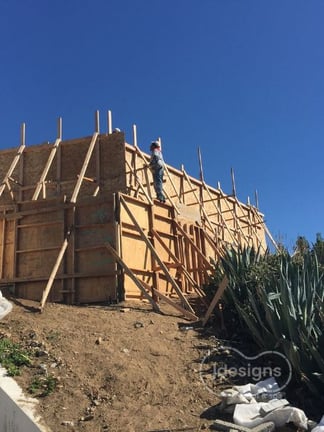
Infinity pools built on hillside properties are far more complex than standard pools. On steep or unstable sites, the pool must function as both a water feature and a structural system.
Unlike pools built on flat ground, hillside infinity pools must constantly resist:
That is why proper soil analysis and structural engineering are so important from the beginning. Even slight movement can affect the vanishing edge, because the entire effect depends on precise leveling. A fraction of an inch of settlement can disrupt water flow, overflow performance, and the clean visual line that makes an infinity pool work.
Structural mistakes in infinity pools are rarely cosmetic problems; they are often six-figure reconstruction projects.
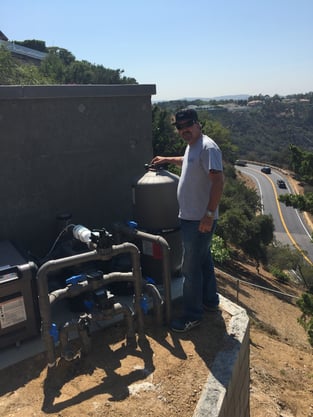
One of the most overlooked parts of an infinity pool is the hydraulic system behind the vanishing edge. While the effect may look simple, creating that smooth, mirror-like overflow requires precise water management.
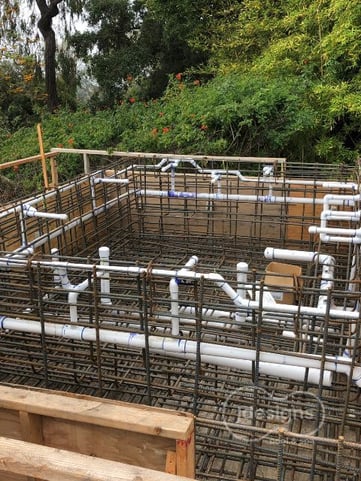
Common hydraulic failures include:
Many homeowners assume these are cosmetic issues, but they often begin with incorrect hydraulic calculations. In many cases, failing infinity pools are not design failures at all. They are hydraulic engineering failures.
One of the most important hydraulic concepts in an infinity pool is water-in-transit. This is the volume of water that is constantly moving through the system rather than sitting still in the main pool.
That water is moving through:
If that volume is miscalculated, the pool can experience overflow problems, unstable water levels, or circulation failures.
Surge capacity is the system’s ability to absorb displaced water during swimmer use, rainfall, and changing water movement. In an infinity pool, that extra water has to go somewhere without disrupting the edge effect.
If the surge basin is undersized:
These are not just visual problems. In many cases, they are signs of hydraulic engineering failures.
For the vanishing edge to appear seamless, the overflow edge has to remain perfectly level across the entire span. Even small deviations in settlement, inaccurate concrete work, poor formwork, or movement over time can immediately disrupt the effect. This is also where experience in selecting the right materials matters, because rough surfaces or materials that are inconsistent in dimension can interfere with moving water and create visual and performance problems.
Homeowners may notice:
With infinity pools, even a slight leveling error or poor material choice can break the clean visual line that makes the edge disappear.
Water velocity has to be carefully controlled for an infinity edge to perform properly.
If water moves too fast:
Turbulence develops
If water moves slowly:
Dead spots form
The goal is not maximum flow. It is controlled, balanced, uniform flow.

One of the biggest misconceptions about infinity pools is that the vanishing edge alone creates the visual impact. In reality, the success of an infinity pool depends on sightlines, elevation, and perspective just as much as the edge itself.
Designers need to consider how the pool will be viewed from:
Interior living spaces - Outdoor seating areas - Balconies - Entry points - Nighttime Lighting - Reflection on the water
A properly designed infinity pool is engineered not just for water flow, but for human visual experience.
This becomes especially important in view-driven communities like Malibu, Pacific Palisades, Hollywood Hills, and Bel Air, where the surrounding landscape is part of the entire experience.
The best infinity pools feel visually effortless because the view, elevation, and perspective were carefully planned from the beginning.
While the vanishing edge is the visual centerpiece of an infinity pool, waterproofing determines whether the system performs properly over the long term. Because infinity pools are exposed to constant water movement, fluctuating pressure zones, and continuous overflow, even small waterproofing failures can turn into major problems.
Common failure points include: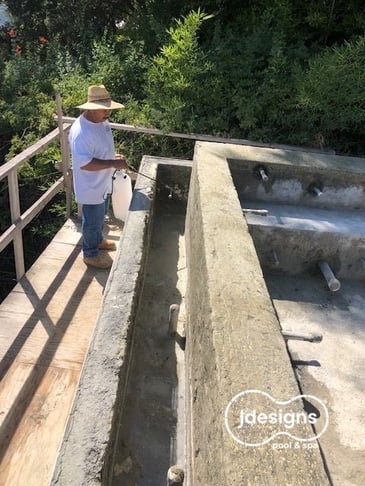
When low-quality materials or poor installation methods are used, homeowners may experience leaks, cracked tile, staining, efflorescence, concrete deterioration, or water intrusion beneath the surrounding hardscape. Luxury appearance alone does not guarantee long-term durability.
Infinity pools usually require more maintenance than traditional pools. This is not necessarily a disadvantage, but homeowners should understand that these systems have tighter tolerances and higher performance demands.
Maintenance costs are often higher in areas such as:
Small issues such as calcium buildup, clogged trough drains, slight settling, or pump calibration problems can quickly disrupt the clean, mirror-like effect homeowners expect.
This is especially true in coastal and hillside communities like Malibu and Pacific Palisades, where wind exposure can dramatically affect water loss.
These can quickly disrupt the clean, mirror-like effect homeowners expect.
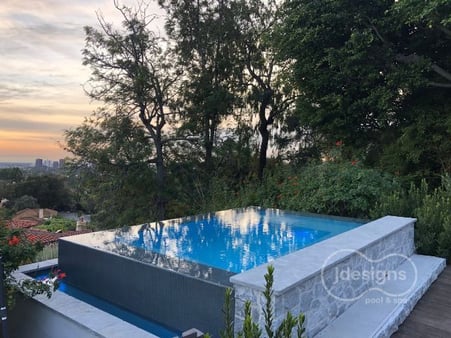
Infinity pools are designed to visually blur the boundary between water and the surrounding landscape, but that same effect can create safety concerns if not carefully planned. This is especially important on hillside properties and in spaces used by children, older adults, or guests unfamiliar with the layout.
Key safety concerns include:
An edge that disappears beautifully during the day should still remain safe and visually understandable at night.
Building a successful infinity pool requires far more than creating a dramatic visual effect. The most important work happens long before water ever reaches the vanishing edge.
The process starts with understanding the property itself. Soil conditions, slope stability, drainage behavior, and elevation changes all influence how the pool will perform over time. This is especially important on hillside properties in Los Angeles, where terrain complexity requires specialized engineering.
From there, the project must be engineered as a complete system from the outset. Structural engineering, hydraulic calculations, waterproofing, and edge leveling all need to work in harmony for the pool to perform as beautifully as it looks.
Choosing the right builder is one of the most important parts of a successful infinity pool project. In Los Angeles, especially on hillside properties, homeowners should look for a builder with real experience in structural engineering, hydraulic design, soils coordination, waterproofing, and elevation precision rather than someone focused only on the visual effect.
Before hiring a builder, homeowners should ask:
A successful infinity pool is not simply built to look impressive. It is carefully engineered from the ground up for long-term beauty, safety, and performance. When done correctly, it can elevate the property and outdoor living experience. When corners are cut, the repair costs can be substantial.

 JC Escudero: Sep 23, 2026
Planning a custom pool involves dozens of decisions about shape, depth, materials, and features. Get one wrong, and you could face expensive rework...
 JC Escudero: Sep 19, 2026
Your pool's circulation doesn't simply begin at the pump.
After heavy rain, don't automatically shock your pool or add chemicals. Test the water first.
 JC Escudero : Oct 30, 2025
Discover how to design the best indoor pool for your home. Learn about costs, HVAC, waterproofing, and key tips to create a beautiful,...
 JC Escudero : Aug 18, 2026
Learn when a retaining wall in Los Angeles may need a permit, engineering, or GPI, and how drainage, slopes, and pools affect the design.

 Daniela Escudero : May 25, 2026
Learn why late-stage pool design changes trigger re-engineering, permits, utility reviews, delays, higher costs, and how to avoid these unexpected...