
Buying or Selling a House With an Unpermitted Pool in Los Angeles: Risks, Fines & What to Do
An unpermitted pool in Los Angeles is more than a missing permit. It may also mean there are no approved plans or inspection records confirming how...
Why a Proper Soils Exploration Is Critical Before Building a Pool: A homeowner’s guide to preventing settlement, cracking, uplift, and long-term structural damage.
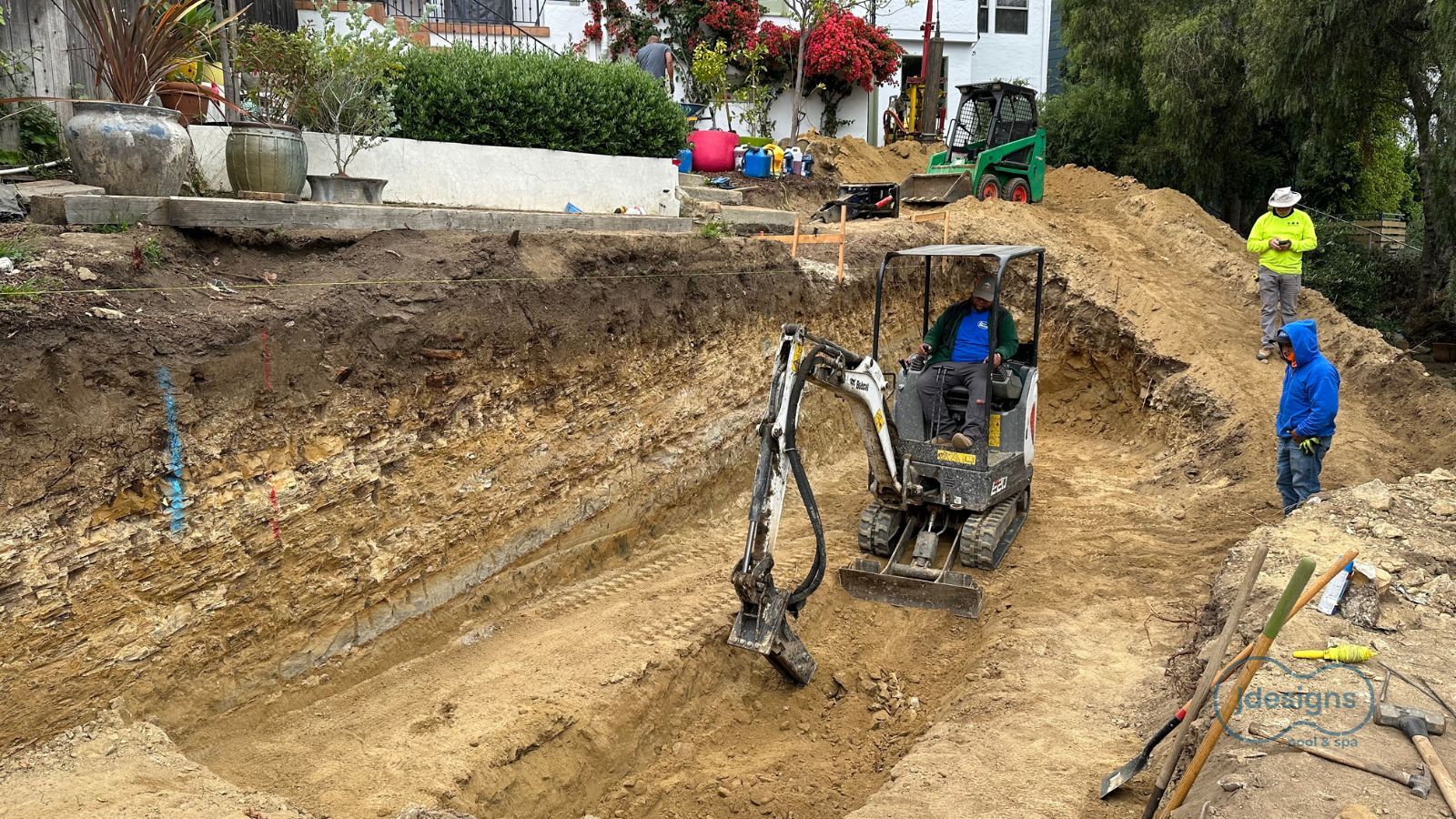
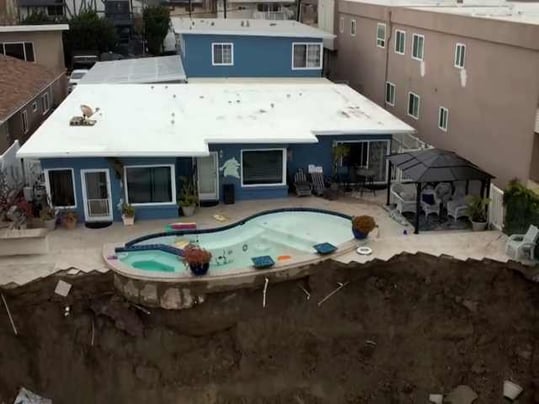
What happens when a swimming pool is built on soil that was never meant to hold its weight, or worse, on land that has been improperly filled, compacted, or evaluated?
Even a brand-new, visually “stable” backyard can hide soil conditions capable of cracking a pool shell, shifting a deck, or creating costly structural failures. How many homeowners realize this before they start digging?
In this article, you’ll learn why a proper soil exploration or geotechnical report is one of the most important and most misunderstood steps in designing and building a long-lasting, safe swimming pool. We’ll also explain why responsible builders repeat soil verification after excavation, before any concrete is placed, to confirm that what was “expected” in the report actually matches what is found in the ground. Backed by engineering standards and Los Angeles Department of Building and Safety (LADBS) grading requirements, we’ll break down how soil behavior, groundwater, and site history directly affect your pool’s performance, your safety, and your long-term cost.
You’ll see
By the end, you’ll understand why spending money on soil exploration up front is one of the most innovative ways to protect your investment and avoid the hidden costs that often come with low-bid construction.
For many homeowners, a swimming pool feels like a straightforward project: design a shape, dig a hole, pour concrete, add finishes, and enjoy.
What actually determines whether that pool lasts for decades or becomes a source of stress and repair bills is not just the concrete or the tile, it’s what the entire structure sits on: the soil.
In Los Angeles and surrounding regions, this matters even more. Our terrain is a patchwork of:
- Man‑made fill
- Hillside grading cuts and pads
- Variable clay layers
- Old grading operations
- Former creek beds and drainage paths
- Fluctuating groundwater levels
-Improper drainage runoffs, like gutters that end up in yards, not the storm drains.
Any one of these can compromise a pool if they’re not properly evaluated and accounted for in the design. That’s why a soil exploration, geotechnical report, or, at a minimum, a professional soil inspection is not a “nice to have.” It is the invisible foundation of an innovative pool project.
The Earth's crust has multiple layers just like a slice of cake.
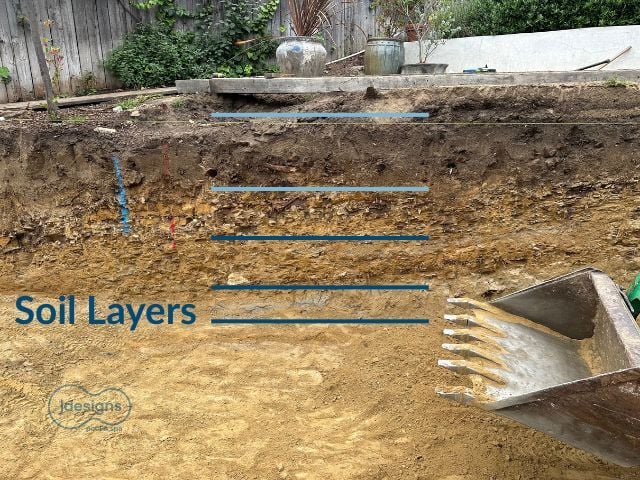
A soil exploration (often called a “soils report” or “geotechnical report”) is the subsurface equivalent of an MRI. It informs your design and engineering team of what lies beneath your proposed pool location before excavation begins.
Just as a surgeon would not operate without imaging or an X-ray, responsible engineers and builders should not design or construct a pool without understanding what’s below the surface. A proper soil investigation completed by a Geotechnical Engineer is the first step and typically includes:
Test borings or test pits – controlled holes or trenches to see and sample the different soil layers
Laboratory analysis of soil samples – to measure strength, moisture content, expansion potential, and more
Identification of fill, loose soil, organics, or compressible layers – materials that may move, rot, or settle over time
Evaluation of groundwater depth and seasonal fluctuations – how high water can rise throughout the year
Assessment of risks such as expansion, settlement, or liquefaction – critical in seismic zones
Recommendations for excavation, compaction, foundations, and drainage – practical instructions the builder and engineer can follow. Without this information, building a pool is guesswork. The pool might sit on solid native ground – or on a hidden problem that only reveals itself years later through cracks, tilting, or leaks.

Even with a strong initial soils report, the conditions in your specific excavation can reveal surprises: old debris, softer pockets of soil, higher moisture, or fill that wasn’t obvious in the early borings. That’s why a best‑practice approach includes:
1. Pre‑design soils exploration/report: To understand the site globally and guide engineering.
2. Post‑excavation soils inspection A qualified soils or geotechnical engineer reviews the actual open excavation, confirms that suitable bearing soil has been reached, and may recommend additional over‑excavation, recompaction, or reinforcement before any steel or shotcrete is placed.
This second step is where many low bids cut corners. Skipping it can leave a pool shell sitting partly on good ground and partly on marginal material, a recipe for differential movement, cracking, and long-term distress.
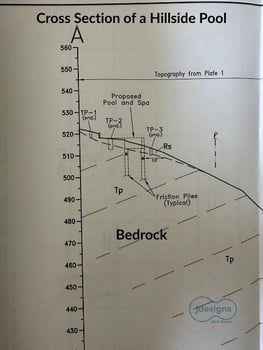 In Los Angeles, the Department of Building and Safety (LADBS) has long recognized the dangers of building pools and structures over unknown soils. The Grading Division often requires a soils or geology report before issuing permits, especially when:
- Excavation occurs on or near a hillside - The property is known or suspected to be on fill - There is a history of movement, landslides, or instability in the area - Groundwater is likely to be a factor.
Structural engineers rely on this soil data to design:
- Shell thickness and shape - Reinforcement (steel) size and layout - Footing depths and locations - Deck and retaining wall support systems - Drainage, subdrains, and hydrostatic relief
Without verified soil data, structural design becomes an assumption – and in engineering, assumptions about the ground are often what fail first.
Many Los Angeles properties were graded or filled decades ago – sometimes with minor compaction or documentation. This “uncontrolled fill” may include: Loose soil - Rocks or construction debris - Organic matter (roots, wood, vegetation) - Moisture‑prone or compressible layers - Air pockets and voids.
Even newer homes can be sitting on fill that predates current standards.
Why it matters: If a pool shell is placed on fill that moves under pressure or moisture, the rigid structure can:
Crack in isolated areas - Tilt or rotate - Separate at coping or joint lines - Shift surrounding decks and plumbing
A proper soil report and a post‑excavation inspection can identify these conditions and recommend whether to:
- Over‑excavate and rebuild with engineered, compacted fill - Support the pool on piles, caissons, or deeper footings that reach competent ground - Relocate or reshape the pool to a more stable portion of the lot. Early knowledge of uncontrolled fill is one of the best ways to prevent the most expensive post‑construction failures.
.jpg?width=280&height=374&name=Low%20bidder%20Vertical%20Blog%20Visual%20(2).jpg)
Some Los Angeles neighborhoods are built on clay layers that expand and contract significantly with changing moisture levels.
Why this is dangerous: Your pool shell and deck are rigid; they’re not meant to flex like rubber. The soil underneath, however, can move vertically and laterally as it gains or loses moisture.
Expansive soils can - Push upward against the shell (heave) - Apply lateral pressure to walls and retaining structures - Crack concrete decks and coping - Break underground plumbing lines - Cause tile misalignment and surface damage.
You cannot reliably see this from the surface. A perfectly flat backyard can hide highly active clay just a few feet down.
A soils report measures the Expansion Index (EI) and offers engineering solutions such as:

Even inland areas of Los Angeles can have seasonal water tables that reach the depth of a pool excavation.
What is hydrostatic uplift?
It is the upward pressure of groundwater on a structure. When a pool is empty, or partially empty, and groundwater pressure exceeds the weight of the pool and surrounding soil, the structure can:
Think of an empty pool like a boat in the ground: if the water pressure beneath is stronger than the weight holding it down, it wants to rise.
This risk is highest in:
A soil and groundwater study helps engineers design appropriate solutions:
- Subdrains and gravel blankets
- Hydrostatic relief valves
- Anchors or tie‑downs
- Sump pumps or dewatering systems
- Heavier or specially detailed pool shells
Without this study and follow‑through, a builder may unknowingly create a pool vulnerable to uplift, especially during heavy-rain years or when the pool must be drained for maintenance.

Settlement is the downward movement of soil over time. Pools, decks, and underground plumbing do not tolerate uneven movement well.
Common causes of settlement include:
- Old fill that was never properly compacted
- Natural consolidation of soils under the new pool’s weight
- Poor drainage or irrigation leaks saturating the subgrade - Groundwater level changes over seasons or years
- Adjacent construction, retaining walls, or vibration
Consequences over time:
- Structural cracks in the pool shell
- Tilted or uneven decks
- Plumbing line ruptures and hidden leaks
- Tile and coping misalignment
- Accelerated deterioration due to water infiltration through cracks
The damage is progressive. It rarely shows up on day one, but it nearly always costs more to fix later than it would have to address it properly during design and construction.
A soils report and post‑excavation sign‑off allow engineers to:
- Anticipate and mitigate settlement risks
- Design deeper, wider, or reinforced footings where needed - Recommend removal and recompaction of marginal soils
- Predict and manage long‑term site behavior rather than simply reacting to it
Los Angeles is an earthquake‑prone region. While pools are not classified as life‑safety structures the way homes or hospitals are, they are still exposed to the same seismic ground motions.
During an earthquake, Seismic shaking causes different soil layers to move at different speeds and directions. If the soil beneath your pool is loose, filled, or saturated, it can:
- Shift unevenly across the pool’s footprint
- Create strong lateral forces on walls
- Crack shells, decks, and raised features
- Damage plumbing, coping, and adjacent hardscape
Why native soil or shallow bedrock matters
A pool founded on verified native soil or shallow bedrock generally performs better during seismic events. This type of foundation:
- Reduces uneven or differential movement
- Disperses energy more predictably
- Helps prevent post‑quake settlement and long‑term distortion
Major fault systems, including the San Andreas, Newport–Inglewood, Hollywood, Raymond, Santa Monica, and Palos Verdes faults, run through or near Los Angeles. Properties around these systems require additional geotechnical attention, not only for primary structures but also for major outdoor investments such as pools, spas, and retaining walls.
Bottom line
Earthquakes may be unavoidable, but many types of pool damage related to poor soil conditions can be reduced or prevented with proper geotechnical evaluation and structurally sound design.

If you live near the ocean, a bay, a lake, or marshy ground, expect:
In these environments, a pool without hydrostatic mitigation and proper materials is a significant liability. A coastal soils report, often paired with corrosion‑resistant design details, is not optional; it is essential for long-term performance.
Soils Reports and Explorations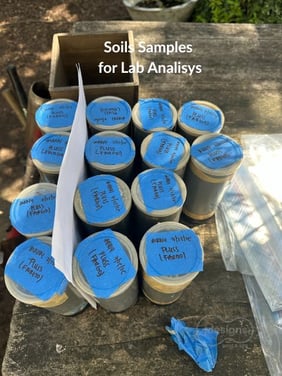
What You Gain: Investing in a soil exploration or report before construction, and confirming conditions after excavation
Safer, more accurate engineering grounded in real site data
Fewer mid‑project surprises, redesigns, or costly delays
Lower long‑term maintenance and repair costs
Reduced structural risk to the pool, decks, and nearby structures
LADBS and code compliance were required
Higher property value through documented due diligence and quality construction decisions
Most of the expensive pool problems homeowners face years later can be traced back to avoidable soil or groundwater issues that were not adequately understood or addressed on day one.
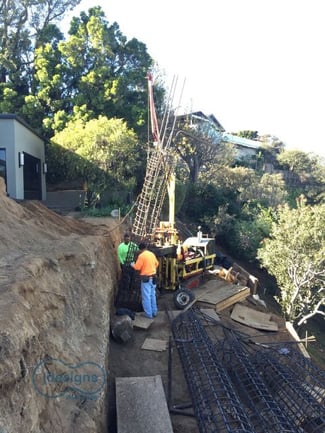
You should strongly consider a soils report or, at a minimum, a professional soils exploration and post‑excavation inspection on virtually every new pool. It is especially critical if:
- Your home sits on fill, a slope, or a hillside pad
- You live near the coast, a canyon, or a drainage channel
- Groundwater, erosion, or prior movement is suspected
- You plan a deep pool, an infinity edge, or heavy features such as slides, grottos, or large raised walls - You or your neighbors have noticed cracking, tilting, or settling in nearby structures, decks, or driveways
- LADBS grading review or geotechnical approval is required. If there is any doubt, test the soil and confirm your findings after excavation. For the size of the investment you’re making, it is one of the least expensive insurance policies you can buy.
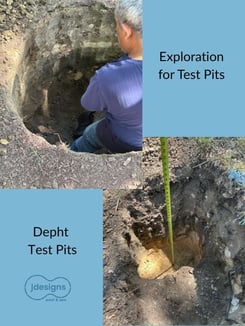 You can’t build a great pool on a bad foundation. And you can’t build a smart foundation without knowing what’s beneath your feet.
A proper soil exploration is not red tape and not an upsell. It is the single most effective way to:
- Protect your investment - Avoid preventable structural issues - Support a design that performs the way it was intended
When that exploration is paired with a careful post‑excavation inspection, you remove as much guesswork as possible before placing steel, shotcrete, and finishes.
Without these steps, even the most beautifully designed pool can become a structural liability.
Now that you know how much is riding on the soil beneath your backyard, are you comfortable moving forward with a pool project that hasn’t truly checked what’s under the surface, before and after excavation?
The cost of a soil report can vary based on location, site complexity, and ease of access to the site. For most Los Angeles residential pool projects, we typically see geotechnical investigations ranging from *$8,000 to $15,000. To complete the report accurately, additional documentation is often required, such as:
Boundary or land surveys
Topographic elevation surveys
Slope stability or slope analysis reports
These supporting documents provide the soils engineer with the information needed to recommend excavation limits, foundation design, and drainage strategies tailored to your specific property. While this investment may feel significant at the start of a project, it is a fraction of the cost of repairing a failed pool foundation, correcting long‑term settlement, or rebuilding damaged decks and drainage systems later on. In practical terms, a soil report is one of the most cost‑effective forms of protection you can build into your pool budget.
If you’re planning a pool in Los Angeles, start with the ground, not the tile samples.
J Designs Pool & Spa works with experienced geotechnical and structural engineering teams, understands LADBS requirements, and translates soil data into a safe, durable, and beautiful pool design. From initial soil exploration through post‑excavation verification and final construction, we help homeowners across LA build pools on reliable foundations, not assumptions.
If you need guidance on whether your property requires a soils report, an exploration, or a post‑excavation inspection, contact J Designs. We’ll walk you through the proper steps, help you ask the right questions, and make sure your pool is supported by more than just hope – the right soil, the right structure, and the right team support it.

*The costs in this article are a case-by-case average representation only; a Soils Engineer can accurately provide the exact cost for your project.
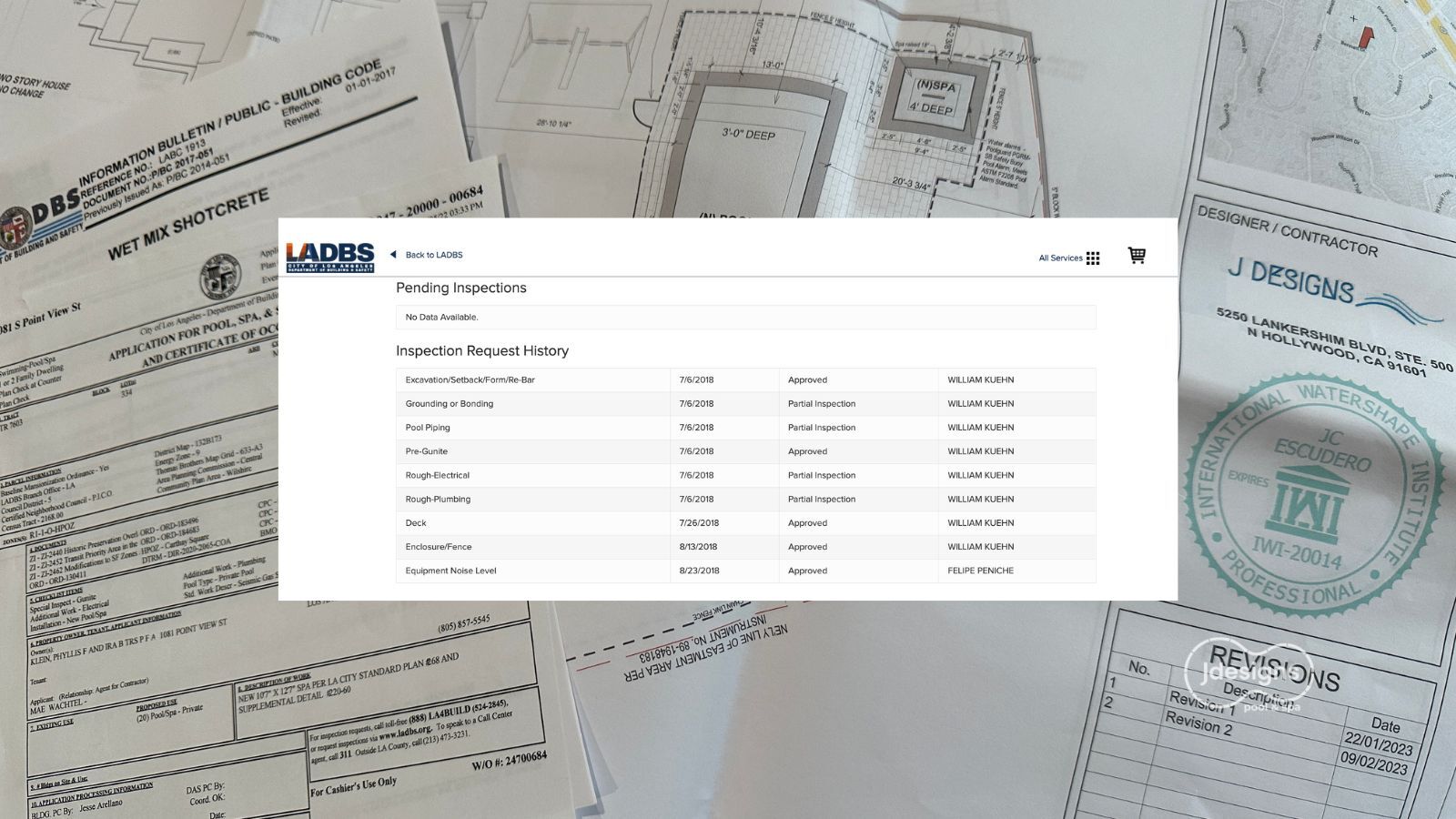
An unpermitted pool in Los Angeles is more than a missing permit. It may also mean there are no approved plans or inspection records confirming how...
 JC Escudero: Sep 2, 2026
If you own a Spanish Colonial or revival-style home, clay coping can be one of the most beautiful ways to connect your pool while staying true to...
 JC Escudero: Aug 23, 2026
We are all very familiar with the statement that water is an electrical conductor; therefore, this also applies to the pool's surrounding areas and...
1 min read
JC Escudero : Jun 10, 2025
You’re ready to build a pool in your backyard, but you’re not sure what size or type is right for your family. That’s a big decision—and it can feel...
1 min read
JC Escudero : Jan 7, 2026
Imagine floating effortlessly through your own backyard oasis on a warm afternoon.
1 min read
JC Escudero : Oct 30, 2025
Thinking About an Indoor Pool? Here's What You Need to Know First Are you a homeowner envisioning a private, year-round swimming space, or an...