
How 3D Pool Design Prevents Construction Mistakes
 JC Escudero: Sep 23, 2026
Planning a custom pool involves dozens of decisions about shape, depth, materials, and features. Get one wrong, and you could face expensive rework...
Saltwater pools have become increasingly popular, and for good reason. Many homeowners like that the water feels softer on their skin, they don’t have to handle as many harsh chemicals, and the whole swimming experience can feel more gentle and “natural.”
But there’s an important detail that people don’t always talk about:
Saltwater pools affect how the pool water and surrounding materials behave over time.
That doesn’t mean saltwater pools are bad. It simply means they need to be planned, built, and maintained more carefully.
Most problems people blame on saltwater pools are not actually caused by the salt itself. They usually result from using the wrong materials, overlooking small construction details, or taking shortcuts during construction. Below is a clear, research-based look at common saltwater pool myths and what really matters if you want your pool to stay comfortable and last a long time.
Many people think saltwater pools are chlorine-free. They are not.
In a saltwater pool, there is a special machine called a salt chlorine generator. You add salt to the water, and this machine converts it into chlorine using electricity. So the difference is how the chlorine is made, not whether there is chlorine in the water.
If the water chemistry is not balanced correctly, you can have the same chlorine-related problems in a saltwater pool as in a regular chlorine pool; in fact, some say it can cause greater damage to surfaces when not monitored.
Can saltwater pools make your eyes burn or feel itchy? Yes, but it depends on how the water is cared for.
Eye irritation is usually caused by things like:
If the salt level or pH is too far outside the normal range, your eyes can feel uncomfortable. However, many trusted sources and many pool owners report that saltwater pools often cause less eye irritation. That’s because the chlorine level tends to stay more steady, and chloramines are usually lower.
In other words, eye irritation is almost always a water chemistry problem, not a “too much salt” problem.
Saltwater pools still produce chlorine byproducts, as we mentioned, especially when chlorine reacts with organic matter, such as sweat, body oils, and leaves. These byproducts are called CHLORAMINES and can irritate the skin or eyes if they build up too much.
Having a salt system does not mean you can stop taking care of the water. You still need:
pH control, regular water testing, and proper sanitation levels (active chlorine)
When water chemistry is regularly checked and adjusted, saltwater pools are not automatically harsher or more dangerous for swimmers than other pools.
The amount of salt in a pool, "usually about 3,000–3,500 parts per million," is much lower than that of the ocean. Ocean water is many times saltier.
Some people may experience dry skin if the pool chemistry is not properly maintained. But many swimmers say the opposite, they feel like the water is softer, their skin is less itchy, and their hair feels better in a well-maintained saltwater pool.

Big Picture:
Saltwater damage usually doesn’t happen overnight. It is slow, builds up over time, and can be hard to see in the early years.
Here’s a key point: salt does not disappear when water dries. Water can evaporate (turn into vapor and go into the air), but salt stays behind. When pool water dries on a surface, the salt can:
Over many cycles of getting wet and drying out, this gentle pushing can slowly weaken materials if the pool was not designed or built to handle salt exposure.
This process doesn’t usually cause a sudden crack or break; it gradually wears things down when the wrong materials or details are used.
What Can Happen
Why
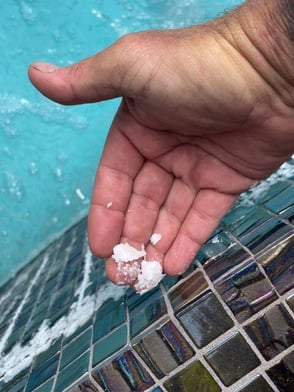
Grout, the material between tiles, is often cement-based and full of tiny pores. Saltwater can easily soak into it. When water evaporates, leaving the salt behind, the growing salt crystals within the grout can weaken it and cause it to crack or crumble over time.
What Homeowners Should Ask For
Important note: People often blame the tile when they see problems, but in many cases, the real weak spot is the grout holding the tile in place.
Coping is the “picture frame” around the top edge of the pool, the material your feet touch when you walk around the pool’s rim.
Potential Issues of Natural Stone, Travertine, Limestone, and Sandstone
Why
Natural stone is full of tiny spaces where water and salt crystals can enter. Saltwater can move below the surface, and when the water dries, the salt turns into crystals inside the stone. Over time, this can cause thin stone layers to lift and break away, especially in sunny areas where water evaporates quickly.
Prevention
Porcelain is usually very dense and highly resistant to salt; however, how it is installed matters just as much as the setting material itself.
Best Practices
When the whole system, not just the tile, is installed correctly, porcelain coping can perform exceptionally well around a saltwater pool.
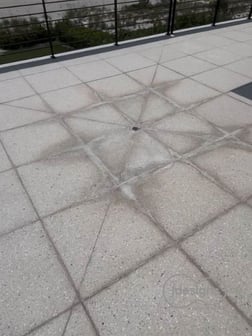
The deck is the walking surface around the pool, often made of concrete.
Common Issues
Why
Concrete is both porous (it absorbs some water) and alkaline (basic in pH). Saltwater can:
Decorative concrete finishes, such as stamped patterns or colored surfaces, are often more fragile than thick, plain structural concrete slabs.
Prevention
Metal parts may look small, but they matter a lot around a saltwater pool.
At-Risk Items
Salt speeds up rust and corrosion, even on some metals sold as “stainless steel” if they are not the right grade.
Best Practices
It can help to think of a saltwater pool like a mild version of living near the ocean: you choose materials and details as if the environment is a little coastal, even if you’re inland.
Expansion joints are flexible gaps that let different parts of the pool and deck move slightly as temperatures change or the ground shifts. In a saltwater pool, these joints are especially important.
What Can Go Wrong![Copy of [TEMPLATE] Vertical Blog Visual](https://www.jdesigns.com/hs-fs/hubfs/Blog%20-%20Visual%20Assets/Expansion%20Joint%20Blog/Copy%20of%20%5BTEMPLATE%5D%20Vertical%20Blog%20Visual.jpg?width=233&height=311&name=Copy%20of%20%5BTEMPLATE%5D%20Vertical%20Blog%20Visual.jpg)
Prevention
This single design and maintenance step often makes the difference between a deck that lasts about 10 years and a deck that can perform well for 30 years or more.
You may hear someone say, “We’ve had a saltwater pool for years and never had a problem.”
When that happens, it usually means:
Saltwater pools are not “out to get you.” They simply make good design and good workmanship more important. When everything is done thoughtfully, saltwater pools can perform very well. When shortcuts are taken, salt tends to reveal those shortcuts sooner.
Below is a polished, drop-in “bonus section” draft you can add to the article or use as a standalone education piece.
Tone, depth, and structure are aligned with your educator-first, premium positioning, factual, calm, and prevention-focused.
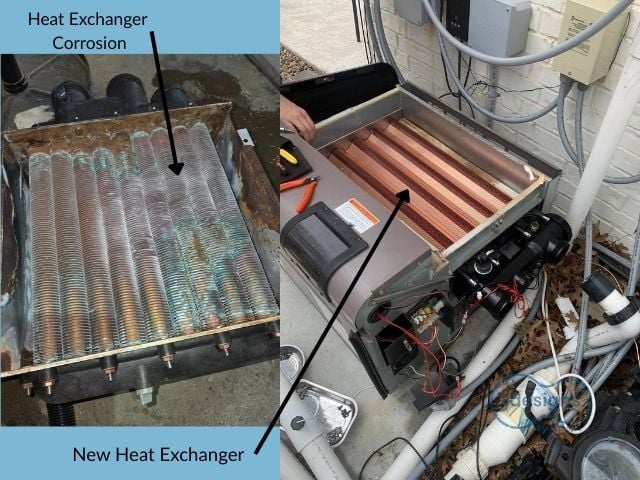
Saltwater pools don’t just affect finishes and decking; they also change how pool equipment ages over time. While salt systems are safe when properly maintained, salt creates a more corrosive environment for mechanical components, especially when chemistry or installation details are overlooked.
Understanding where corrosion occurs and how to prevent it is key to protecting long-term performance and avoiding premature equipment failure.
Saltwater pools contain dissolved salt. While this is far below ocean water levels, it still:
Increases water conductivity
Accelerates electrochemical reactions
Amplifies corrosion when metals are exposed to moisture
Salt doesn’t need to be in direct contact with equipment to cause damage. Salt spray, evaporation, and humid air around the equipment pad can all contribute to corrosion over time.
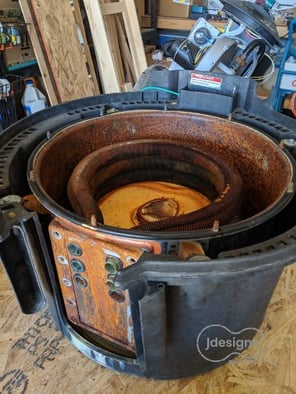
Pool heaters are particularly vulnerable in saltwater environments because their internal components are largely metal and are exposed to both water and heat, two conditions that accelerate corrosion.
Why Heaters Fail Faster in Saltwater Pools
Heat exchangers are typically made of copper, cupro-nickel, or stainless steel.
Salt increases electrical conductivity, speeding up galvanic corrosion
Low pH, high salt levels, or improper bonding can rapidly attack metal surfaces
Poor water flow or scale buildup further concentrates corrosion in the exchanger
Once corrosion begins inside a heat exchanger, it is a matter of time until the unit is destroyed, and in many cases that means full heater replacement is needed.
Progressive
Often hidden until performance drops
Expensive to repair or replace
Other equipment at Risk
Pump motor housings and fasteners
Filter clamps and internal metal components
Salt chlorine generator cells (sacrificial over time)
Unions, fittings, and metal valves
Electrical connections and bonding hardware
Corrosion often begins as surface rust or discoloration, but internal degradation may already be underway.
Low pH or acidic water
Improper bonding or grounding
Incompatible metals installed together
Poor ventilation around equipment pads
Lack of sacrificial protection (anodes)
Incorrect salt levels
Specify heaters designed for saltwater systems
Use cupro-nickel or titanium heat exchangers where appropriate
Avoid mixing dissimilar metals in plumbing and fittings
Sacrificial anodes are among the most effective and overlooked forms of corrosion protection.
How They Help
Anodes corrode first, protecting more expensive equipment
They reduce galvanic corrosion throughout the system
Anodes should be:
Bonded adequately to the system
Inspected annually
Replaced as they wear
Consistent chemistry is the single most significant factor in heater longevity.
Critical Ranges
pH was kept stable and within the recommended range
Salt levels maintained per manufacturer specs
Calcium hardness is balanced to prevent scaling
Proper flow rates through heaters
Even a short-term chemical imbalance can significantly shorten equipment life.
Electrical bonding equalizes electrical potential across metal components and reduces galvanic activity. Poor bonding can:
Accelerate corrosion dramatically
Void equipment warranties
Cause premature heater and pump failure
This is a design and installation issue — not a maintenance one — and must be done correctly from day one.
Elevate equipment to prevent standing water
Provide airflow and drainage
Avoid salt spray accumulation
Rinse equipment periodically in high-exposure areas
Salt-laden moisture trapped around equipment can cause corrosion even when water chemistry is perfect.
Saltwater pools are not harmful to equipment by default, but they demand more thoughtful planning and protection.
Heaters fail early, not because saltwater is “bad,” but because:
Materials weren’t selected for salt exposure
Protective measures were skipped
Chemistry wasn’t consistently maintained
With salt-compatible equipment, sacrificial protection, proper bonding, and ongoing maintenance, pool equipment — including heaters — can perform reliably for many years in saltwater environments.
Most material problems around saltwater pools are not caused by salt alone. They usually come from:
The real difference between a pool that lasts about 10 years and one that lasts 30 years or more is not just the type of sanitation system. It’s the quality of the materials, the level of design detail, and the care put into planning and maintenance.
At J Designs Pool & Spa, we believe that when clients understand how their pool really works, they can make smarter choices. Those better choices lead to pools that not only look beautiful when new but also age gracefully, season after season.
In addition to these precautions, we also follow guidance from the American Concrete Institute, which has studied concrete performance for more than 100 years. For pools that use salt systems or are located in coastal environments, we work with engineers to specify a minimum 5,000 PSI, high-density concrete mix with fewer open pores, helping to limit salt penetration, protect the reinforcing steel, and reduce the risk of premature structural corrosion.
You still want to learn more? The following article compares Salt Systems vs Alternative Options

 JC Escudero: Sep 23, 2026
Planning a custom pool involves dozens of decisions about shape, depth, materials, and features. Get one wrong, and you could face expensive rework...
 JC Escudero: Sep 19, 2026
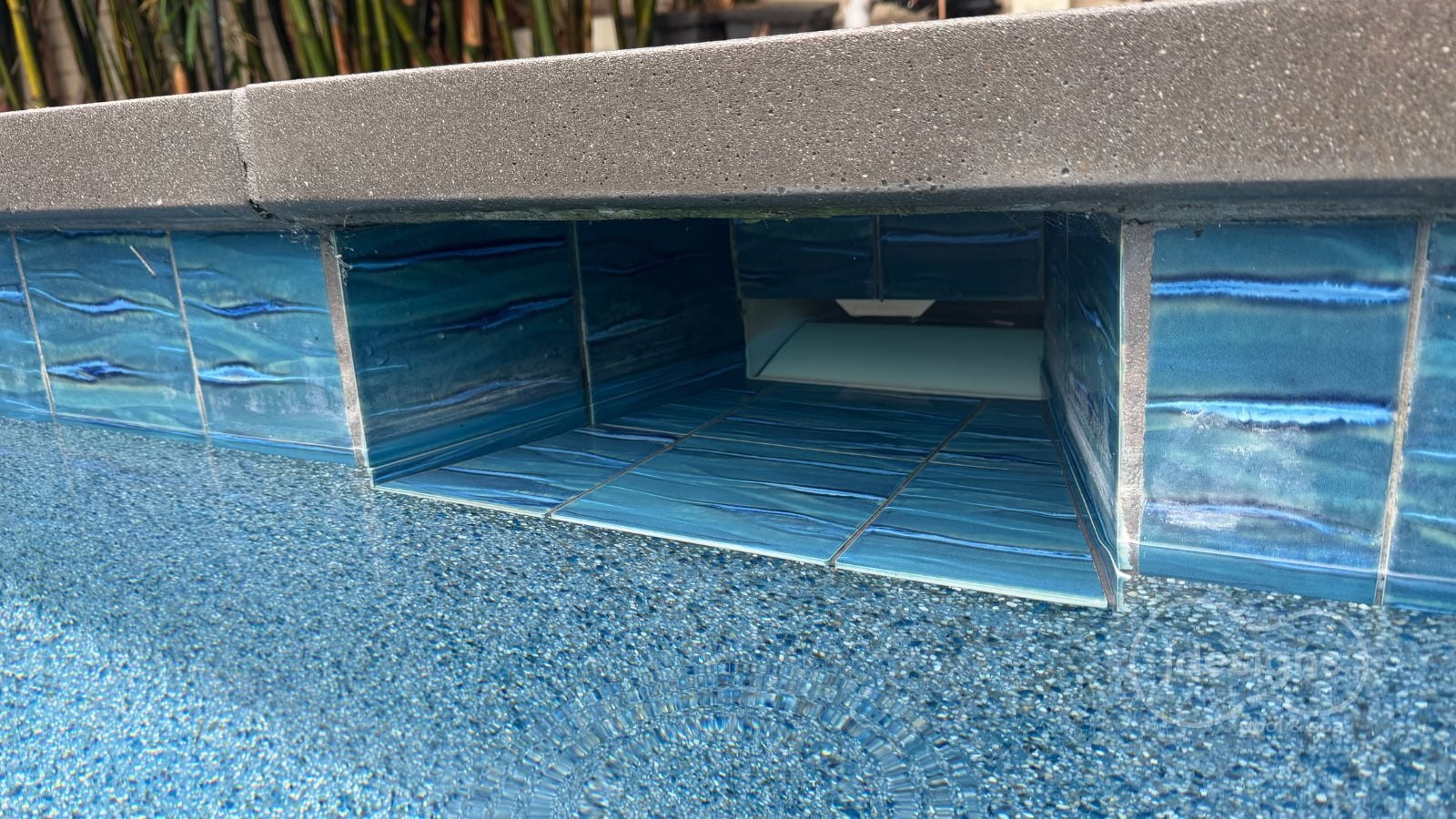
Your pool's circulation doesn't simply begin at the pump.
After heavy rain, don't automatically shock your pool or add chemicals. Test the water first.
 Daniela Escudero : May 21, 2025
Salt pool stains are caused by corrosion, high pH, and poor salt quality. Find out how to prevent and remove stains for a crystal-clear pool!
 JC Escudero : Jan 3, 2026
Discover the top 2026 pool design trends, from shapes and colors to fire pits, acrylic windows, and smart tech. Get inspired to build your dream pool.
 Daniela Escudero : Sep 8, 2022
Discover the pros and cons of different pool covers: solar, vinyl, mesh, and automatic options. Find the right cover for your pool.