
Stainless Steel Pools in Los Angeles: When Do They Make Sense?
 JC Escudero: Oct 1, 2026
When most homeowners picture a swimming pool, they probably picture a concrete or shotcrete structure built into the ground.
.jpg?width=1920&height=1080&name=Roman%20Classic%20-%20Simi%20Valley%20-%20Noya_%20Hero%20Banner%20(4).jpg)
Imagine walking barefoot around your pool on a hot day. Is the surface cool, smooth, and safe? Or is it rough, slick, or already starting to crack?
Choosing the wrong material around your pool can lead to years of frustration. The right deck surface should feel comfortable, stay safe when wet, drain properly, and protect your investment rather than work against it.
In this article, we break down the top materials homeowners consider for pool decks, with a focus on pavers, also referred to as interlocking pavers. We’ll look at heat retention, slip resistance, drainage, maintenance, and long‑term durability. You’ll also learn what most people overlook during installation (soil prep, drainage, and weed control) and how to make a wise, lasting choice for your backyard.
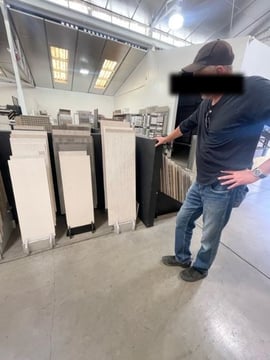
Pool deck pavers are individual units made from materials such as concrete, stone, brick, or porcelain that interlock to form a solid, durable surface around pools. Because each paver is an individual piece, small sections can be lifted and replaced if damaged, a significant advantage over poured concrete slabs or bonded overlays.
For luxury pool projects, pavers appeal because they provide:
Here’s a breakdown of common paver materials and what distinguishes them.
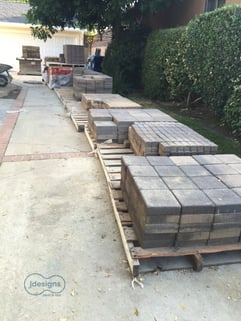
Affordable and widely available, often used for patios, walkways, and driveways. They can be designed to interlock for added stability. These concrete blocks are manufactured in molds to maintain their shape and are available in various types.
Offers an upscale, timeless aesthetic and often good slip resistance when left with a textured, tumbled, or sandblasted finish. Many natural stones are porous and require appropriate sealing and maintenance.
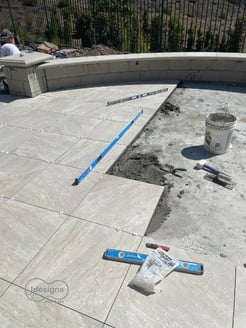
Increasingly popular thanks to durability, low maintenance, and design flexibility. Because porcelain is manufactured under high pressure and high temperature, these pavers tend to be very dense and non‑porous. They resist staining, UV fading, and chemical absorption, making them especially well-suited to pool environments.
A classic, traditional look with potential for good slip resistance.
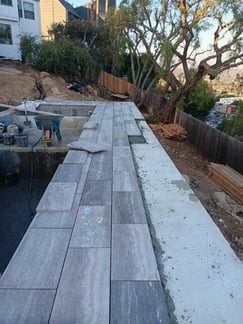
These include natural stone or stone‑look porcelain, mixed-modular systems, or surface‑textured products. They aim to balance aesthetics and practicality, for example, giving the look of stone with the performance of porcelain, or combining different materials for a custom pattern.
Combining materials is tricky because the thickness must match as the ground is leveled, ensuring a uniform installation to avoid gaps or trip hazards.
Some pavers are designed to support vehicle loads; they are thicker, denser, and stronger. For a pool deck, that extra load‑bearing strength is often unnecessary and can be overkill. Over‑spec’d pavers may:
For a pool deck, you typically want pavers engineered for pedestrian use, with an emphasis on comfort, slip resistance, and thermal performance rather than support for heavy loads.
Surface texture is one of the most critical safety factors.
Always look for products tested for wet slip resistance (DCOF ≥ 0.42) when used around pools.
Pavers from different producers vary in:
Sourcing from out-of-state or ordering custom/non‑standard colors or sizes can increase freight costs, extend lead times, and introduce batch variation. When possible:
Beyond material cost, availability and logistics matter:
Pavers typically win on versatility. You can mix shapes, sizes, colors, and textures to complement your home’s architecture and landscape design.
Concrete slabs or stamped overlays offer a more uniform, monolithic look. While they can be attractive, they generally provide less detail and customization than a well‑designed paver layout.
Pool decks get wet by definition, so slip resistance is non‑negotiable.
Always confirm that your chosen material and finish meet or exceed the recommended "0.42 dynamic coefficient of friction" (DCOF) for wet areas.
Color and material directly affect surface temperature:
In a sunny climate, prioritizing lighter tones and appropriate finishes can make a noticeable difference in day‑to‑day comfort.
Over time, however, the ability to perform localized repairs, combined with reduced risk of significant cracking or wholesale replacement, can make a paver deck more cost‑effective than slab concrete that requires resurfacing or full demo and replacement.
.jpg?width=640&height=480&name=Hardscape%20Horizontal%20Blog%20Visual%20(2).jpg)
Like any other deck surface choice, stay away from large trees to prevent lifting or damageto the deck
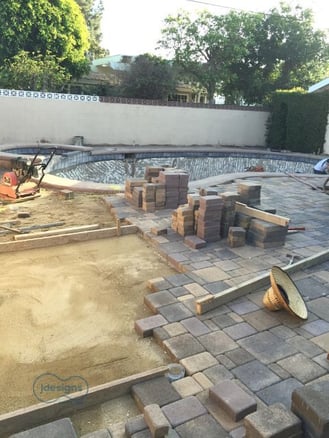
Proper installation is often more important than the material itself. A well‑engineered base and drainage plan can make modest pavers perform exceptionally well, while careless installation can cause even premium stone or porcelain to fail.
Under every successful paver deck is a stable, well‑draining base
Skipping compaction or undersizing the base are among the quickest paths to uneven settling and trip hazards.
Without proper drainage:
When key steps are skipped or rushed, common problems will arise.
A well‑designed system, built according to recognized standards, is the best protection against these failures.
Industry standards exist to help you avoid guesswork and ensure performance. This is not a shortcut and should not be ignored. Most installation defects and failures have been attributed to poor decision-making, including cutting corners and installers reducing installation requirements.
For walking surfaces around pools and spas, the Tile Council of North America (TCNA), working with code‑making bodies, defines a required wet dynamic coefficient of friction (DCOF) — typically a minimum of ~0.42 for wet conditions under the Uniform Swimming Pool, Spa, & Hot Tub Code (USPSHTC). This helps ensure tiles and pavers remain safe under wet, real‑world use.
The TCNA Handbook provides established methods, for example, F101/F102 for exterior walkways or guides for installing porcelain over concrete slabs. These methods specify:
When your installer follows these published methods, you’re not relying on improvisation; you’re relying on tested assemblies.
A Licenced Contractor is required per CSLB, to perform the paver installation, not using one will leave you exposed to bigger issues.
For natural stone pavers, ASTM standards should also be observed and guidelines followed.
Verify that the stone meets accepted performance criteria for density, absorption, surface traction and wear resistance.
You also add credibility to contractor claims and create a clear technical baseline for the work.
Having pavers does not mean zero maintenance, but smart, consistent maintenance dramatically extends their life and appearance.
Sealing is often recommended, but NOT all sealants are suitable for wet applications.
Not every paver type needs sealing, and not every sealer is appropriate. Always follow the manufacturer's and installer's recommendations for your specific pavement material.
- High‑gloss or film‑forming sealers around pools: These can create slick, glossy surfaces when wet, which directly undermines one of the main reasons to choose a textured, slip‑resistant paver in the first place.
- Over‑sealing with non‑breathable products: Multiple layers of the wrong sealer can trap moisture beneath the surface or in the joints, leading to discoloration, efflorescence, mold/mildew growth, and premature surface degradation.
- Harsh cleaners or bleach (especially on natural stone): Strong chemicals can etch the surface, change the texture, and prematurely break down sealers. Always use paver‑safe, pH‑neutral cleaners formulated for the specific material (stone, concrete, or porcelain).
- Sweep or hose off the surface to remove dirt, leaves, dust, and debris. Regular light cleaning helps prevent buildup that can cause stains, organic growth, or slippery areas.
- Perform a more thorough cleaning with mild soap and water, then rinse well. - Prioritize this after heavy use, storms, or periods with significant leaf or pollen drop. - For stubborn spots, low‑pressure washing is acceptable. Avoid directing high pressure directly into joints or at paver edges, which can dislodge sand or damage the surface.
- Re‑evaluate the condition of your sealer. If water no longer beads on the surface, or if pavers show noticeable fading or discoloration, consider reapplying a breathable, textured sealer appropriate to the specific material (stone, concrete, or porcelain). - Many professionals recommend a 3–5‑year cycle for sealing, but local climate, sun exposure, and how heavily the area is used can shorten or extend that interval.
- Check joints periodically. If sand or polymeric sand has eroded or washed out, refill the joints. This helps prevent weed growth, ant tunnels, and interlock loss, and keeps the surface stable and even.
with Honest Answers
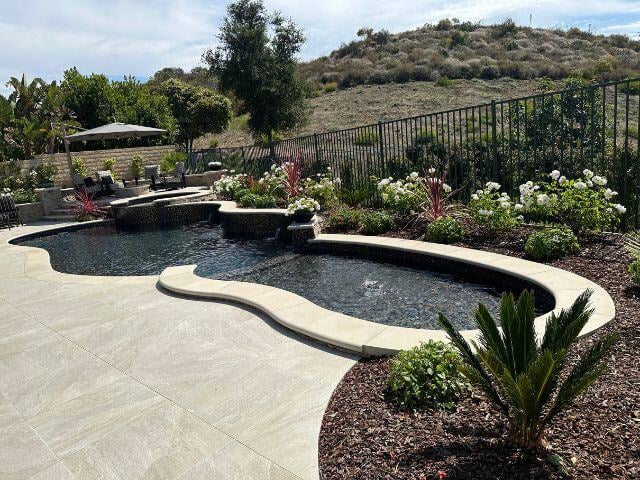
Do pavers get too hot in the sun?
Yes, darker or denser materials can absorb and retain heat. However, many homeowners find that light‑colored natural stone or porcelain pavers stay relatively comfortable underfoot, even on hot days. Textured surfaces and lighter finishes tend to reflect more heat, making them feel cooler.
Are pavers slippery when wet?
They can be if you select polished or very smooth finishes. When you choose textured, brushed, tumbled, or slip‑rated porcelain surfaces, pavers generally perform better than flat, smooth concrete or glossy tiles in wet conditions.
What’s the cost difference vs. concrete?
Upfront, pavers usually cost more due to materials, labor, base preparation, joint sand, and possible sealing. Over the long term, that investment is often offset by: ⚫ Easier, localized repairs ⚫ A longer expected lifespan ⚫ A lower likelihood of large‑scale replacement or resurfacing.
How long do pool deck pavers last?
With proper design, professional installation, and consistent maintenance, pavers, especially porcelain or high‑quality natural stone, can last 20 years or more.
Are all pavers safe for pool decks?
Safety depends on the combination of material, surface finish, and installation quality. Avoid: Driveway‑grade pavers with unnecessary density or thickness that overheat and are harder to work with. ⚫ Polished or glossy finishes in wet areas. ⚫ Inconsistent or uncertified materials from questionable suppliers.
What about weeds or shifting over time?
If an installer skips proper base compaction, edge restraints, or correct joint filling, pavers can shift, and weeds can appear in the joints. Using polymeric sand, maintaining joints, and ensuring a proper base and edge system from the start significantly reduces these issues.
Pavers are an excellent fit if you:
- Want a customizable, design‑forward pool deck that complements your home and landscape
- Value safety (slip resistance) and barefoot comfort around the pool
- Are willing to invest in high‑quality materials and professional installation
- Prefer a surface that can be repaired section‑by‑section instead of replacing the entire deck
- Prioritize long‑term performance and aesthetics over the lowest initial bid.
You may want to reconsider or choose another solution if you:
- Are on a very tight budget or compressed timeline
- Prefer a single, uninterrupted slab with minimal joints or patterning
- Do not want any ongoing maintenance (cleaning, joint care, or occasional sealing)
- Have limited access to quality materials or experienced contractors/installers in your market.
Before you decide, always discuss with your installer or supplier:
- Sub‑base preparation and compaction, drainage planning, and slope away from the pool and house - Joint filling strategy (polymeric sand or equivalent), edge restraints, and weed barriers
- Sealer type (if recommended), application schedule, and how local climate and usage affect maintenance
- Material origin, batch consistency, surface finish, and verified slip‑resistance ratings
Now that you understand the pros, cons, and practical considerations around pool‑deck pavers, your next step is to consult a trusted installer, pool builder, or landscape professional. The right partner will:
- Evaluate your site conditions (soil type, drainage, climate, pool size, access)
- Help you select the appropriate paver material, thickness, and finish for your specific design and performance goals
- Provide a detailed, realistic quote that includes base prep, delivery, joint materials, edge work, sealing (if applicable), and long‑term maintenance recommendations
Prices below reflect material and standard installation only and may vary significantly by region, freight, project complexity, and added features (lighting, curves, coping, custom shapes). Always request a complete quote that includes base preparation, edge work, joint materials, sealing, and freight charges for non‑local materials.
|
Spec # |
Material & Finish |
Base / Installation Notes |
Typical Cost Range* |
Notes / Why It Works |
|
1 |
2 cm gauged porcelain pavers, light‑neutral color, textured (slip‑resistant) |
Compact crushed‑rock base, 30% running‑bond pattern (per TCNA/ANSI), polymeric sand joints, edge restraint, 1–2% slope away from pool |
$30–$45/ft² |
Porcelain is non-porous, stains and pool chemicals resistant, low-maintenance, durable, well-suited to the CA climate, and suitable for pool surrounds. |
|
2 |
Natural stone travertine or limestone (ASTM C1527‑compliant), sandblasted or honed‑textured finish |
Gravel + compacted base, sand bedding, full mortar contact if over slab, sealed after installation, joint sand/polymeric sand, slope/drainage |
$30–$40/ft² |
Offers high‑end aesthetic, natural slip resistance, stays cooler underfoot than dark concrete; stone quality certified under ASTM. |
|
3 |
Medium‑duty concrete interlocking pavers |
Proper base (crushed rock + sand), compacted, edge restraints, joint with polymeric sand, sealed if recommended |
$25–$35/ft² |
Budget‑conscious option; when appropriately installed, it offers good durability and easy repair without over‑specifying strength (as with driveway pavers). |
|
4 |
Porcelain pavers with a stone‑look finish |
Thin‑set over concrete slab + membrane (TCNA F101/F102), slope & drain, expansion joints |
$55–$75/ft² |
Combines stone‑look elegance with the advantages of porcelain (low absorption, weather resistance, no need for frequent sealing). Great when remodeling an existing concrete patio. |
|
5 |
High‑quality dense limestone (ANSI/ASTM standards, slip‑resistant finish) |
Gravel base + geotextile barrier + compacted sand + polymeric sand joints + edge restraints + sealed |
$55–$75/ft² |
Dense stone resists moisture absorption, freeze‑thaw, and chemical exposure; it has good long‑term value and lifespan with proper maintenance. |
|
6 |
Concrete pavers rated for light vehicular use |
Crushed‑rock base, sand bedding, compacted, polymeric sand, edge restraints, drainage slope, sealed joints/spaces |
$35–$55/ft² |
Useful if the pool deck doubles as service access or occasional cart/maintenance access: a stronger base but still manageable underfoot. |
|
7 |
Mixed modular pavers (porcelain + natural stone accents) as long as their thickness matches |
Base + slab/mortar method + edge restraints + proper jointing + sealed stone edges + slope |
$55–$75/ft² |
Balances durability and a high‑end looking finish; stone accents can elevate aesthetics without compromising pool‑deck resilience. |
*Costs are approximate and for comparison; actual pricing depends on site conditions, access, detailing, manufacturers, and market conditions. Natural stone sources can also increase material and delivery costs.
You need to learn more about pool expansion joints. The following article will expose the facts. Also, check out the different types of pool deck options available.

 JC Escudero: Oct 1, 2026
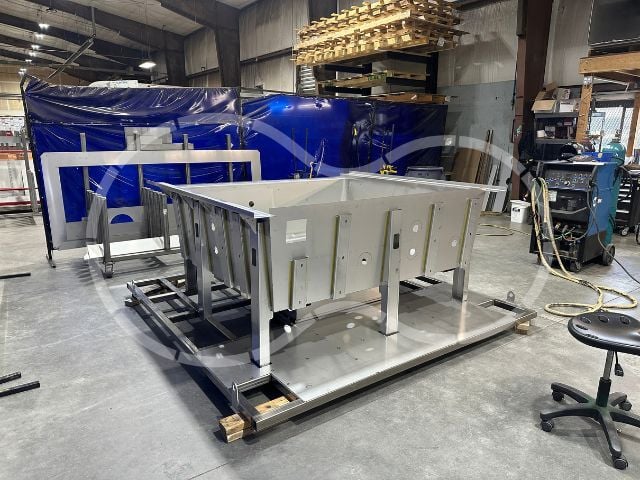
When most homeowners picture a swimming pool, they probably picture a concrete or shotcrete structure built into the ground.
 JC Escudero: Sep 26, 2026
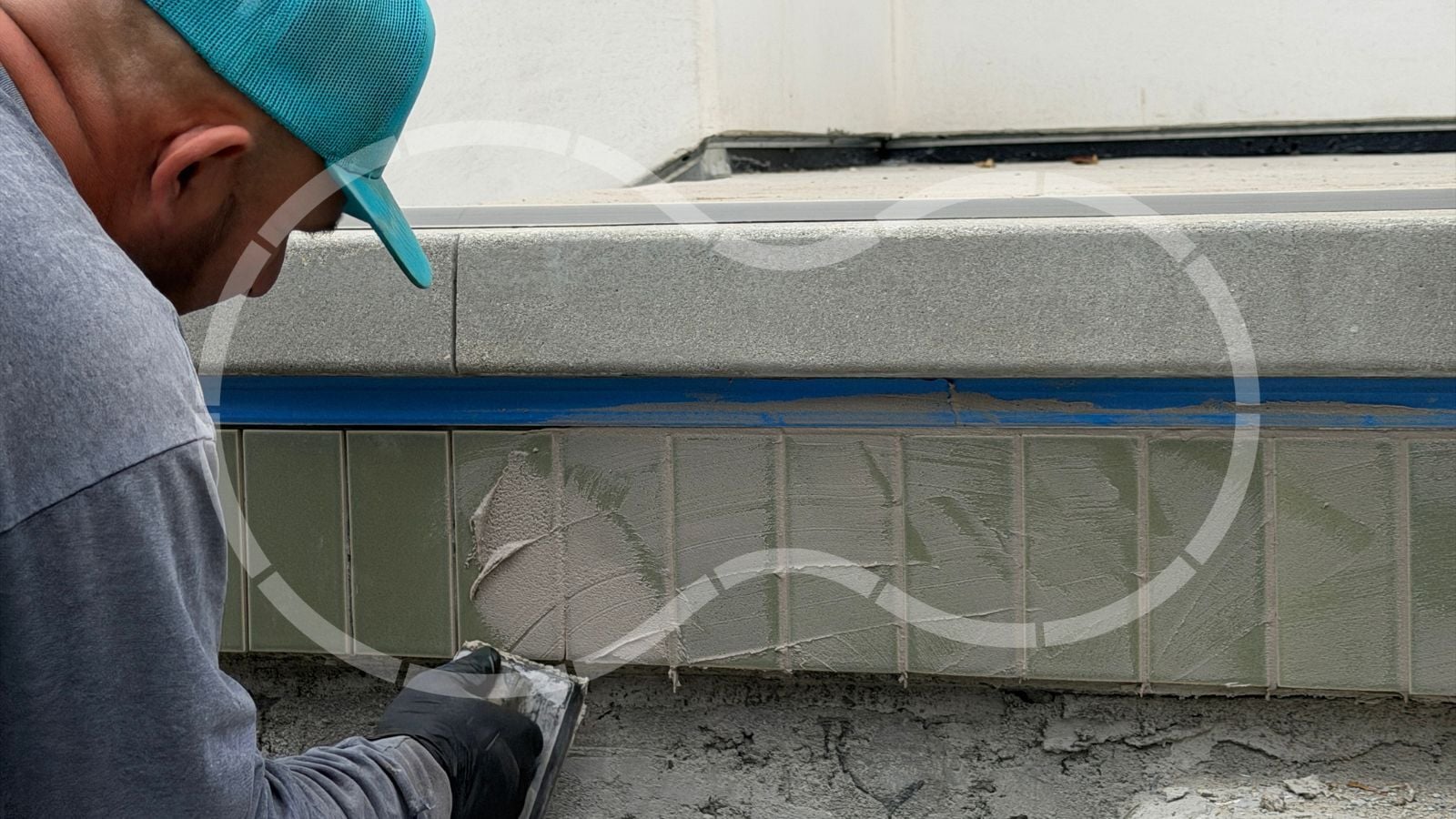
When most homeowners choose tile for a swimming pool, they naturally focus on the tile itself: the color, shape, texture, and overall design, because...
 JC Escudero: Sep 23, 2026
Planning a custom pool involves dozens of decisions about shape, depth, materials, and features. Get one wrong, and you could face expensive rework...
 JC Escudero : Dec 17, 2025
What is pool coping, and which materials last longest? Learn the best options, what to avoid, TCNA installation standards, waterproofing steps, LA...
 JC Escudero : Nov 1, 2025
Compare composite, wood, and GFRC decking for hot climates and pools. Learn the pros, cons, costs, and what makes a deck last in extreme heat and...
 Daniela Escudero : Aug 9, 2025
Think pools waste water? The truth is they use far less than lawns. See how much a pool really costs to fill—and why it’s smarter than you think.